Spending $20 billion in a single year is a bold statement, and spending $25 billion is a declaration of war (not quite!).
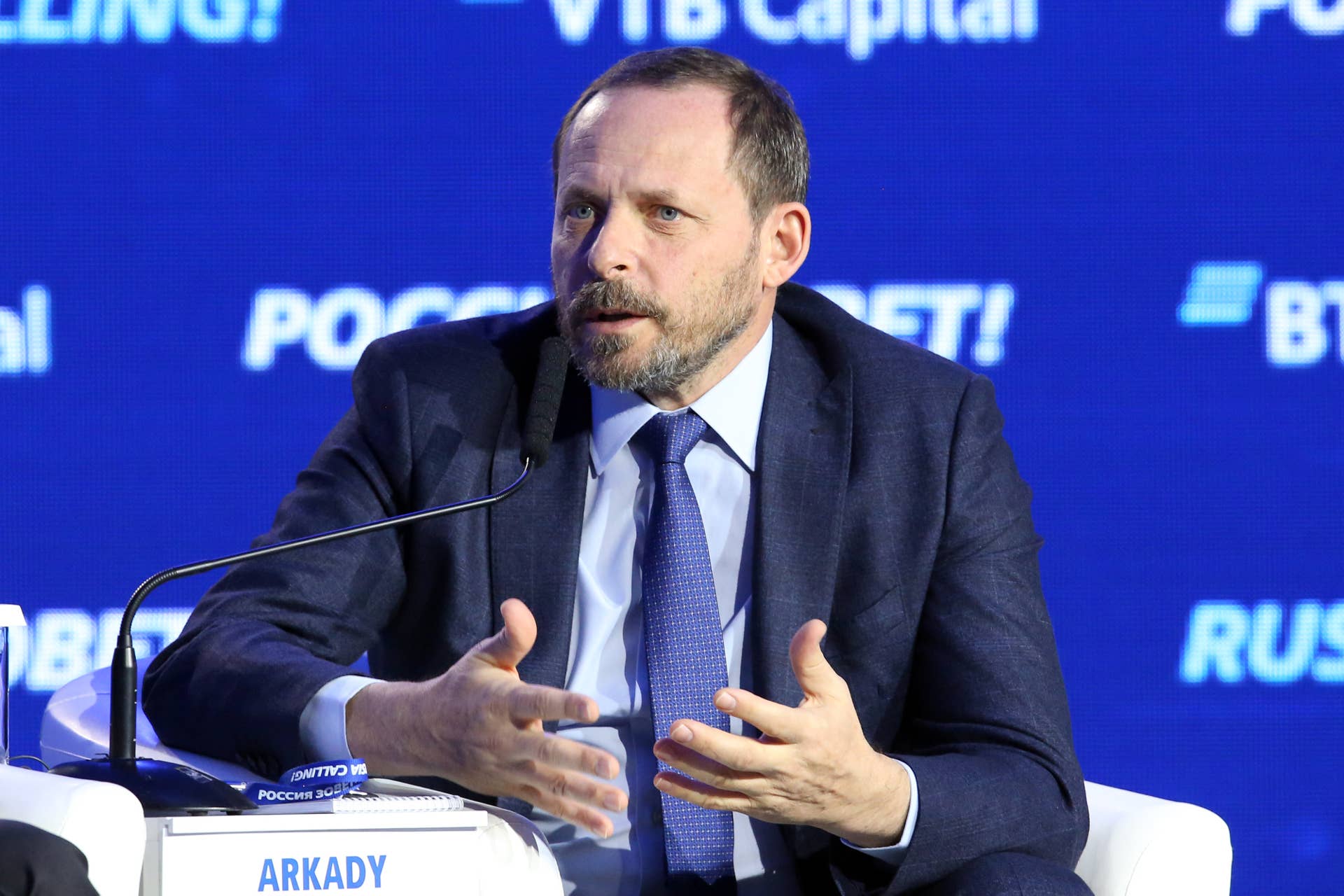
That’s essentially what Nebius GroupCEO Arkady Volozh said on the company’s May 13 first-quarter 2026 earnings call.
He raised the capex guidance aggressively and explained why he’s not worried about it.
“Everything we build, we sell, and we are still in the very early days,” Volozh told investors.
For anyone watching the artificial intelligence infrastructure race, that’s not a throwaway line. It’s a signal.
Nebius is an AI-native hyperscaler
Nebius (NBIS) calls itself an “AI-native hyperscaler.” It’s a fancy way of saying Nebius builds and runs the computing infrastructure that AI companiesneed to train models and run applications.
Think of it like a landlord, but instead of apartments, Nebius rents out graphics processing units (GPUs), cloud computing power, and a growing suite of AI software tools.
The business is booming right now because demand for AI computing far exceeds supply. Every time Nebius brings new hardware online, it’s already spoken for.
Related: Goldman Sachs revisits Nebius stock price target after earnings
The company said it typically sees four or more customers competing for every GPU it adds. The ongoing supply squeeze is the engine behind the numbers.
In Q1 2026, Nebius reported group revenue of $399 million, an increase of 684% year over year and 75% sequentially. The core AI businessrose 841% year over year to $390 million.
Margins are also expanding. The company’s earnings before interest, taxes, depreciation, and amortization (EBITDA) margin for the AI segment rose to 45% in Q1, up from 24% in Q4 of 2025.
Nebius hikes capex guidance to $25 billion
So why is Nebius spending more when things are already going well? Because the demand isn’t slowing down, and Nebius wants to gain a competitive moat.
The company’s original 2026 capex guidance was $16 billion to $20 billion. It just raised that to $20 to $25 billion.
More AI:
- Micron sits at the center of a red-hot chip rally
- IBM CEO sends blunt message on AI and quantum computing
- Anthropic CEO makes shocking admission about AI
CFO Dado Alonso was direct about the reason: Nebius is building for 2027 demand, not just this year.
Customers have already committed to capacity that won’t come online until early next year.
“We are building for 2027 demand where we have customer commitments already in place,” Alonso said.
One of those customers is Meta.
- Nebius unveiled a $27 billion, five-year contract with Meta.
- The deal breaks into two pieces, $12 billion commitment for dedicated computing capacity and an additional $15 billion option that Nebius can either sell to Meta or to other cloud customers at potentially higher market rates.
- If Nebius finds a buyer willing to pay more, it can take it. If not, Meta is committed to absorbing the capacity.
The deal serves as a backstop and unlocks asset-backed financing at attractive borrowing rates, given Meta’s strong credit profile.
Moreover, NVIDIA made a $2 billion equity investment in Nebius in March, locking in a long-term supply relationship across future GPU generations.
Together, the two deals changed the financial picture significantly.
Nebius ended Q1 with $9.3 billion in cash and cash equivalents, supported by $2.3 billion in operating cash flow, driven primarily by upfront customer payments.
Notably, analysts tracking the AI infrastructure stock forecast a cumulative free cash outflow of roughly $57 billion over the next five years, indicating aggressive capex in the medium term.
Capacity is the key variable for investors
Nebius is growing fast, but the timing of new data centers coming online will drive quarter-to-quarter results. Alonso warned that Q2 margins will likely dip before recovering.
The company’s new capacity is back-end-weighted this year, meaning most of it comes online in Q3 and Q4. Investors should expect some noise in Q2 numbers, then a step-up.
For the full year, Nebius reiterated its guidance: group revenue of $3 billion to $3.4 billion, with an annualized run rate of $7 billion to $9 billion by year-end and an EBITDA margin of about 40%.
The company is also expanding fast on the contract side.
Contracted power capacity now stands at more than 3.5 gigawatts, up from the 2-gigawatt mark it reported just three months ago.
A new Pennsylvania site, capable of supporting 1.2 gigawatts at full build-out, was also confirmed.
Pipeline growth is equally striking.
Qualified sales opportunities grew 3.5x quarter over quarter in Q1 — and that figure doesn’t even include major hyperscaler deals like Meta.
New customers include Revolut for AI inference services, 1X Technologies for physical robotics development, and enterprise clients in manufacturing, pharma, and energy.
The message from Nebius leadership is consistent: demand is real, contracts are signed, and the spending is justified.
Whether Wall Street believes that story will show up in the stock. But for now, the fundamentals are giving Volozh room to keep swinging.