Advanced Micro Devices (AMD) has gained about 98% year to date, according to Yahoo Finance at the time of writing, Sunday morning, May 17. Meanwhile, the SPDR S&P 500 index (SPY) is up about 8.4% in the same period.
The company has outpaced the S&P 500 by a huge margin. That is impressive, but what is driving these gains?
AMD is a semiconductor company that makes CPUs and GPUs, and its stock has rallied amid the AI boom.
Key news items for AMD stock:
- At the end of February, AMD expanded its partnership with Meta.
- Bank of America revised its server CPU sales forecasts in April.
- Intel’s Q1 earnings, reported on April 23, boosted confidence in the semiconductor sector.
- Following Intel’s earnings, AMD reported its earnings on May 5, helping to sustain the momentum from the ongoing sentiment that the AI boom will drive further growth.
- Bank of America raised its price target for AMD.
The company also holds investments in many companies, through its corporate venture capital arm AMD Ventures, and investors pay close attention whenever it invests, as it sends a strong signal of confidence for that particular stock.
AMD filed its Form 13F on May 12th, revealing their most recent investment.
Shutterstock
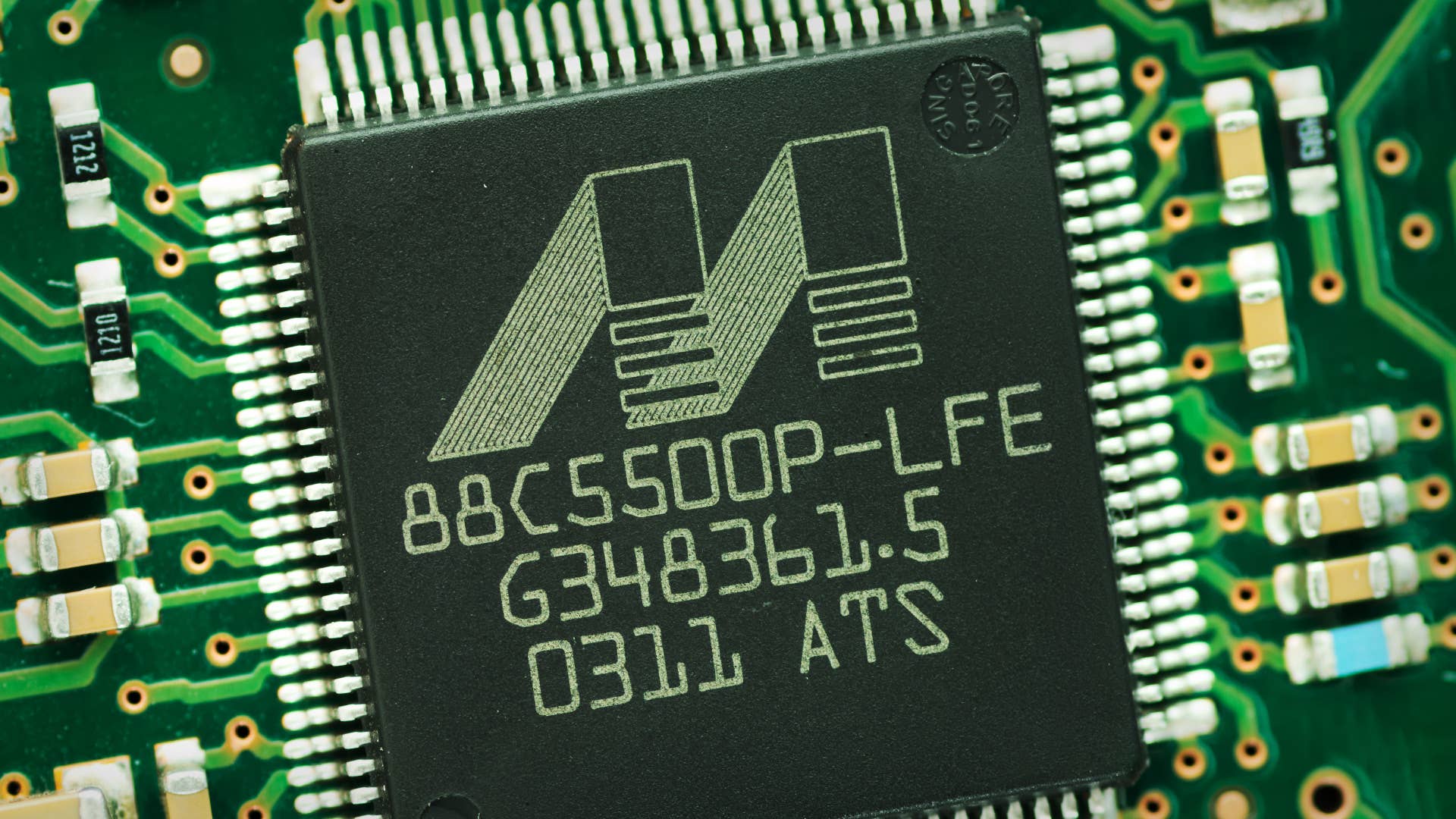
AMD invests $6.5 million in Marvell
The filing for the quarter that ended on March 31 revealed that AMD owns 65,516 shares of Marvell (MRVL) stock, purchased for $6,489,360.
That translates to a purchase price of about $99.05 per share. Marvell stock closed on March 31 at exactly that price. AMD managed to buy the stock just as the semiconductor rally was starting.
Marvell has closed the May 15, Friday trading session, down 3.12% at $176.89. The stock has fallen further in the after-hours trading to $174.92. Despite this drop, thanks to the stock’s surge over the entire period, AMD still made a lot of money on this investment, as the shares they purchased are valued at about $11,460,058.
More Tech Stocks:
- BofA resets Google stock price target after earnings smasher
- Bank of America resets Microsoft stock forecast after earnings
- 5-star analysts reset Broadcom stock price target
Regarding the drop, most semiconductor stocks fell on Friday. The cause of this sell-off was President Donald Trump’s meeting with Chinese leader Xi Jinping, which ended without major chip deals, as reported by the Wall Street Journal.
Another factor may have been a strong warning from UBS analysts about semiconductor stocks.
As long as the hyperscalers continue to invest heavily in AI buildout, the rally is likely to continue, and this AMD move just confirmed that they also think what Nvidia thinks.
Marvell might be the key semiconductor player for data center networking
Nvidia (NVDA) announced on March 31 that it has invested $2 billion into Marvell and entered into a strategic partnership with the company.
It is very likely that AMD decided to invest in Marvell exactly because Nvidia did, and the matching closing price on that date and the purchase price of the shares indicate that was the case, though we can’t be certain.
So, what is the most likely reason for both Nvidia and AMD deciding to invest in their competitor? (Marvell also makes AI accelerators)
It’s Silicon photonics.
According to Marvell, unlike traditional optical modules used in networking, silicon photonics uses common-wavelength lasers, which are less expensive and easier to manufacture.
Here is what Hock Tan, Broadcom (AVGO) President and CEO, said during the Q4 earnings call about Silicon photonics:
“And of course, when you can’t do it even in copper, then you’re right. You go to silicon photonics, and it will happen.”
What Tan is saying here is that once copper transceivers can’t be improved further, the switch from copper wires to lasers will happen.
Marvell completed its acquisition of Celestial AI in February. The key reason for this acquisition was its Photonic Fabric optical interconnect technology, designed to support high-bandwidth, low-latency connectivity across large-scale AI deployments.
Related: Cathie Wood sells $40.6 million of popular semiconductor stock
While the company has strengthened its silicon photonics efforts, it is already a major player in the data center networking space thanks to its Data Center Interconnect (DCI) Modules, which transmit data over regional fiber networks.
“We are winning new customers and expect to supply DCI modules to all five major U.S. hyperscalers this year,” Marvell Chairman and CEO Matt Murphy said during the Q4 earnings call, describing the company’s progress.
Regarding analysts’ views on Marvell stock, Bank of America and Goldman Sachs recently reset their stock price targets. Bank of America rates Marvell a buy, and Goldman Sachs rates it neutral.
The downside risks for investing in Marvell include hyperscalers slowing overall AI spending and the company losing market share in custom AI accelerators.
The author holds no position in any of the stocks mentioned at the time of writing.