There is only one company in the world that makes the machines needed to produce the world’s most advanced semiconductor chips. One. No competition. No substitute. No workaround. That company is ASML Holding N.V. (ASML). And Philippe Laffont just bet $655 million on it.
Coatue Management, according to WhaleWisdom, is a technology-focused hedge fund that Laffont founded in 1999 and runs approximately $93 billion in assets under management. Coatue initiated a brand new position in ASML Holding (ASML) during the first quarter of 2026. The firm acquired 496,234 shares valued at $655.4 million, according to Coatue’s latest 13F filing. Actually, it is one of the largest new positions in Coatue’s recent history.
As of writing, ASML is up 37.81% year-to-date and 98.36% over the past year, according to Yahoo Finance, and is trading now at $1,472.39. Laffont is not discovering a hidden gem. He is making a conviction call that the most critical chokepoint in the global semiconductor supply chain is underowned relative to the AI infrastructure buildout demand.
Why Coatue’s Laffont initiated a $655M ASML position and the monopoly thesis
ASML occupies a position in the semiconductor ecosystem that has no parallel in any other industry. The Dutch company is the sole producer of extreme ultraviolet lithography machines. These are the equipment that chipmakers like TSMC, Samsung, and Intel must use to manufacture chips at sub-3 nanometer nodes. Without ASML’s EUV systems, the most advanced AI chips simply cannot be made.
That monopoly creates a demand profile that is structurally distinct from that of any other semiconductor equipment company. Every major chipmaker expanding capacity for AI workloads needs more ASML machines. There is no alternative vendor to turn to. No negotiating leverage. The queue for EUV systems is the queue for the future of computing.
More Tech Stocks:
- Morgan Stanley sets jaw-dropping Micron price target after event
- Nvidia’s China chip problem isn’t what most investors think
- Quantum Computing makes $110 million move nobody saw coming
Laffont built Coatue specifically to identify this kind of structural technology advantage early. ASML’s largest holding by size in Coatue’s 13F is Taiwan Semiconductor Manufacturing, with 9.28 million shares – the world’s most important chipmaker. Adding ASML, which supplies the equipment TSMC depends on, creates a vertically integrated thesis in the AI semiconductor supply chain that runs from the foundry to the lithography machine.
My review of the timing suggests that Laffont moved after ASML’s Q1 2026 results confirmed that the demand acceleration is real and sustained.
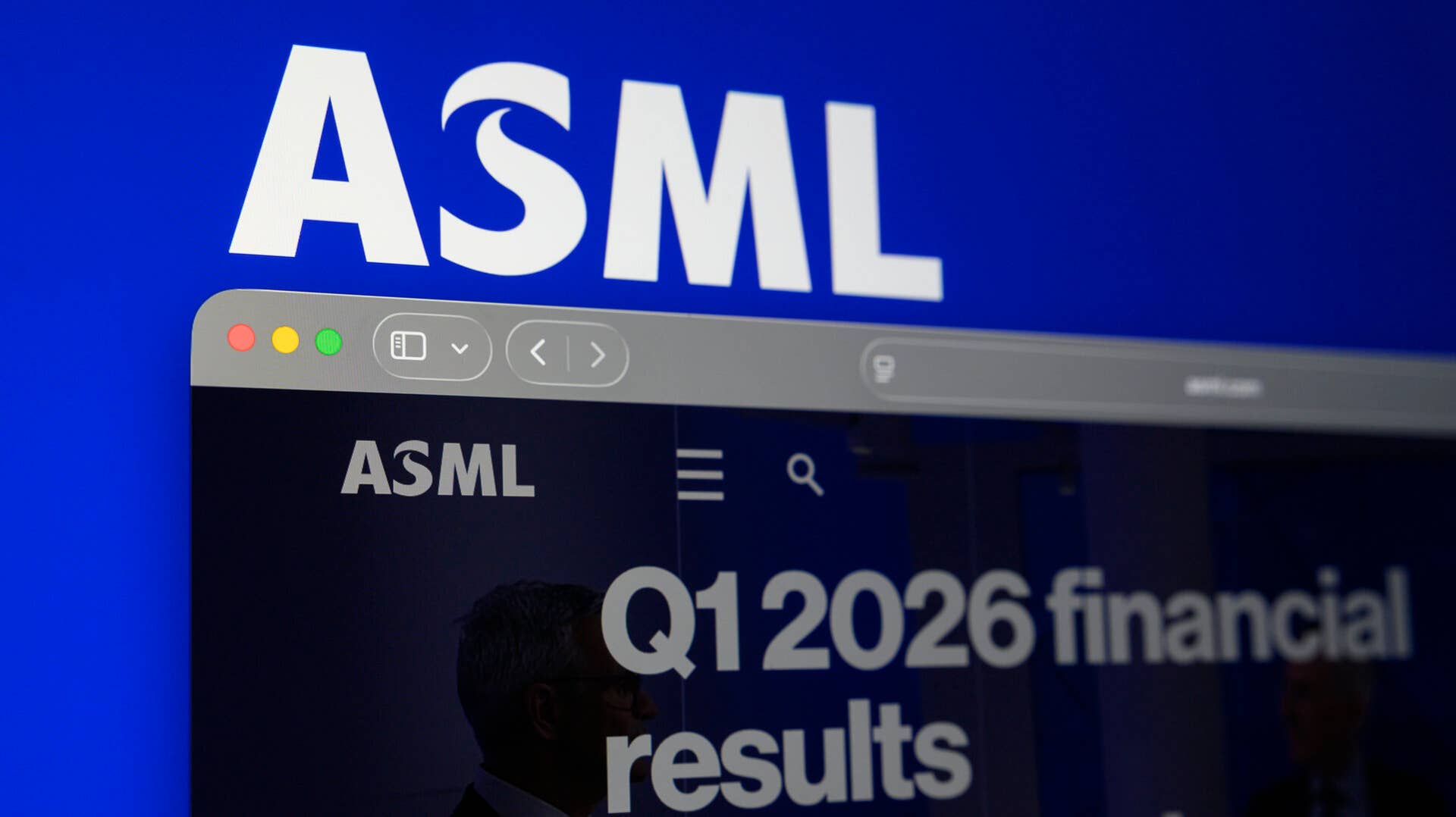
ASML’s Q1 2026 results and upgraded guidance show why Coatue moved now
ASML reported first-quarter 2026 results on April 15, according to the company’s press release:
- Total net sales of €8.8 billion, within guidance
- Gross margin of 53.0%, at the high end of guidance
- Net income of €2.8 billion
- Full-year 2026 net sales guidance raised to €36 billion to €40 billion, with gross margins of 51% to 53%
Source: ASML 2026 first-quarter results
The guidance raise is the key data point. ASML came into 2026 with a specific revenue outlook, and then widened and raised it based on customers accelerating their capacity expansion plans. CEO Christophe Fouquet addressed the demand environment directly in the earnings statement.
“Demand for chips is outpacing supply. In the past months, our customers have increased their expected short- and medium-term demand for our products,” Fouquet said. “ASML’s order intake continues to be very strong as a result.”
For Q2 2026, ASML guided for net sales of €8.4 billion to €9.0 billion with gross margins of 51% to 52%, according to the release. The next earnings report is scheduled for July 15.
The broader context that makes ASML’s monopoly even more valuable in 2026
Several concurrent developments are amplifying ASML’s strategic position beyond the near-term demand cycle.
Related: UBS drops aggressive Broadcom stock price forecast
ASML is partnering with Tata Electronics to establish India’s first commercial-scale semiconductor fabrication facility, expanding its geographic footprint into a market that the U.S. and its allies are actively subsidizing to diversify supply chains. As semiconductor manufacturing becomes a global national security priority, ASML’s role as the essential enabler of advanced chip production becomes a geopolitical asset, not just a commercial one.
The company’s stock trades at a price-to-earnings ratio of approximately 48.6 times, below the European semiconductor industry average of 58.2 times, according to Simply Wall Street. For a company with a literal monopoly on the equipment required to manufacture the world’s most advanced chips, that relative discount to peers is the kind of gap that attracts sophisticated capital.
ASML’s stock performance relative to its benchmark is striking. The AEX Index, the primary Dutch market index, has returned 9.96% over the past year. ASML has returned 98.36% over the same period, according to Yahoo Finance.
At $1,472 per share with a demand environment that CEO Fouquet described as customers accelerating capacity expansion “for 2026 and beyond,” Laffont’s $655 million bet is a statement that the AI infrastructure buildout has created a structural, multi-year demand cycle for the one company that cannot be replicated or replaced.
Related: Bank of America resets ServiceNow stock price target sharply