There was a time in the late 1950s when American Express (AXP) was a house divided.
At issue was whether the financial giant should embrace a new product, with one faction defending the company’s traditional travelers’ checks business and another pushing aggressively into the future.
One of the dissenters told then-president Ralph T. Reed in a group letter that he “cannot develop any enthusiasm for credit cards in general.”
Yes, that’s right, the cards that roughly 67 million people around the world carry today almost never happened.
The company had discussed launching a travel charge card as early as 1946, but it did not seriously pursue the idea until the Diners Club introduced its card in March 1950.
Still, the idea of a company known for travelers’ checks introducing a charge card did not sit well with some of American Express’ top executives.
But another executive called credit cards “a growth business,” saying “the sooner we go into it, the better.”
Well, we all know who won that argument.
Here’s how Amex became the international credit card powerhouse it is today.
Amex: The early years
At the end of 1957, Reed announced that American Express would enter the charge card business, and public interest was so widespread that 250,000 cards were issued prior to the official Oct. 1, 1958, launch date.
The first American Express cards were made of paper, with the account number and card member’s name typed on the front. But in 1959, American Express became the first company to issue embossed plastic cards.
Related: History of Amazon: From garage startup to tech titan
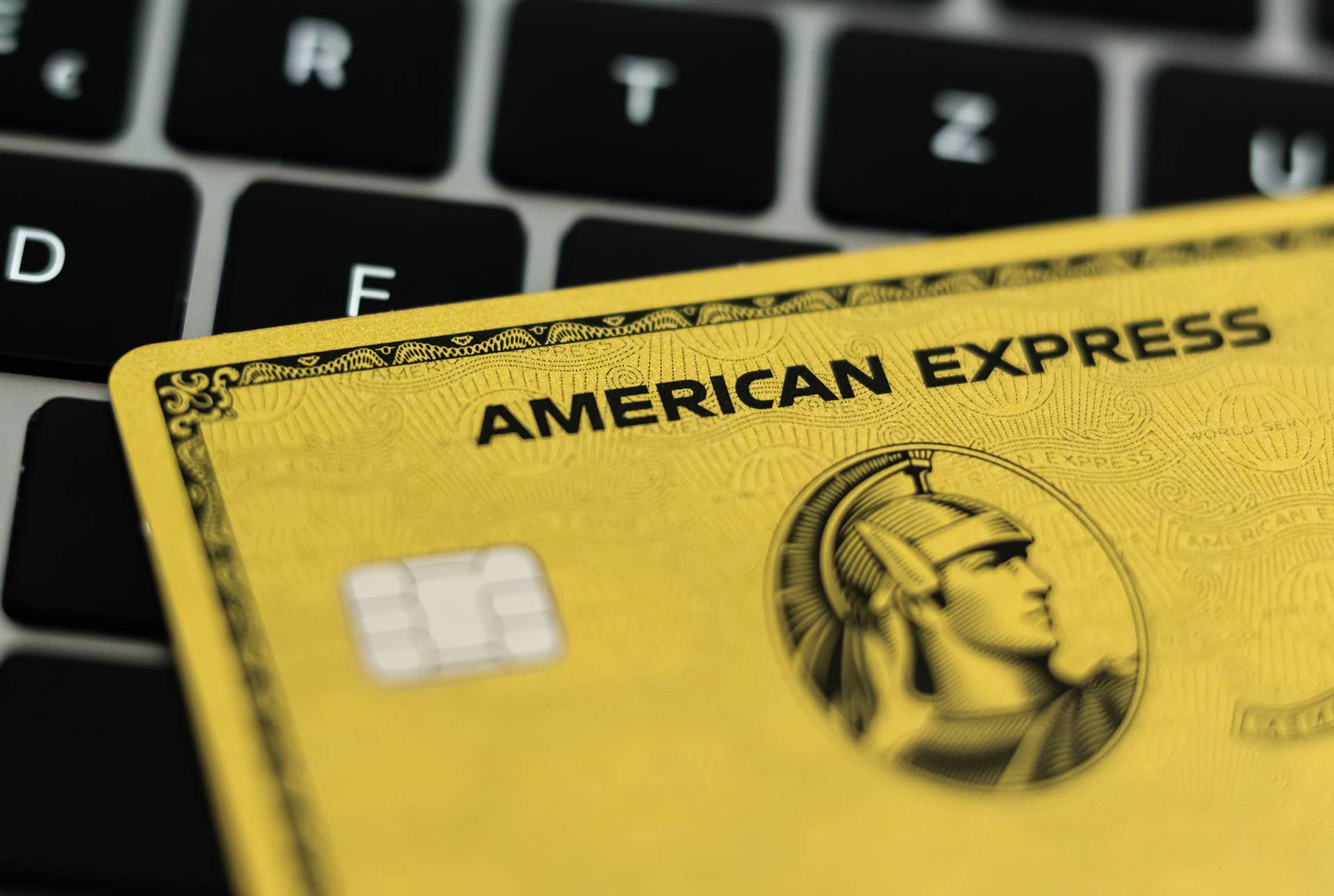
The company introduced the Gold Card for “big-spending members” in 1966. This was followed by the “ultra-exclusive” Platinum Card in 1984 and the Optima card in 1987.
As of 2025, cardholders charged $1.67 trillion across millions of active accounts.
The introduction of charge cards was a pivotal moment for American Express, which was founded on March 18, 1850, in Buffalo, as a freight forwarding company by Henry Wells, William G. Fargo, and John Warren Butterfield.
Another turning point came in the late 1880s, when then-president J. C. Fargo became seriously miffed during a trip to Europe after he had trouble obtaining cash with traditional letters of credit outside major cities.
Upon returning home, Fargo directed Marcellus Berry, a mid-level manager, to devise a product that would improve upon the letter of credit.
American Express had already made a major move into financial services in 1882 when the company introduced money orders to compete with the U.S. Post Office.
Berry came up with travelers’ cheques, which allowed people to make purchases or exchange them for local currency.
Travelers’ cheques established American Express as a truly international company, and by 1913, sales had reached $32 million.
Some 84 years later, actor Karl Malden introduced the iconic slogan, “Don’t leave home without them,” to promote American Express travelers’ cheques. The tagline was later adapted into “Don’t leave home without it” for the company’s charge cards.
After many years of service, American Express discontinued selling and issuing new Travelers’ Cheques at the end of 2020.
Moving beyond travel
At the onset of World War I, American Express in Europe was among the few companies to honor letters of credit held by U.S. citizens stranded on the continent, even as other financial institutions refused to help them.
The company was appointed by the British government as its official agent at the beginning of the conflict in 1914 to deliver letters, money, and relief parcels to British prisoners of war.
Related: History of IBM: Company timeline, milestones & facts
In 1915, American Express expanded from financial services into global tourism by establishing its travel division and opening its first travel agency.
Over the following decades, American Express expanded beyond travel services into a global payments and financial-services powerhouse.
In the 1980s, American Express expanded into brokerage and investment banking through acquisitions, including Shearson, as part of a broader push into financial services.
Around 2010, the company began applying machine learning to fraud detection and risk management, gradually embedding data-driven automation into its core risk systems over the following years.
In April 2025, American Express said it was exploring more than 70 generative AI use cases across the organization. In addition, the company said it was investing in firms evolving the broader generative AI ecosystem through Amex Ventures, the company’s venture capital investment arm.
American Express stock: IPO, dividends & stock splits
American Express completed its initial public offering and was first listed on the New York Stock Exchange in 1977.
The company has undergone four stock splits since its IPO and pays dividends quarterly.
In 1982, American Express was added to the Dow Jones Industrial Average, representing the financial services sector and replacing Johns-Manville Corp.
American Express, which has a global workforce of roughly 76,800 employees, reported record full-year 2025 revenue of $72.2 billion, up 10% from the previous year.
Net income totaled $10.8 billion, or $15.38 per share, representing a 15% year-over-year increase.

American Express CEO Stephen Squeri
Stephen Squeri, who joined the company in 1985, became chairman and CEO of American Express in 2018, succeeding Kenneth Chenault. He has focused on driving growth through technology, premium services, and attracting millennial and Gen Z customers.
“Millennial and Gen Z spending growth continues to be robust and, globally, over 70% of new accounts are on fee-paying products,” Squeri told analysts during the company’s first-quarter earnings call.
“International remained our fastest-growing segment, with billings up double digits for the twentieth consecutive quarter on an FX-adjusted basis.”
Buffett: Amex is ‘a fantastic story’
Legendary investor Warren Buffett, chairman of Berkshire Hathaway, once said that “the most important thing about American Express is the brand and the customers that aspire to be associated with the brand.”
The “Oracle of Omaha” noted that American Express entered the charge card sector much later than Diners Club, “but they came to dominate the luxury end of the credit card business.”
“It’s a fantastic story, and I’m glad we own 18% of it,” Buffett said.
Related: History of Caterpillar: Company timeline & facts
Wall Street analysts are generally bullish to cautiously optimistic on American Express, holding a consensus “Moderate Buy” to “Hold” rating across major brokerages.
While analysts continue to praise American Express’ affluent customer base and strong profitability, some caution that the stock’s premium valuation leaves little room for error.
A timeline of American Express’ milestones
March 18, 1850: American Express is founded in Buffalo, NY, as an express mail and freight-forwarding business.
July 7, 1891: The company officially receives copyrights for the “travelers’ cheque”.
Oct.10, 1915: Amex announces the launch of its travel department, which offers such services as selling rail and steamship tickets and outlining tours.
Oct. 1, 1958: Amex launches its first credit card.
1966: The gold card is introduced.
Related: History of Walmart: Company timeline & facts
May 18, 1977: American Express officially listed its shares on the New York Stock Exchange.
April 20, 1981: Amex announces its acquisition of Sanford I. Weill’s Shearson Loeb Rhoades.
Aug. 30, 1982: American Express joins the Dow Jones Industrial Average.
1984: The platinum card is introduced.
1987: The Optima card is introduced.
1999: The Centurion Card, often referred to as the “black card” is introduced.
Feb. 1, 2018: Stephen J. Squeri becomes chairman and CEO of American Express.
Dec. 31, 2020: Sales of new travelers’ cheques are discontinued.
Jan. 30, 2026: American Express reported record full-year 2025 revenue of $72.2 billion.
Related: Home Depot over the years: A complete history of America’s biggest hardware store