Federal Reserve Chairman Kevin Warsh is stepping into the heart of the artificial intelligence universe on Nov. 16 while hosting a high-stakes Fed conference in Silicon Valley to examine whether generative AI will spark unprecedented economic productivity or trigger widespread financial instability and job disruption.
The forum co-sponsored by the San Francisco Fed is top-heavy with academic and industry gurus including MIT’s Dan Huttenlocher and technology visionary Marc Andreessen.
But over on the other coast, there’s drama brewing.
The Nov. 16 Silicon Valley hootenanny hits just 24 hours before a major Wall Street earnings catalyst: Nvidia Corp. reports its quarterly financial results after the bell on Nov. 17.
Pass the popcorn.
Warsh’s AI forum first of its kind in Fed history
The public forum serves as the premier milestone for one of the five independent task forces that Warsh established shortly after taking the helm of the central bank in May 2026.
Designed to institute Warsh’s promised sweeping “regime change’’ in monetary policy, the initiative aims to reconcile the Fed’s dual congressional mandate of price stability and maximum employment with the rapid rise of general-purpose technologies.
The real story is that Warsh is trying to understand how artificial intelligence could fundamentally change the economic assumptions behind U.S. monetary policy.
However, the Nov. 16 gathering comes at a turbulent crossroads for Wall Street.
While tech investments have propped up U.S. growth and consumer spending throughout the year, the frenetic infrastructure buildout is colliding with sticky inflation, ongoing trade and tariff pressures, energy shocks from the eight-month Iran War and a shifting political and populist landscape following the Democrats’ recent midterm sweep.
For the Fed, the challenge is determining whether AI’s productivity gains will arrive quickly enough to offset the inflationary costs of building the infrastructure and the potential disruption to the American workforce.
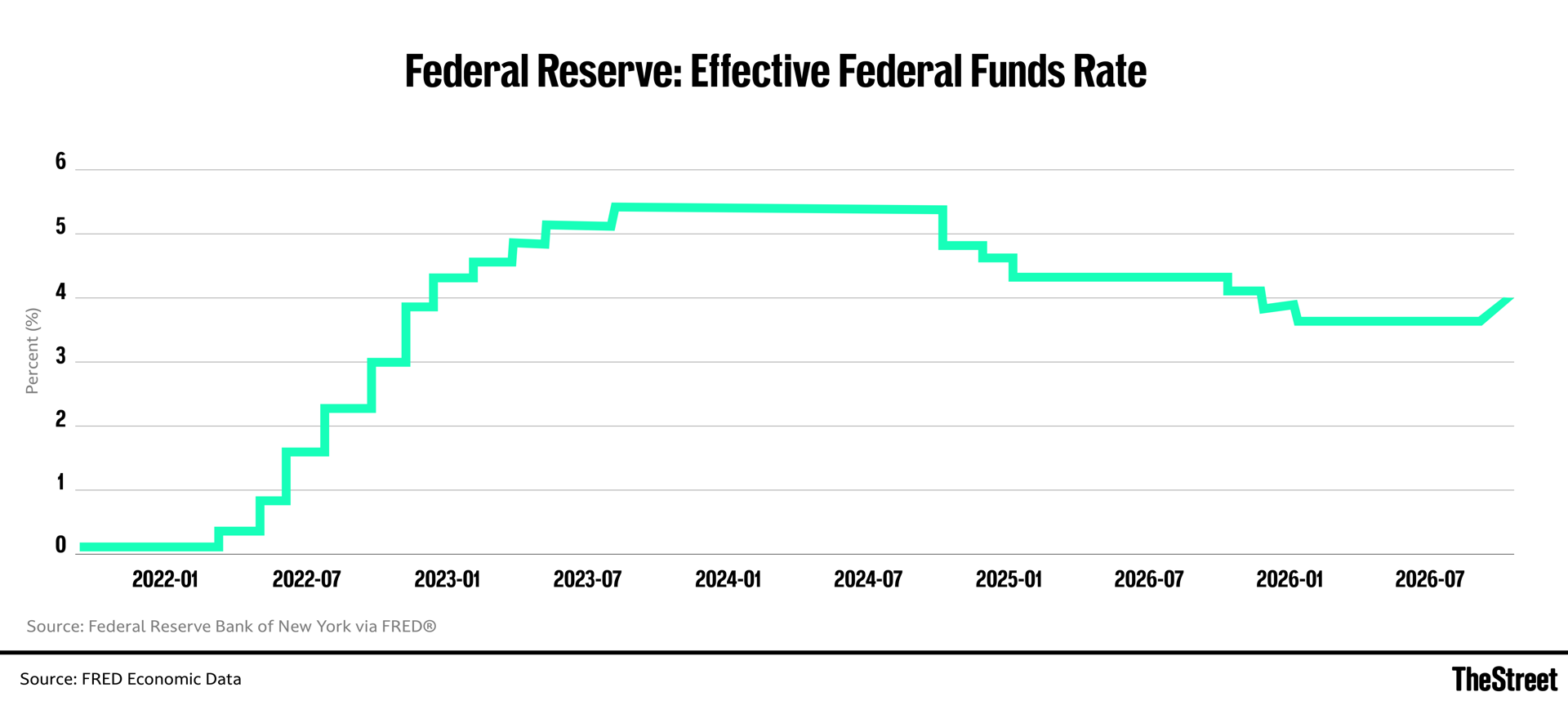
TheStreet
Fed AI task force precedes Nvidia earnings
Analysts note that Nvidia, which has faced recent, ahem, market corrections following prior volatility, represents the final “Magnificent Seven’ tech bellwether to report this cycle.
Rather than trading as a unified block, Wall Street is experiencing sharp stock-by-stock bifurcation.
Investors are aggressively hedging positions across key semiconductor and AI infrastructure providers including Advanced Micro Devices, Dell Technologies and Broadcom ahead of the Nov. 17 Nvidia print.
“You have this investment that is truly historic,’’ Richmond Fed President Tom Barkin said at a recent South Carolina event. “You are taking railroad-plus-interstate-highways-historic. If that historic investment does not pay off and people scale back, you worry what is going to happen.”
Weighing AI productivity against Fed economic risks
Warsh repeatedly has said that the Fed is committed to its dual congressional mandate: use interest rates and balance-sheet policy to keep prices stable and the labor market at full employment.
That’s tricky.
- Lower interest rates support hiring but can fuel inflation. This risks fueling further inflation, potentially leading to an inflationary spiral.
- Higher rates cool prices but can weaken the job market. This increases the cost of borrowing and further stifles economic activity.
Now, comes the AI complicating factors.
- AI’s untested productivity promise: Lower production costs could eventually help restrain inflation.
- AI’s exploding investment costs: Data centers, electricity and semiconductor infrastructure could add to U.S. inflationary pressures.
- AI’s employment risks: Automation could disrupt hiring and wages, complicating the Fed’s maximum-employment mandate.
Fed’s own research displays vast array of AI impacts
The central bank’s independent research highlights a complex balancing act.
An Atlanta Fed working paper showed productivity improvements differing significantly across sectors, with larger firms anticipating AI-driven workforce reductions and smaller enterprises projecting modest employment gains.
Meanwhile, a Minneapolis Fed analysis characterized current macroeconomic effects as moderate and uneven.
Related: Jumbo Fed rate-hike warning sends shock waves after inflation surprise
And despite AI’s touted disinflationary potential, some Fed officials are increasingly alarmed by how the heavy energy and data-center demands are driving up prices.
Fed Governor Michael Barr recently warned that the U.S. economy must prepare for potential short-term labor disruptions depending on the deployment speed and accessibility of emerging technologies.
“The concentration of market power may help drive a widening of inequality that would strain the American Dream,’’ Barr said Nov. 12. “In my judgment, now is the time for society to begin to consider how to address these potential challenges—while AI adoption is in its relatively early stages—so we can realize the long-term benefits for society.”
Warsh’s real reasons for the AI task force focuses on monetary policymaking
For Warsh, the stakes extend well beyond Silicon Valley. If AI delivers the productivity its proponents promise, it could reshape the American economy and the Fed’s inflation outlook.
If the investment boom falters or the technology accelerates job losses, the consequences could be just as significant for workers, businesses and investors.
As I reported, Warsh said the timelines for recommendations will depend on the individual task forces and the urgency of the answers needed. He said he expected the work to be finalized by the end of the year.
Note: the task forces’ missions all reflect areas of Fed operations that Warsh has been criticizing since resigning from the Fed Board of Governors in 2011.
Related: Fed rate hike may not be ‘one and done’ if AI boom fuels inflation