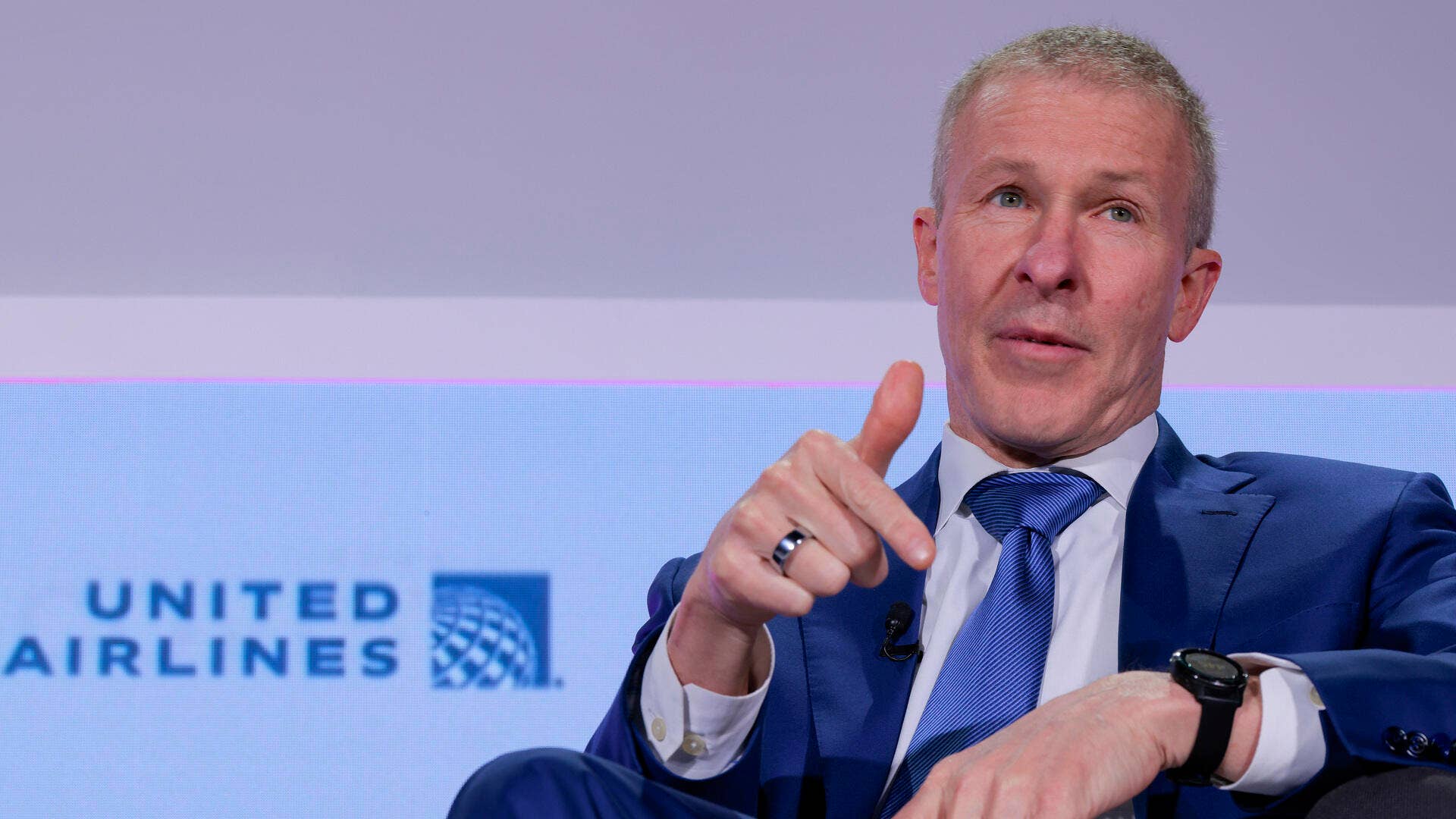
There’s an old saying in business: never waste a crisis. United Airlines CEO Scott Kirby, it seems, has that line memorized.
The 95-year-old and Chicago-based United Airlines (UAL) chief executive was in Rio de Janeiro over the weekend, which ended on June 7, speaking on the sidelines of the International Air Transport Association’s annual meeting, according to CNBC.
The topic was fuel costs, competition, and a failed merger attempt with American Airlines (AAL). But buried inside all of that was something more interesting and a quiet signal that United might be about to go shopping.
Kirby didn’t announce anything dramatic. He didn’t have to. Sometimes the most revealing thing a CEO says is what he’s still willing to consider, and what he’s watching closely before he moves.
United Airlines CEO Kirby sees asset deals ahead as fuel squeeze hits weaker carriers
Fuel prices are hammering the airline industry right now, and not everyone is absorbing the blow equally.
Kirby told Reuters that United remains open to acquiring airport slots, gates, or other airline assets if rising fuel costs push weaker rivals into financial distress. “Consolidation is a low probability,” Kirby said — but the door for targeted asset purchases is wide open.
That distinction matters. A full merger is a years-long regulatory fight. Buying gates or slots from a struggling competitor is faster, cheaper, and potentially just as valuable in the right market.
Related: United Airlines will fly to Venezuela after eight years
Kirby framed the current environment as one that separates airlines with genuine brand loyalty from those still competing primarily on price.
Kirby told Reuters:
Customers care about the technology, the service, the reliability, the product. They want a great experience. They don’t just want a seat.”
He pointed to United and Delta Air Lines (DAL) as carriers that have invested in their brands and are now pulling ahead, while others are scrambling.
Why the American Airlines merger fell apart, and what Kirby says it would have taken
The American Airlines overture is worth understanding because it explains a lot about how Kirby thinks.
As reported by Bloomberg, Kirby confirmed in April that he approached American about a merger, an idea he had raised with President Donald Trump in February. American CEO Robert Isom publicly rejected it as anti-competitive and bad for customers, according to CNBC.
More Airlines:
- Another airline files for bankruptcy, cancels flights
- JetBlue makes a boarding change some may like
- Another airline shuts down for summer, cancels all flights
Kirby’s position is that the deal made sense — for consumers, for labor, for shareholders. But he acknowledged that a transaction of that size cannot be closed without management support from both sides.
“You can’t have the management team on record publicly saying it was anti-competitive,” Kirby told Reuters.
Related: American Airlines faces new problem after nationwide aviation meltdown
Asked whether United Airlines had given up on American entirely, Kirby repeatedly returned to the same phrase: any deal would require “a willing partner.” He did not close the door. He described the conditions under which it could reopen.
He also denied that United had discussed giving the U.S. government a golden share as part of any merger structure — a detail that had circulated in earlier reporting.
United Airlines Q1 2026 results show resilience, but fuel costs left a mark
The financial background here is important.
United Airlines reported first-quarter 2026 results on April 21, and the headline numbers were solid. Key highlights included:
- Total operating revenue of $14.6 billion, up 10.6% year-over-year (YoY)
- Net income of $0.7 billion
- Free cash flow of $2.9 billion
- Ending available liquidity of $17.2 billion
Source: United Airlines First-Quarter 2026 Results
But fuel was a drag. United paid an average of $2.78 per gallon in Q1 and has already trimmed its capacity plan for the rest of 2026 by roughly five percentage points, according to the company statement.
The carrier now expects third- and fourth-quarter capacity to be flat to up approximately 2% year-over-year.
Also Read: United Airlines Holdings Inc. Latest News
“These are results our employees can be proud of, and they show the resilience of our long-term strategy, even in the face of escalating fuel expense,” Kirby said in the company statement.
My review of the data suggests United is navigating this well relative to peers. The $17.2 billion liquidity cushion gives management room to stay patient and opportunistic.
UAL stock trails the S&P 500 this year, but the longer view tells a different story
Year-to-date through June 5, UAL is down about 5.45% compared to the S&P 500‘s 7.86% gain, according to Yahoo Finance.
That negative reading reflects a rough stretch driven by elevated fuel costs and lingering uncertainty from broader geopolitical tensions, including volatility tied to the Iran war. But zoom out and the picture changes.
Related: United Airlines CEO makes stark warning about ticket prices
Over one year, UAL is up about 31.59%, compared to roughly 24.32% for the S&P 500. Over three years, UAL has gained approximately 119%. That’s nearly double the index’s roughly 73% return over the same period, according to Yahoo Finance.
I looked at the numbers and arrived at this fair conclusion. United has outperformed the broader market convincingly over any horizon longer than 12 months. The near-term noise around fuel is real, but it doesn’t erase that track record.
According to Reuters, Kirby said United expects higher fares to help it fully recover the fuel cost hit later this year. Demand, he noted, has remained strong even as ticket prices climb.
What United Airlines’ opportunistic posture means for you watching UAL
Kirby is running a carrier with $17 billion in liquidity, record passenger volumes, and an improving brand in an industry where some competitors are quietly running out of runway.
He dismissed fuel hedging as a long-term fix and showed no interest in following Delta’s move to buy a refinery. His strategy is simpler: stay lean, stay loyal, and be ready when weaker hands fold.
Also Read: American Airlines Group Inc. Latest News
Whether that means buying JetBlue’s (JBLU) gates, scooping up slots at a congested hub, or waiting for a more willing merger partner, Kirby is clearly playing a longer game than the current fuel headlines suggest.
For you, the setup is short-term pressure from fuel costs, but a management team that has consistently turned industry turbulence into long-term advantage. The opportunity Kirby is signaling may take months to materialize, but he’s already told you he sees it coming.
Related: American Airlines stock sinks after United merger talk sputters