Setting a record sounds like a positive, but not every record counts as an accomplishment.
You don’t want to be the person who sets the record for surviving the most snake bites, although that’s better than coming in second and dying after the record-breaker.
In addition, you can set a record for the fastest Olympic marathon, while someone else wins the dubious distinction of having the slowest time ever recorded. Both make the record book, but only one is likely to make the runner’s resume.
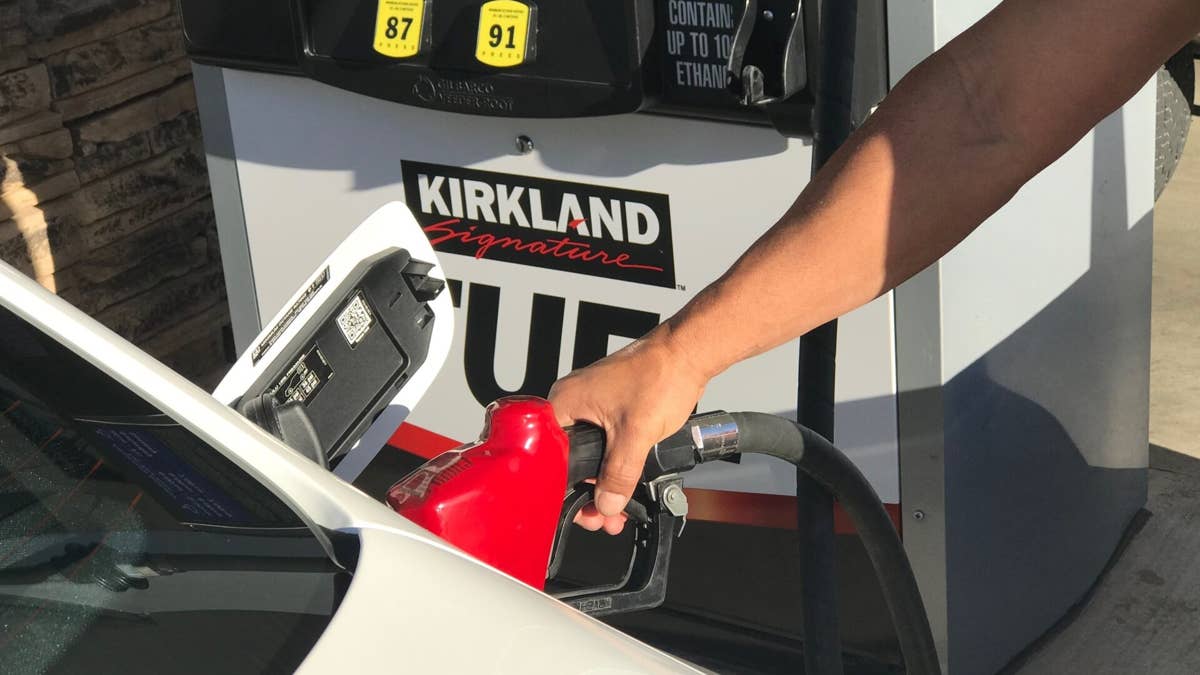
In Costco‘s case, the company has set a record for gas sales by volume. That’s an achievement for the warehouse club, but it’s decidedly mixed news for consumers.
Costco’s gas sales show a bigger problem
“Against the backdrop of ongoing macro uncertainty, our focus is providing quality goods and services at the lowest possible price continues to resonate strongly with our members. Nowhere has this been more apparent in the third quarter than our gas business,” Costco CEO Ron Vachris shared during his company’s third-quarter earnings call.
That concern shows up directly in how drivers are changing their behavior when prices stay elevated.
“The result was record-breaking volumes. “All three four-week fiscal periods of the quarter set successive all-time company volume sales records with the final five weeks of the quarter becoming our top five volume weeks ever,” he added.
Costco’s gas sales have climbed, while demand has fallen.
“Gasoline demand decreased last week from 9.10 million b/d to 8.81 million. Total domestic gasoline supply decreased from 222.3 million barrels to 219.8 million. Gasoline production decreased last week, averaging 9.6 million barrels per day,” according to late-May data from the Energy Information Administration (EIA).
Shutterstock
More Costco members opt for gas
Rising gas prices and increased consumer concern about the economy drive members to Costco’s gas stations.
“The high consumer price sensitivity, which fueled these record volumes, also drove many members to use our gas stations for the very first time in the third quarter. We believe this will drive even greater loyalty with these members in the future as members who use our gas stations typically spend more with us in the warehouse,” Vachris said.
Getting members to fill up at its gas stations is a way for the chain to entice customers to visit.
“Gas isn’t a profit center for the clubs. It’s a high-octane magnet. Think about it: If you’re already sitting in a 15-minute line to save $0.30 a gallon, you’ve already committed the time. You’re in the ‘Costco headspace.’ Once you finish at the pump, your brain says, ‘I’m already here, I might as well grab the $5 chicken and a 30-pack of paper towels,'” TheStreet retail advisor and RTMNexus CEO Dominick Miserandino told TheStreet.
Rising gas sales are good for Costco, a very positive record for the chain, but it’s a warning sign for the broader economy. Rising gas prices have forced many Americans to cut back.
Americans are cutting back due to gas prices
The national average for a gallon of regular gasoline is down 18 cents since last week to $4.24. This marks the second straight week of decline, according to June 4 AAA data.
- June 4 National Average: $4.241
- One Week Ago: $4.426
- One Month Ago: $4.457
- One Year Ago: $3.144
Source: AAA
Prices have eased but remain elevated, and consumer behavior is shifting.
“Two in three Americans (63% up from 58%) say they are driving less overall as a result. Fewer (16% down from 21%) say they are driving farther to buy cheaper gas (likely because there is no cheaper gas),” according to April Ipsos data.
Almost a third of Americans say they’ve made changes to their typical spending or savings habits as a result of higher gas prices, and another 35% say they will do so if prices remain high, according to Lending Tree, which surveyed 2,060 consumers, including 1,799 who operate a gas-powered vehicle, about the impact of rising gas prices on their personal finances.
Bigger budget cuts may be coming to American homes if gas prices stay high.
“Sixty-two percent of Americans with a gas-powered vehicle agree that if gas prices remain high for a month or longer, it’ll have a significant impact on their personal finances. That includes 28% who strongly agree, according to LendingTree.
That level of concern is consistent with how economists describe the impact of higher fuel costs on household budgets.
“For most consumers, you can’t avoid gasoline price increases. It functions like a tax, very similar to a tariff,” Luke Tilley, Wilmington Trust chief economist and the Philadelphia Federal Reserve‘s former economic adviser, told Wealth Advisor.