On June 25, Apple (AAPL) raised prices on iPads and MacBooks due to skyrocketing memory chip costs, according to Reuters. The stock dipped that same day, closing 6% lower and losing more than $260 billion in market cap.
The price increases hit Apple’s MacBook Neo, raising its starting price to $699 from $599 just a few months after launch. The whole point of the MacBook Neo was to go after the cheap laptop market.
The stock closed 3.14% higher the next day, recovering slightly. The seriousness of the situation was best described by Apple CEO Tim Cook in his interview with the Wall Street Journal.
Cook said that he has never seen a commodity price swing like the one happening to memory chips.
“This is a hundred-year flood,” he said. “I’ve never seen anything like it in any area in over 40 years.”
The situation’s difficulty has prompted Apple to make a risky move.
Apple is lobbying the Trump administration for clearance to buy memory chips from ChangXin Memory Technologies (CXMT), reported the Financial Times.
CXMT is a Chinese company on the Pentagon’s blacklist because of alleged ties to the People’s Liberation Army.
The AI gold rush is a problem for the rest of the tech industry
Apple trying to partner with a company on the Pentagon’s blacklist is a massive political and reputational risk, especially considering the administration’s America First strategy. This is why this move sends a clear signal of how dire the situation is, and it doesn’t affect only Apple.
Microsoft (MSFT) announced on June 25 that it is raising prices of XBOX consoles starting Aug. 1, 2026. The price will increase by $100 for 512 GB models and $150 for 1 TB models. In addition to these price increases, the company is phasing out the 2 TB model.
On top of price changes to the current generation of XBOX consoles, Microsoft is already facing a problem with the next generation, codenamed Helix, currently in the works.
Matthew Ball, chief strategy officer of XBOX, talked about this in an interview with The Game Business Live.
“We are working very hard to rethink everything that we can about Helix, which is a console we are committed to shipping, and we are very cognisant of the ways in which we need to change as a company to make sure it is affordable, to make sure that it’s flexible.”
If Microsoft and Apple have run into problems pricing their products due to memory price hikes, it is easy to see that smaller companies face even bigger problems.
So how did we get here?
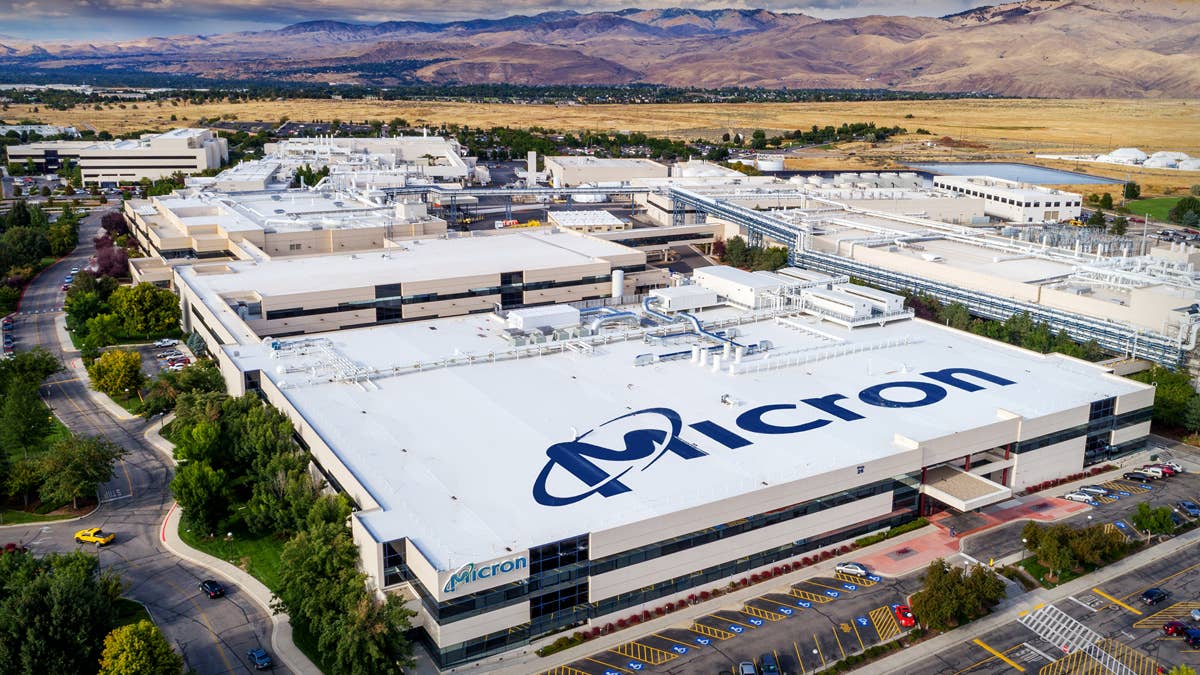
Shutterstock
Memory cartel’s pricing power
The data center buildout has caused hyperscalers to confirm massive capital expenditure plans for this year. Data centers need a special kind of memory called high bandwidth memory (HBM).
HBM is actually made like regular DRAM memory, just layered differently. This allowed memory manufacturers to switch their production from regular DRAM to HBM, resulting in fewer memory chips available to non-data-center customers.
The three biggest memory manufacturers are Samsung, SK Hynix, and Micron (MU).
In a way, they are acting like a cartel by practicing what Bank of America calls “increasing supply-side discipline.” This means they can price their HBM at extreme levels and achieve high profit margins.
Micron reported its fiscal 2026 third-quarter earnings, revealing 345.8% year-over-year revenue growth and a GAAP gross margin of 84.6%. The company’s outlook is even higher, with GAAP gross margin expected to reach 86% in the next quarter.
More tech stocks:
- Bank of America resets Intel stock price target
- Morgan Stanley resets Nvidia stock forecast after key event
- Bank of America resets Broadcom stock price target after earnings
The best part for Micron’s investors is that the company has revealed it has completed 16 strategic customer agreements (SCAs) with customers across the data center, consumer, and auto market segments.
These are contracts that can’t be canceled, and even if companies decide they no longer need their orders, they have to pay (though not at full price). The length of these contracts is three to five years.
Knowing this makes it even more obvious why Apple wants to work with CXMT. If Apple gets the green light for that partnership, it will not have a huge impact on Micron in the near term, as CXMT doesn’t currently have the capabilities to produce HBM of the same quality.
While SCAs and high profit margins are great for Micron, they are inadvertently putting pressure on the AI bubble.
The headwind for the AI bubble that might just pop it
By refocusing their business mainly on data centers and raising gross margins to software-level profitability, the memory cartel is creating a massive macroeconomic side effect.
The AI bubble is already facing several headwinds.
Tech writer and prominent AI skeptic Ed Zitron published leaked OpenAI’s audited financial statements, which were verified by the Financial Times. This revealed an incredibly impressive increase in OpenAI’s net loss, from $5.09 billion in 2024 to $38.53 billion in 2025.
SpaceX had its IPO and, after initial gains, lost most of them, up 2.15% since the IPO at the time of writing, Sunday afternoon, June 28.
Many people expected it to become a typical Elon Muskmeme stock, but this quick retreat signaled that tech mega-cap growth stocks aren’t that hot.
OpenAI is considering postponing its IPO until 2027, The New York Times reported.
Seeing their financials leaked and then SpaceX having a not-so-glorious IPO seems to have raised the bar for the company on what it needed to do to achieve a good IPO.
On top of these problems, the era of “tokenmaxxing” has ended. Or, to put it simply, many companies are capping their use of AI because it is too expensive.
As the only companies in the AI space that make a clear profit are hardware companies, and software companies have struggled to show any, the pressure from skyrocketing memory prices presents a sobering headwind for the industry.
Does it make any sense to continue with high capex plans?
Related: Wall Street veteran warns of epic stock market crash