The year 2026 wasn’t supposed to be like this for OpenAI.
The company was finally set to go public after years of waiting amid an AI boom that was only going to accelerate as the technology matured, placing the most popular AI company at the forefront of a global revolution.
But it hasn’t quite happened that way.
OpenAI reportedly delayed its initial public offering to 2027 due to concerns about dwindling market enthusiasm and increased competition from rivals like Anthropic, whose Claude AI assistant has been gaining popularity.
But perhaps the most concerning development has been the exodus of C-suite-level talent from the company in recent months.
In April, OpenAI saw three top executives leave in one day, Business Insider reported. Kevin Weil, who headed the company’s scientific research efforts after serving as chief product officer; Bill Peebles, who headed its now-defunct video app Sora; and Srinivas Narayanan, its chief technology officer for business-to-business applications, all said goodbye.
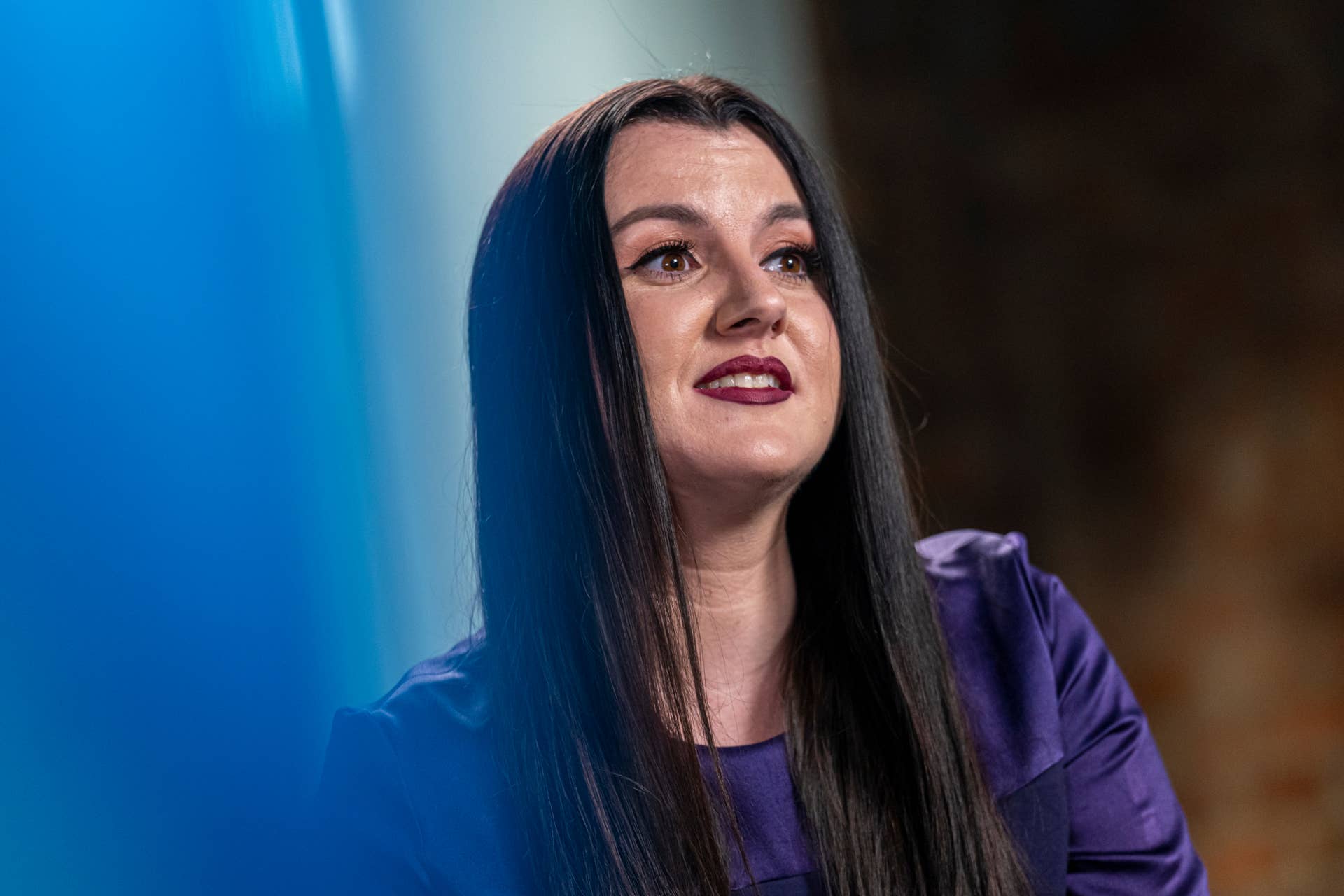
This week, the company lost another executive when Fidji Simo, its number-two executive, told OpenAI she was also leaving.
OpenAI loses top lieutenant after extended medical leave
In an internal note to staff, viewed by The Wall Street Journal, Simo told colleagues she is leaving OpenAI.
According to the note, Simo, who had been away from her full-time role due to an extended medical leave, is stepping away because her medical condition has worsened and her road to recovery will be much longer than originally anticipated.
Simo has reportedly been battling a chronic neuroimmune condition called Postural Orthostatic Tachycardia Syndrome since 2019.
She will continue as a part-time adviser to the company, but she is officially stepping down as CEO Sam Altman‘s right hand. She announced that she was taking medical leave in April after telling staff that her condition had worsened.
Simo joined the company last August to take a role that would free up Sam Altman from the day-to-day minutiae of running the nearly trillion-dollar company. Her duties included overseeing the chief financial officer and chief revenue officer, and leading OpenAI’s product and business divisions.
Her departure in April “created a leadership vacuum at the time, raising questions among investors and employees about the future direction of the company,” the Journal reported.
“This has been one of the hardest decisions of my career, but my body left me no choice —my symptoms became as loud as I am stubborn,” she said in the internal note.
While her condition is clearly out of her control, the timing could not be worse for OpenAI.
Anthropic has surpassed OpenAI’s valuation for the first time as enterprise customers seem to prefer the former’s product over OpenAI’s at this early stage in the game.
OpenAI receives $520 million credit line from Bank of America
This week, Reuters reported that Bank of America has extended a $520 million credit line to OpenAI ahead of its IPO.
While this is the first time BofA has extended a loan to the company, the credit line makes the bank one of OpenAI’s largest lenders. A source told Reuters that Bank of America is eyeing advisory roles on the planned IPOs of both OpenAI and Anthropic.
OpenAI is targeting a valuation of more than $1 trillion, according to reports, though the company did not disclose the size or terms of its public debut in its confidentially filed IPO application last month.
It that report is true, OpenAI would immediately become one of the top-15 most-valuable companies in the world, right behind Berkshire Hathaway.
Anthropic also confidentially filed for a U.S. IPO last month, just weeks after it raised $65 billion in a funding round that valued the company at $965 billion.
Earlier this year, OpenAI said it raised $110 billion from technology heavy hitters including SoftBank, Amazon, and Nvidia at an $840 billion valuation.
Earlier this year, Moby reported that OpenAI generated net revenue of $13.1 billion in 2025 while incurring a net loss of $38.5 billion, though it cited Ed Zitron, the reporter who broke the news, adding the caveat that OpenAI converted from a nonprofit to a for-profit entity last year. That led to a nearly $42 billion loss, due to changes in the fair value of convertible interests and warrant liability.
In other words, all early investor IOUs that later converted into equity became debt on the books. That debt spiked, along with OpenAI’s value.
Still, OpenAI reportedly only lost $5 billion in 2024.