For decades, federal rules limited how much of America’s local television market a single company could control.
That guardrail is now gone.
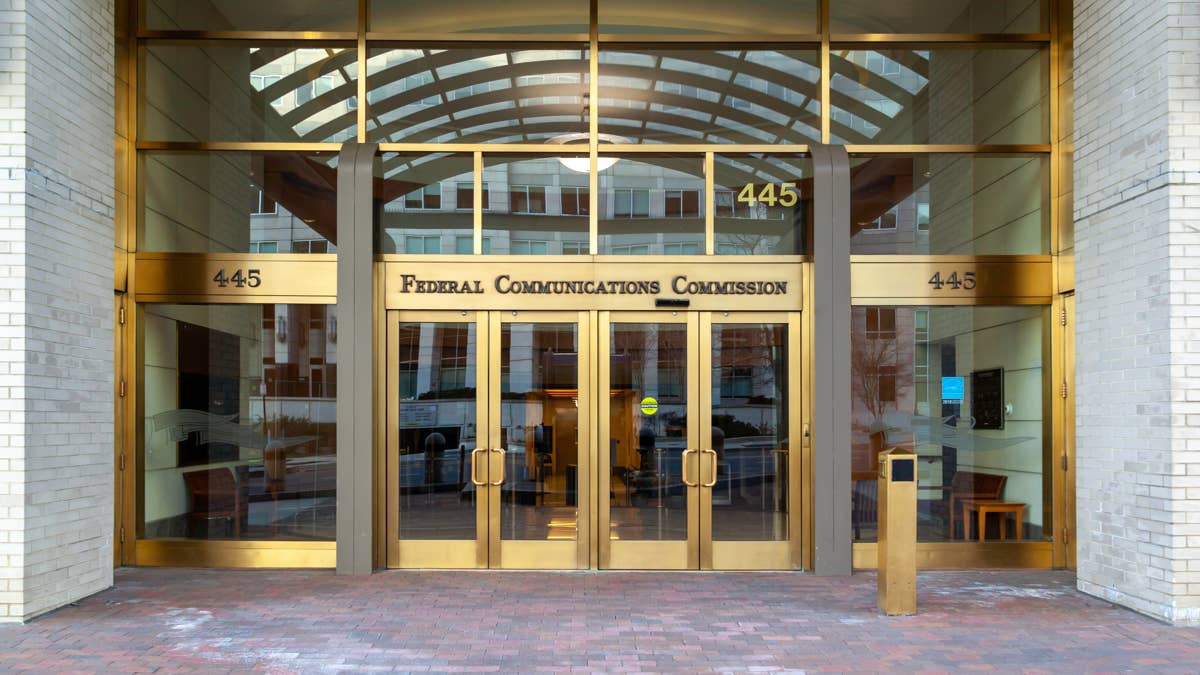
The Federal Communications Commission voted on Aug. 6 to repeal its national television ownership cap.
This effectively eliminates a rule that generally prevented a single broadcaster from owning stations that reach more than 39% of U.S. television households.
Instead, the FCC will review proposed transactions on a case-by-case basis, potentially giving the country’s largest broadcasters substantially more room to acquire local television stations.
The change comes during an already active period for local television ownership, with broadcasters including Nexstar Media Group, Gray Media, and E.W. Scripps buying, selling, and reshuffling stations.
It also marks a major departure from a system that has restricted national television ownership in some form for decades.
FCC eliminates 22-year-old television ownership limit
Congress directed the FCC to establish the current 39% threshold in 2004, after the commission had attempted a year earlier to increase the ownership limit from 35% to 45%.
The 39% threshold has remained unchanged for 22 years.
Under the old system, a proposed acquisition that pushed a broadcaster’s national reach above 39% of U.S. television households generally ran directly into the ownership restriction.
The new system removes that fixed ceiling.
Instead, the FCC said it will determine whether individual transactions serve the public interest, including by examining localism, viewpoint diversity, and competition.
Related: Trump FCC gives Tesla a leg up in critical technology race
The agency argues that the television market has changed dramatically since the rule was established.
Streaming services now reach more than 80% of U.S. adults but do not face comparable national ownership restrictions, according to the FCC.
Allowing broadcasters to grow larger, the agency said, could help them compete for advertising and investment while strengthening their negotiating position against national television networks.
The FCC described Thursday’s action as the first time it has exercised its authority to modify the rule in more than 20 years.
But there is disagreement over whether the agency has that authority at all.
Congress and FCC disagree over who can change the rule
Senate Commerce Committee Chairman Ted Cruz, R-Texas, raised that question months before the FCC’s vote.
Cruz noted during a February hearing on broadcast ownership that Congress specifically directed the FCC to establish the 39% cap in 2004 and deliberately separated the national ownership limit from other media regulations subject to regular FCC review.
“It may be the case that the FCC cannot modify the 39 percent cap because Congress set that number in statute,” Cruz said.
His concern is notable because the debate over the FCC’s authority has crossed party lines.
More Lawsuits:
- Warner Bros. Discovery sues Amazon over executive poaching
- Ozempic maker takes biggest rival to court over weight-loss drug ads
- Meta Stock Faces New Scrutiny Over AI Layoff Claims
Democratic lawmakers had raised similar objections during the regulatory fight over Nexstar’s acquisition of Tegna.
That merger also drew criticism from lawmakers, including Sen. Elizabeth Warren, over concerns surrounding media concentration, local journalism, and consumer costs, which I covered here.
The FCC takes the opposite position.
In announcing the new rule, the commission said Congress has previously directed it to alter ownership restrictions but has never removed its underlying authority under the Communications Act to regulate or change those limits.
This disagreement could become one of the most important tests of the new policy.
What the FCC change could mean for viewers
For viewers, the FCC decision does not immediately change which local stations they receive.
Instead, it changes how large the companies owning those stations may become.
Broadcasters that previously risked exceeding the 39% national threshold through an acquisition can now ask the FCC to approve the transaction under a case-by-case public-interest review.
The FCC argues that allowing broadcasters to gain scale could help them attract investment and advertising revenue and better compete with streaming platforms, which the agency says now reach more than 80% of U.S. adults.
Opponents have warned that greater consolidation could reduce the number of independent voices serving local communities.
At a Senate Commerce Committee hearing earlier this year, lawmakers framed the debate as a choice between giving broadcasters more scale to invest in local news and the risk that greater concentration could shift more control over local newsrooms to large national companies.
The change could also have implications for people working at local television stations.
Broadcasters are already restructuring their operations as the industry looks for greater efficiency.
Scripps, for example, launched a transformation plan this year targeting $125 million to $150 million in annualized EBITDA improvement through cost savings, revenue initiatives, AI and automation.
Greater consolidation could therefore affect not only who owns local stations, but potentially how television companies staff their operations.
Local TV companies were already reshaping ownership
The significance of the FCC change becomes clearer when looking at what broadcasters have already been doing.
Nexstar completed its $6.2 billion acquisition of Tegna earlier this year after receiving FCC approval despite the combined company’s reach exceeding the former national ownership limit.
TheStreet previously reported on the merger, which added 64 stations in 51 markets and would give Nexstar stations reaching roughly 80% of U.S. television households.
The deal sparked significant opposition from lawmakers and others concerned about local journalism, competition, and consumer costs.
While the acquisition closed in March, a preliminary injunction preventing Nexstar from fully integrating Tegna while the litigation continues.
But the industry’s consolidation extends well beyond Nexstar.
Gray Media has expanded its station portfolio through several transactions.
As of June, Gray operated in 117 full-power television markets collectively reaching approximately 37% of U.S. television households, just below the former 39% threshold.
That meant even before Thursday’s decision, one of the country’s major station owners had little room left to expand nationally without confronting the old rule.
Scripps shows how ownership rules shaped TV deals
E.W. Scripps provides another clear example of how FCC ownership restrictions have influenced corporate decisions.
Scripps completed the $83 million sale of Indianapolis ABC affiliate WRTV to Circle City Broadcasting in March after separately selling WFTX in Fort Myers, Florida, for $40 million.
The two transactions generated $123 million.
But Scripps also plans to use part of the proceeds to reacquire 23 ION-affiliated stations it previously divested when it acquired ION in 2021.
The company explicitly said those earlier divestitures had been required to comply with FCC ownership rules.
Scripps had expected it might need to seek waivers from the FCC to buy the stations back if those restrictions remained in effect.
That makes Scripps a particularly direct example of what the regulatory change could mean.
Stations that companies once had to sell or avoid acquiring because of ownership restrictions may now be easier to bring into larger portfolios.
Bigger broadcasters could reshape local television
The new framework could similarly give other large television owners, including Sinclair, as well as network owners with local station portfolios such as Paramount’s CBS and Fox, greater flexibility to pursue acquisitions.
That does not mean every proposed takeover will be approved.
The FCC stressed that it can still reject transactions that fail its public-interest review.
“Under a case-by-case approach, the Commission’s interests in localism, viewpoint diversity, and competition (to the extent they are implicated in a case) can be fully analyzed and vindicated in the context of a specific transaction,” said the release.
But a major structural barrier has disappeared.
For 22 years, broadcasters knew that reaching 39% of U.S. television households represented a national ownership ceiling.
Now there is no predetermined percentage that automatically stops them.
What remains to be seen is how quickly broadcasters take advantage of their new room to grow.
Related: Kroger makes a pricing move Costco and Walmart will love