Let me tell you something about selling a position you’ve held for some time. It’s some strange feeling, trust me. I’ve been there.
Not necessarily in the markets. Maybe it’s a house you once thought you’d never leave. Or maybe it’s an old car that carried you through thousands of miles and gave you golden memories.
The longer you’ve owned it, the harder it becomes to let go. Especially when you still believe in what you’re selling.
Warren Buffett built one of the most famous positions in American banking over more than a decade.
His stake in Bank of America (BAC) became a signature holding, a bet on the recovery of American finance and the durability of consumer banking through multiple cycles. Now, the latest 13F filing from Berkshire Hathaway shows that the position is shrinking.
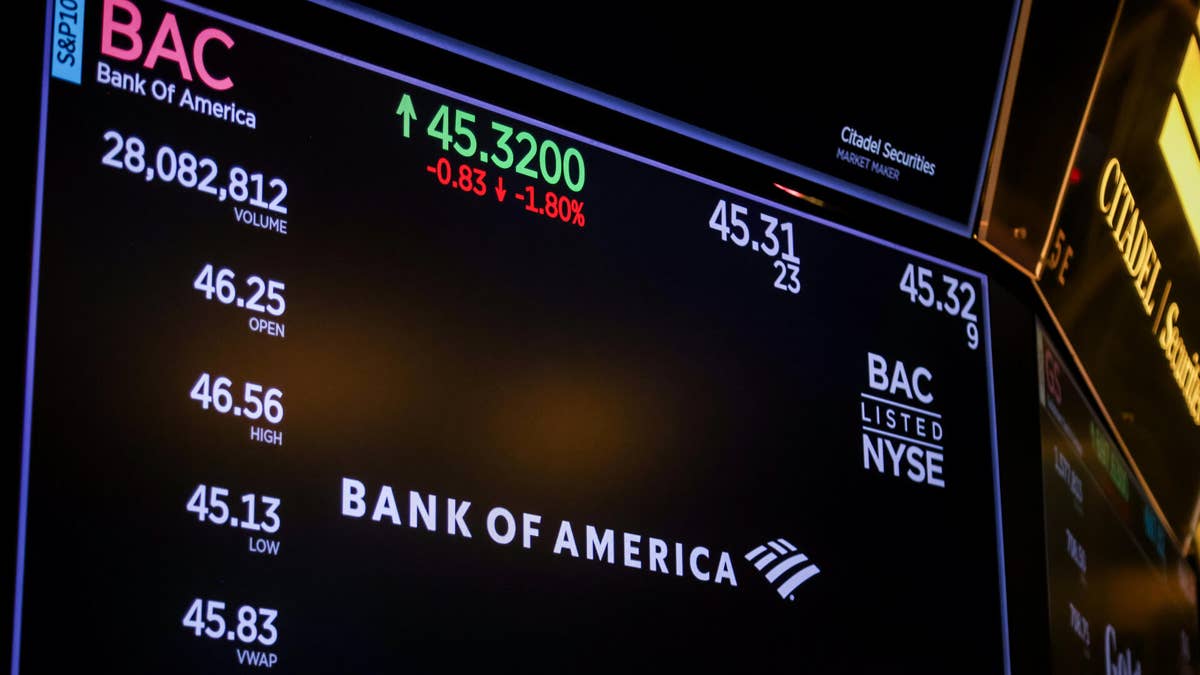
Berkshire sold approximately 30.2 million shares of Bank of America during Q2 2026, for an estimated $1.6 billion, according to its 13F filing.
The sale includes the closure of one position worth approximately $1.377 billion, plus a partial trim of an additional 1.99 million shares.
Currently, BAC remains the fifth-largest holding in Berkshire’s portfolio at approximately 9.20%, according to GuruFocus data. Trading at $62.95 and up 15.69% year to date, BAC has slightly outpaced the S&P 500 in 2026, even as Berkshire reduces exposure.
Also Read: Bank of America Corporation Latest News and Stories
The Greg Abel portfolio consolidation is happening faster than expected
The Bank of America sale isn’t the only one. There has been a broader portfolio restructuring that began when Greg Abel took over as Berkshire CEO at the start of 2026, succeeding Warren Buffett.
A combined Morningstar analysis of the filing noted that Berkshire eliminated holdings previously ascribed to former portfolio managers Todd Combs, who left at year-end, and Ted Weschler.
The firm sold stakes in Lennar Class A for an estimated $830 million, Capital One for $795 million, and Kroger for $700 million in the same quarter.
At the same time, the major purchases reveal where Abel and Buffett are directing capital. Berkshire bought an estimated $7.9 billion in Alphabet Class A and $7.6 billion in Alphabet Class C during Q2, plus $1.4 billion in Delta Air Lines and $1.1 billion in Lennar Class B.
Related: Buffett’s Berkshire is doubling down on Google
The Alphabet position, now sitting at approximately 9.41% of the portfolio, according to GuruFocus, is one of the clearest signals that the post-Buffett Berkshire is comfortable with large technology positions in a way the prior era was not.
Berkshire’s Q2 13F included $299.25 billion in managed 13F securities, with a top-10 holdings concentration of 88.47%, according to WhaleWisdom data. Apple remains the largest position at 22.04%.
Why Berkshire might be trimming BAC
The counterintuitive element of this filing is that Bank of America is performing extremely well operationally. BAC’s Q2 2026 results, reported for the quarter ended June 30, were genuinely impressive across most metrics.
- Net income of $9.1 billion grew 27% year over year (YoY).
- Diluted EPS of $1.21 grew 34% YoY.
- Total revenue of $31.6 billion grew 15% YoY.
- Net interest income reached $16.0 billion, up 9%.
- The efficiency ratio improved 359 basis points year over year to 59%.
- Return on tangible common equity reached 17.0%.
- Average deposits of $2.02 trillion represented the 12th consecutive quarter of sequential growth.
- Returned $8.0 billion to shareholders in Q2 through dividends and buybacks.
I see these numbers as impressive. Currently, BAC trades at 14.83 times trailing earnings and 13.89 times forward earnings, with a price-to-book ratio of 1.63, according to Yahoo Finance.
Also, those are not expensive valuations for a bank generating 17% returns on tangible equity and growing earnings at 27% year over year.
Related: Buffett’s Berkshire increases exposure to blue-chip housing stock
My read of the Berkshire sale is therefore not a statement about Bank of America’s business quality. It appears to be about portfolio rebalancing and capital redeployment.
It’s clear that the $7.9 billion Alphabet purchase in the same quarter is more than five times the $1.5 billion BAC reduction. Berkshire is funding a larger conviction position, having nothing to do with disliking BAC.
What the filing reveals about the new Berkshire and what you should watch
The Q2 13F offers the clearest picture yet of what a Greg Abel-led Berkshire looks like in practice.
The firm now has fewer, larger, and more concentrated positions with a willingness to sell legacy holdings built over decades when more attractive uses of capital emerge.
More Warren Buffett:
- Warren Buffett reveals he broke his own investing pattern
- Warren Buffett has a blunt take on today’s market
- Warren Buffett pulls no punches on the stock market for 2026
BAC at 9.20% of the portfolio remains a substantial holding. Berkshire still owns 308.8 million shares after the Q2 sales, representing one of the largest single institutional shareholdings in Bank of America’s history. So, the reduction from a peak position is meaningful but not an exit.
For BAC investors watching the filing, the relevant takeaway is nuanced. Buffett and Abel are reducing a position in a bank generating 27% earnings growth, 17% ROTE, and record deposit growth not because the bank is struggling, but because capital is being redirected toward Alphabet’s AI-driven advertising and search business at scale.
That has everything to do with relative opportunity rather than absolute quality.
BAC remains a straightforward income and value investment. The Berkshire reduction is worth noting, but the business underneath the filing continues to compound at a rate that justifies continued growth.
Related: Dividend Aristocrat pays Warren Buffett’s Berkshire $601M annually