Michael Burry has never been shy about naming his targets. He put a specific number on just how far he thinks one of the market’s hottest AI stocks could fall, reviving a fight he has waged against the company for more than a year now.
The warning landed even as the company itself keeps posting some of the strongest quarterly results in its history, setting up a genuine standoff between Burry’s valuation math and Palantir’s actual business performance.
Michael Burry says Palantir could fall below $100 billion
Burry renewed his bearish case against Palantir Technologies on Sept. 2, arguing that the AI-driven favorite behaves more like a consulting business than a true software company. He warned that its roughly $432 billion market capitalization could eventually collapse below $100 billion, Yahoo Finance reported.
The core of Burry’s argument centers on Palantir’s deferred revenue, a figure that signals how much cash customers have paid upfront for software not yet delivered. He calculated Palantir’s deferred revenue-to-revenue ratio at roughly 32%, nearly identical to consulting giant Accenture’s 31%, and far below the range he calculated for SaaS peers such as Salesforce and ServiceNow.
“Palantir is just not what it claims to be,” Burry said, according to BigGo Finance.
More Palantir:
- Palantir CEO admits AI would make him 20 times richer
- Microsoft CEO adds fuel to Palantir CEO’s AI warning
- Palantir CEO has a blunt verdict on OpenAI and Anthropic
Burry has also flagged Palantir’s rising receivables, with one customer accounting for 25% of the total, yet contributing less than 10% of revenue. He described the pattern as evidence of either weakening bargaining power or possible channel stuffing, calling the latter scenario “not so far out there,” Yahoo Finance reported.
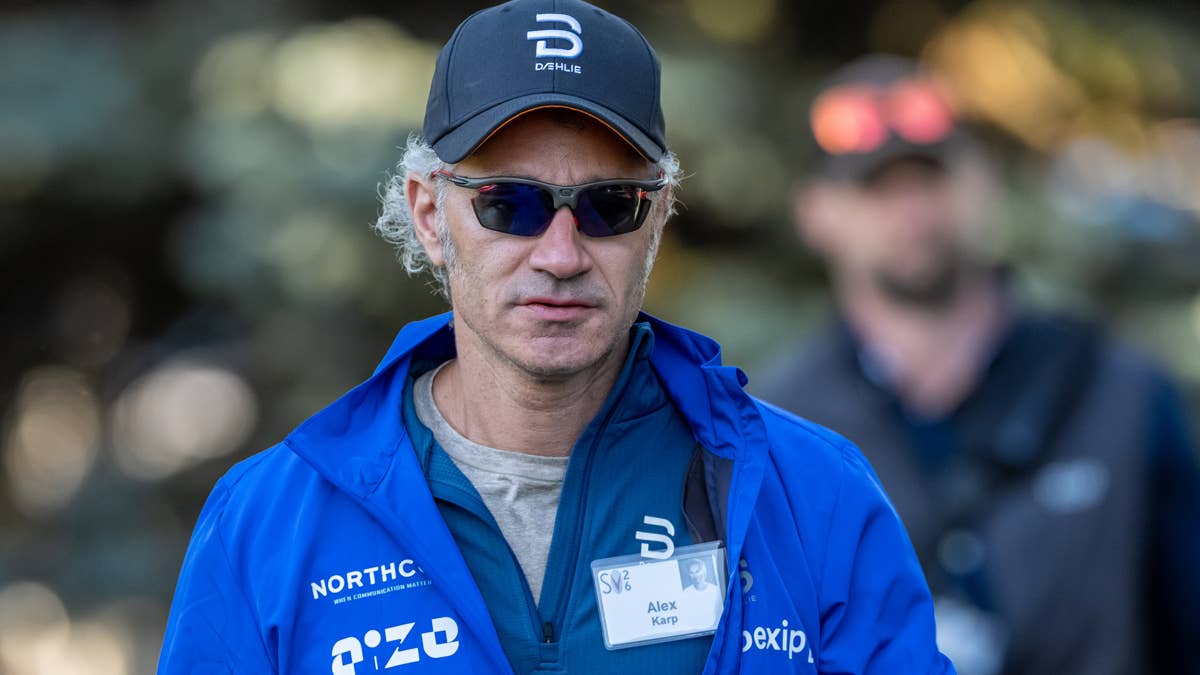
Governance and spending also add to Burry’s critique. He noted that Palantir abandoned a large share buyback program after repurchasing a fraction of what was authorized. He also cited CEO Alex Karp’s private jet expenses and zero U.S. federal cash income taxes paid that year, despite substantial pre-tax income, according to Benzinga.
Palantir’s business keeps outrunning Burry’s thesis
The timing complicates Burry’s argument considerably. Palantir’s most recent quarter showed revenue up 93% year over year, with U.S. commercial revenue growing even faster. Free cash flow came in strong. The company raised its full-year guidance, projecting continued growth well above what most software companies post, TheStreet reported.
Palantir’s stock has reflected that strength more than Burry’s warning so far. Shares fell nearly 6% on Sept. 2 following Burry’s post, then jumped roughly 8% on Sept. 3 as investors responded to an expanded AI partnership with PwC US. Palantir already maintains similar alliances with Deloitte and Accenture.
Not every analyst agrees with Burry’s read. One veteran analyst has pushed back on his earlier arguments, pointing to Palantir’s actual growth rate as evidence that the company’s commercial momentum remains intact, in spite of rising competition from AI model providers.
Burry’s other bullish bet against his own thesis
Burry’s Palantir short is not an isolated call against the broader market. He has paired it with a bullish position in Molina Healthcare, a managed care insurer he has held since the third quarter of 2025. He has described the combination on X (the former Twitter) as “long MOH stock and long PLTR puts, like peanut butter and bananas.”
Burry has also compared Molina to Warren Buffett’s historic investment in Geico. The insurer trades well below what he considers its normalized long-term earnings power, even as the stock has fallen sharply from its 2024 highs on rising medical costs across the industry.
That pairing reflects Burry’s broader investing style, rather than a simple bet against artificial intelligence itself. He has built out a wider bearish basket that includes Nvidia, Micron, Oracle, Caterpillar, and the iShares Semiconductor ETF, arguing that hyperscalers are extending the useful life of AI computing equipment in ways that could significantly overstate profits over the next two years, TheStreet reported.
Burry’s approach to Palantir has evolved over the past year. He first called the stock a “sand castle” trading far above intrinsic value back in June, then doubled down again in August as implied volatility fell to multi-month lows.
What this means for Palantir investors
August already offered a preview of how this standoff tends to play out in the near term. The stock surged 51.4% that month alone, even as Burry added to his bearish put position, a reminder that strong fundamentals and positive sentiment can outrun a bearish thesis for extended stretches.
The practical question for investors is not whether Burry’s individual data points are accurate, since the deferred revenue and receivables figures themselves are drawn directly from Palantir’s own filings.
The more relevant question is whether that financial profile actually predicts a valuation collapse, or whether Palantir’s growth rate can keep outrunning those structural concerns the way it has for the past several quarters.
Palantir’s next earnings report will be the clearest test yet of which view holds up. Continued triple-digit commercial growth would keep reinforcing the bull case that has driven the stock’s gains this year, while any meaningful deceleration could finally give Burry’s valuation argument the opening it has lacked so far.
Related: Michael Burry sends another Nvidia stock verdict to investors