Chinese e-commerce giants such as Shein and Temu have reshaped the retail landscape amid economic uncertainty, higher prices, and cautious consumer spending by offering shoppers a wide range of products at extremely low prices.
Their growth has prompted established companies such as Amazon, Target, and Walmart to invest in strategies like third-party marketplaces, supply chain infrastructure, and digital tools to keep pace with changing consumer habits.
Now, one online-first fashion retailer is taking a different approach. While many established brands have been reassessing their physical footprints and closing underperforming stores, this e-commerce fashion company is moving in the opposite direction by expanding its brick-and-mortar presence in the U.S.
Founded in 2020 as an online-first womenswear brand, Cider has built its business around affordable, trend-driven fashion and a digital-focused shopping experience.
Cider opens its second physical U.S. store
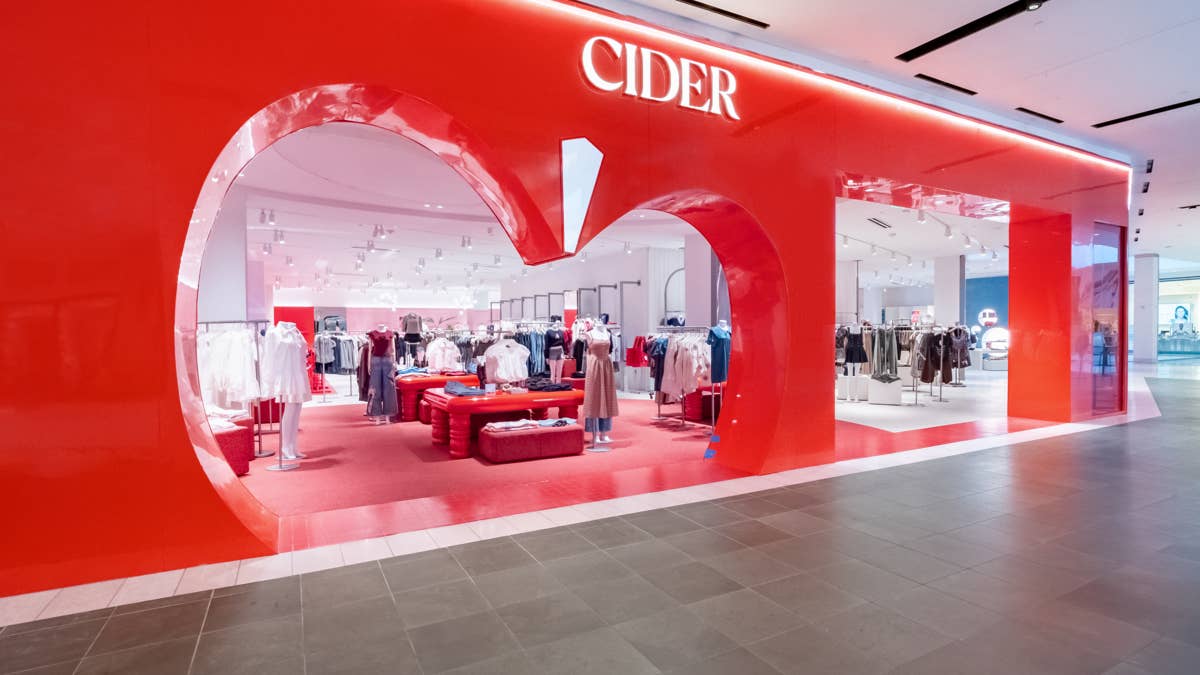
Cider opened its second permanent U.S. retail location on September 4, 2026, at Westfield Valley Fair in San Jose, California. The 11,269-square-foot store is located at 2855 Stevens Creek Blvd., Space No. 2411.
The location combines Cider’s digital-focused approach with an in-person shopping experience. Features include digital fitting-room check-in, smart checkout technology, interactive content areas, and architectural elements designed to encourage customers to engage with the brand both in-store and online.
The company says the San Jose location was chosen in part because of the area’s fashion and technology culture and its large population of Gen Z and young millennial consumers.
“With this opening, we wanted to create more than a store. We wanted to build a space where customers can discover new styles, create content, connect with one another, and experience the Cider community in real life,” Cider Co-Founder Fenco Lin said in a company announcement.
Cider expands its physical retail presence in the U.S.
Cider’s latest opening follows the debut of its first permanent physical store at 6333 W. 3rd St., Suite P-20 in Los Angeles, California.
According to the company, more than 13,000 customers visited the Los Angeles store during the opening weekend.
The online-first retailer is now moving ahead with another location. Cider plans to open a third U.S. store at Los Cerritos Center in Cerritos, California, in November 2026.
The expansion marks a notable shift for a company that built its business primarily through digital channels. Cider’s new stores are designed to give customers another way to interact with the brand while bringing elements of its digital-focused shopping experience into physical retail.
Cider
Why Cider is opening brick-and-mortar stores
Cider is not the only online-first retailer experimenting with physical retail. As e-commerce becomes more established, some digital brands are turning to stores to build brand awareness, create in-person experiences, and give customers another way to interact with their products.
Shein, one of Cider’s largest fast-fashion competitors, has also tested physical retail. The company opened its first permanent brick-and-mortar store at the BHV department store in Paris, France, in November 2025.
That partnership ended seven months later after Shein faced backlash in France, including protests, boycotts, and regulatory scrutiny. BHV and Shein ended their partnership in June 2026, Reuters reported.
Shein does not currently operate permanent stores in the U.S., although it has used temporary pop-up locations in major cities.
For Cider, the expansion is making physical retail a growing part of its U.S. strategy. With a second permanent store now open and a third location planned, the company is continuing to expand its physical presence alongside its digital operations.
Retailers reassess their physical footprints
Cider’s expansion comes as many traditional retailers take a more selective approach to their store networks.
Slower industry growth, shifting consumer behavior, and higher operating costs have made store productivity and the strategic value of individual locations increasingly important for many companies.
The broader fashion industry is also facing a challenging environment. According to the McKinsey & Company State of Fashion 2026 Report, global fashion industry growth is expected to remain in the low single digits in 2026 amid macroeconomic volatility, tariff pressures, and weaker consumer sentiment.
At the same time, e-commerce continues to account for a significant share of retail spending. According to the U.S. Census Bureau, e-commerce sales represented 17.1% of total U.S. retail sales in the second quarter of 2026.
But the continued importance of physical stores shows that online shopping has not eliminated the need for brick-and-mortar retail. Capital One Shopping estimates that 45% of consumers primarily shop in stores and that 80.4% of retail sales are expected to take place in brick-and-mortar stores in 2026.
That dynamic is changing what consumers and retailers expect from physical locations. As more transactions move online, stores increasingly have to offer more than just a place to complete a purchase.
Here’s some of my previous coverage of store closures:
- 172-year-old luxury giant exits entire market
- Discount retailer quietly closes another store
- Fashion giant keeps closing stores
Harvard Business Review research found that stores that create lasting value are built around customer needs that digital channels cannot address as effectively.
“The goal is not simply to open more stores. It’s to give customers a compelling reason to visit—and the organization a coherent way to make that visit worthwhile,” according the HBR research.
With a third U.S. location planned for November, Cider is continuing to build a physical retail footprint alongside the digital business that established the brand.
Related: Clothing retailer returns to brick and mortar stores after 7 years