Warren Buffett has never tried to hide one of his biggest acquisition mistakes.
Berkshire Hathaway (BRK.A) (BRK.B) paid about $37.2 billion for Precision Castparts in 2016, making the aerospace-parts manufacturer one of Buffett’s largest acquisitions.
Then the pandemic crushed commercial aviation. Berkshire eventually took a roughly $10 billion write-down on the business, and Buffett acknowledged that he had paid too much. Six years later, the mistake looks completely unique.
GE Aerospace (GE) recently agreed to spend $11.75 billion for a smaller competitor, Consolidated Precision Products, or CPP, which creates complicated castings for aviation engines and gas turbines. Reuters had named CPP the world’s third-largest manufacturer of the vital metallic components.
Now, all of a sudden, the amount GE was ready to pay has given investors something Berkshire seldom provides them: a market value for Precision Castparts to consider.
Using a comparable value for Berkshire’s considerably bigger business, Barron’s thinks the company might be worth around $100 billion.
That would put Buffett’s historic error at almost three times what Berkshire originally paid.
GE Aerospace just put a huge price on a scarce capability
For more than $12 billion, GE is not acquiring a typical aerospace supplier.
It’s a bottleneck tax.
Modern turbine engines need very complicated cast metal parts that can withstand tremendous heat and pressures. The process is a kind of manufacturing “black art,” Reuters said, with castings still among the biggest bottlenecks in engine production.
GE CEO Larry Culp termed the capacity “mission-critical.”
CPP already makes almost a quarter of GE’s castings. By bringing that production back in-house, GE gains more control over a part of the supply chain that has limited the production of aircraft engines since the pandemic.
Related: Warren Buffett’s Berkshire raises stake in media giant
Thus the price. Thus the shortage.
GE’s acquisition price values CPP at almost 26 times estimated 2027 EBITDA, Barron’s said. Meanwhile, Precision Castparts is around six times larger than CPP in terms of revenue and on track to do roughly $12 billion in sales in 2026.
Precision Castparts is likewise in the same highly concentrated market. Along with CPP, Howmet Aerospace and U.K.-based Doncasters, it is one of the primary makers of engineered castings and components used across the aviation industry.
That missing amount may be worth much more than the Berkshire books indicate.
Precision Castparts has quietly become a Berkshire powerhouse
That $100 billion number is not just an ambitious multiple applied to a flat industry, Barron’s reported.
Precision Castparts’ underlying performance is accelerating.
Berkshire’s second-quarter results showed Precision Castparts revenue increased 14%, while pretax profit surged 34%. Barron’s estimates the company could generate roughly $3.3 billion in pretax income this year and perhaps $3.8 billion in 2027.
One factor is the aerospace recovery.
Aircraft manufacturers and engine suppliers are looking to ramp up production following years of supply-chain interruptions, boosting demand for the specialized components Precision Castparts makes.
But another growth engine is forming, well beyond commercial aviation.
Precision Castparts makes airfoil castings used in industrial gas turbines.
The turbines are growing more important as utilities and tech corporations rush to secure enough energy for large AI data centers. So the same AI infrastructure growth that is making firms like Nvidia and other semiconductor companies wealthy is also producing another source of demand for a Berkshire industrial company.
That makes Precision Castparts an intriguing indirect wager on AI infrastructure inside Buffett’s firm.
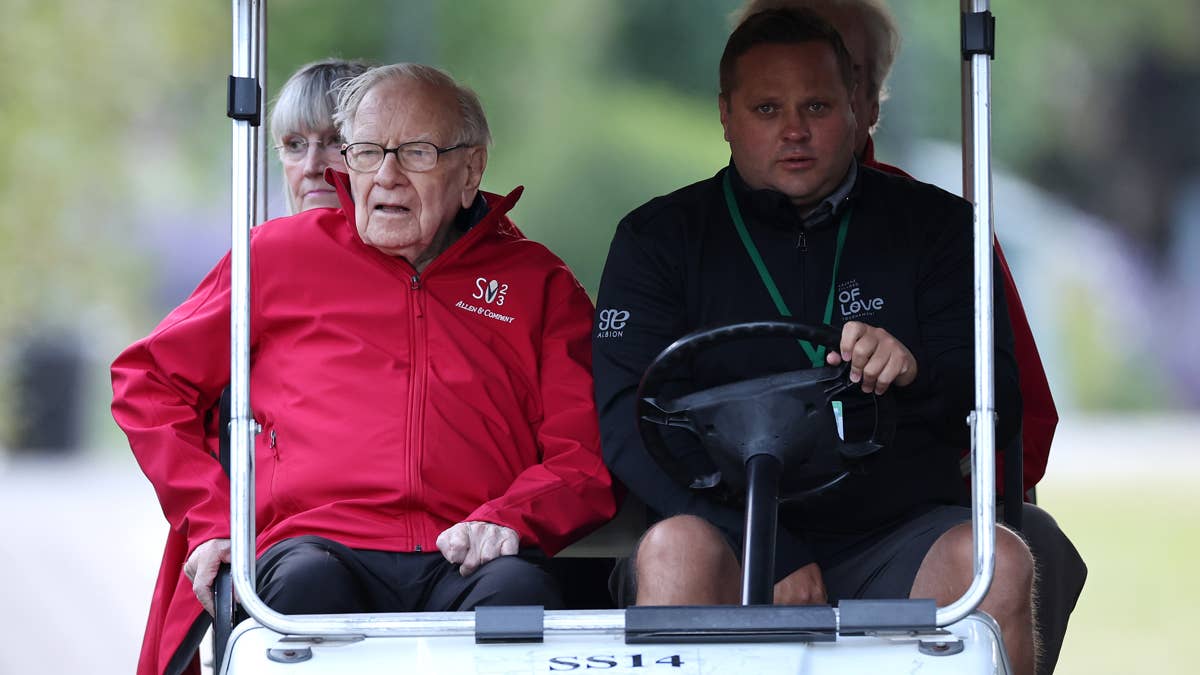
Warren Buffett once admitted he paid too much
What makes the reversal all the more important is that Buffett openly took the blame for misjudging the first transaction.
In 2015, Berkshire Hathaway agreed to buy Precision Castparts for about $37.2 billion, including debt, and finalized the purchase in January 2016.
Berkshire took a big impairment as aerospace demand plummeted during the Covid-19 pandemic.
More Warren Buffett:
- Warren Buffett reveals he broke his own investing pattern
- Warren Buffett has a blunt take on today’s market
- Warren Buffett pulls no punches on stock market for 2026
Buffett later acknowledged he had been excessively bullish about Precision Castparts’ adjusted earnings potential. But importantly, his critique was about the amount Berkshire paid, not the quality of the firm itself.
That difference seems even more crucial now. Commercial aerospace rebounded, turbine-component capacity was tight and the obstacles to manufacturing those components were more valuable.
By buying it, GE in essence sets a new market price on that scarcity.
Berkshire investors may be overlooking a $100B asset
There are reasons to be skeptical of the $100 billion figure.
The amount uses the exorbitant multiple GE paid for CPP to value Precision Castparts. GE is also a strategic purchase of a major supplier, so it may be prepared to spend more than a normal investor would for a stand-alone aerospace firm.
Berkshire isn’t going to sell Precision Castparts either.
But the comparison reveals something investors could be overlooking.
With a market worth of over $1.1 trillion, according to Barron’s, a $100 billion valuation would be roughly one-tenth of the whole stock value of the Berkshire group.
And Precision Castparts is not the only Berkshire industrial asset that might lose value inside the company.
That’s relevant as investors judge Berkshire in the post-Buffett era and argue whether its group of operational companies merits a greater value.
We are not oblivious to the irony.
Buffett had to explain to shareholders he overpaid for Precision Castparts. A decade after Berkshire spent $37 billion on the company, a rival’s $11.75 billion acquisition suggests the business Buffett called a mistake could now be approaching $100 billion in value.
GE may have just given Berkshire investors a reason to reconsider one of Buffett’s most criticized deals.
Related: Warren Buffett’s Berkshire raises stake in media giant