GameStop has focused on cost-savings and expanding the bottom line in recent years. Store by store, market by market, CEO Ryan Cohen has trimmed the video game chain down to a leaner, cash-rich version of what it used to be.
Most headlines about GameStop (GME) over the past 12 months have focused on its bitcoin stash or its audacious bid for eBay.
Fewer people are asking a simpler question: when a GameStop closes, where do its shoppers go?
Increasingly, the answer looks like Target. And the timing lines up with a strong stretch for the retailer.
GameStop closures are nearly finished
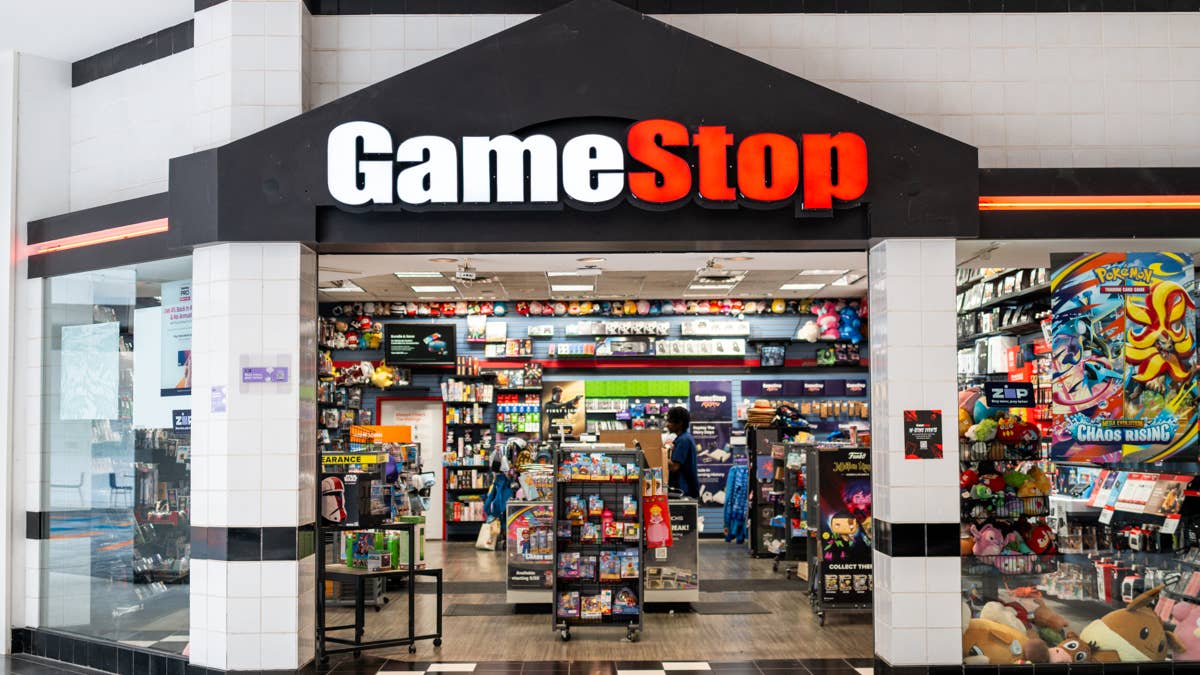
GameStop closed 590 U.S. stores in fiscal 2024, then confirmed more than 470 additional closures across roughly 43 states by the end of fiscal 2025, which wrapped up Jan. 31, 2026.
GameStop now operates around 1,598 U.S. stores, down from about 2,325 at the start of 2025, and management does not expect additional U.S. closures this year.
Data compiled by TIKR shows that GameStop generated $3.63 billion in net sales for fiscal 2026, down from $3.82 billion the year before. Notably, sales have fallen significantly from $9.22 billion in fiscal 2018.
Most people assume GameStop is shrinking because of a rise in digital downloads. However, game software makes up less than 12% of what GameStop sells today, reported Nintendo Life.
More Retail:
- Home Depot is making a big bet on cautious consumers
- Another state just banned a controversial retail pricing practice
- JPMorgan just flagged a slow-build food crisis
The category growing steadily is collectibles, which include trading cards, toys, and pop culture merchandise.
Collectibles brought in $1.06 billion last fiscal year, close to 30% of total sales, up 48% from the year before, according to an earnings release.
Consoles, controllers and other hardware remain the biggest slice at just over half of sales.
Even GameStop’s CEO has leaned into this shift, telling BloombergTech that Sony’s move away from game discs is basically irrelevant to his company in 2026.
“It doesn’t matter at all,” Cohen stated. “Software, it mattered in the past. Software today makes up less than 12% of the business, and collectables makes up over half the business. So, it’s totally, totally irrelevant.”
Separately, Cohen has also been chasing a much bigger deal. GameStop offered $56 billion to buy eBay in May 2026, a bid the latter’s board rejected as “neither credible nor attractive,” according to CNBC.
Target stock rides a toy rebound
Valued at a market cap of over $70 billion, Target (TGT) is one of the world’s largest retailers.
In the quarter ended Aug. 1, 2026, its net sales rose 5.3% to $26.5 billion, comparable sales climbed 3.8%, and traffic was up 3.6%, with every core merchandising category growing, according to Target’s earnings report.
Toys and entertainment stood out. Lego sales rose more than 30%, plush sales climbed over 20%, and the company leaned into a broader “Fun 101” relaunch across its toy floor.
Related: Major changes coming to Target in September
Target Chief Merchandising Officer Cara Sylvester described the shift during the company’s second quarter earnings call, stating:
“In pop culture, we have introduced an entirely new fandom experience and destination that leans into things like trading cards and collectibles, but also exclusive collaborations into one cohesive experience.”
It is precisely the kind of shopper GameStop used to serve.
Not everything GameStop sold can move online. Several categories still need a physical store nearby:
- Consoles like the PlayStation 5 and Xbox Series X, which people generally want to see before buying
- Controllers, headsets, and charging docks, which people replace often and buy on impulse
- Trading cards and collectibles, one of the highest margin categories in specialty retail
- Licensed toys and pop culture merchandise tied to birthdays and holidays
To be clear, no one at Target or GameStop has put a dollar figure on how much of that spending has shifted over.
It is also worth noting collectibles skew toward independent hobby shops, and card shows as much as big retailers, so not every GameStop customer defaults to Target.
Best Buy eyes a share too
The case against Best Buy as a competitor rests on the idea that it was pulling back from consumer computing and entertainment aisles.
However, Best Buy is expanding its store count for the first time in more than a decade, adding new locations it is calling “activation and experience hubs,” according to Retail TouchPoints.
The expansion is modest, around six new stores, but it complicates any narrative that Best Buy is simply retreating.
Target will not double its revenue because GameStop is shrinking. Target’s total sales dwarf GameStop’s, and most of GameStop’s closures have already occurred and will be limited in the near-term.
Still, toys, pop culture merchandise, and collectibles are where Target has posted its strongest growth this year, and GameStop’s retreat is one plausible reason.
Related: A rejected $56B takeover bid just rescued GameStop’s quarter