Earlier this year, Tesla (TSLA) announced that it was raising its 2026 capital expenditure guidance to an eye-watering $25 billion.
It’s part of CEO Elon Musk’s plan to push the company to the next frontier, past its electric vehicle present, into an artificial intelligence and robotics future.
A large chunk of that money was to go to transforming production capacity, which the company previously allocated to its now-defunct Model S and Model X vehicles, into production lines for its humanoid robot project, Optimus.
Tesla eventually hopes to produce 1 million Optimus robots annually. While that plan has always been ambitious, considering the cost of those robots, the Chinese market is showing just how hard it will be for Tesla to achieve its ultimate goal.
China promotes humanoid robot growth
The foreign humanoid robotics market is much more mature than it is in the U.S., so when Unitree, China’s most popular robotics company, debuted on the Shanghai Stock Exchange in August, it was a perfect opportunity for U.S. observers to see what investors thought of the space.
Venture capitalists in China have described investment in the sector as “campaign-style innovation,” a Chinese phrase for money pouring into sectors that China’s Communist Party favors, according to a Reuters report.
Related: Tesla’s Optimus robot plan hits major snag
Party leaders have promoted “embodied intelligence” as a strategic emerging industry, leading to an inflow of investment dollars.
So that might help explain why Unitree jumped more than fivefold in its debut. Unitree wasn’t the first company in the space to go public, though it was seen as a bellwether, and it certainly would not be the last. There are at least half a dozen more Chinese humanoid robotics companies preparing to go public.
But since its debut, Unitree has dropped 55% from its all-time high, and now the same powers that encouraged investment in the sector are looking to pump the brakes.
China slows down humanoid robotics IPO push
Recently, The Information and The Wall Street Journal reported that Chinese regulators are looking to slow down the number of humanoid robotics listings on public markets.
The China Securities Regulatory Commission recently held informal talks with some investment banks and institutional investors about the issue, the Journal reported.
The Information reported that the CSRC issued “window guidance” to some banks and firms that it is “lifting the bar for approving humanoid start-ups that plan to go public.” Now, companies must prove they can generate recurring revenue and can narrow their losses or “achieve real innovation” before IPO approvals are even considered.
Regulators review revenue streams
Regulators are paying particularly close attention to whether the revenue robotics companies are generating through local, government-backed projects is sustainable, Reuters noted.
Robot data-collection centers where robots are trained, and joint ventures where local governments can provide between 80% and 90% of initial investment, have generated significant revenue for some companies.
Those companies then use their inflated balance sheets to meet the public listing requirements. But now regulators are questioning whether that revenue actually represents demand from independent customers.
One person interviewed by Reuters estimated that revenue at some robotics companies could fall between 60% and 70% if you stripped away that data-collection center portion.
While we’ve all seen the videos of humanoid robots dancing or breaking track and field records, such as this one posted on X (the former Twitter), the average consumer doesn’t have any need for a $30,000 appliance that does those things.
“What’s the use case? Is it just people’s robots dancing around? Is it working in factories?” an anonymous senior banker involved in Asian equity offerings asked, according to Reuters. “The volume hasn’t really caught up with the hype.”
Tesla’s humanoid future
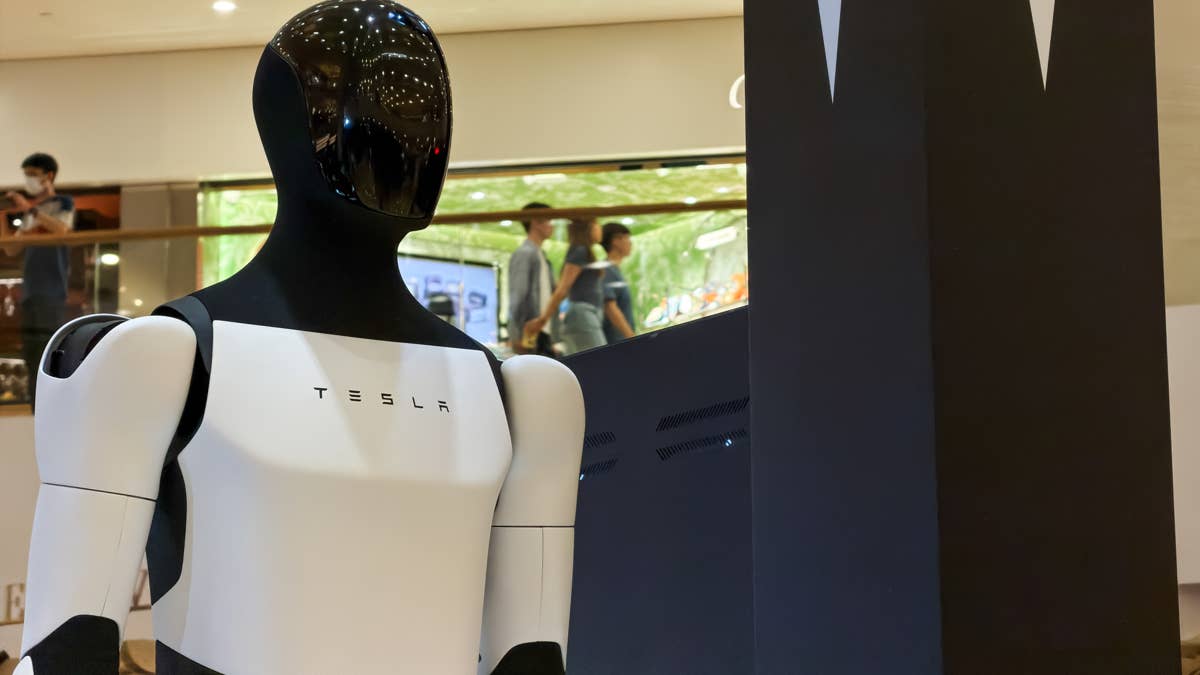
Tesla CEO Elon Musk has been extremely optimistic about Optimus, calling it perhaps “the most important product” in Tesla’s history, Futubull reported.
Lack of demand led Tesla to mothball the Model X and Model S, and the company is betting billions that demand for humanoid robots will be there to replace them. But there is scant evidence for this assumption.
“Tesla’s humanoid robots have hardly demonstrated any notable capabilities, but they’re supposed to cost tens of thousands of dollars each once they’re launched,” Zachary Shahan of CleanTechnica wrote recently.
Optimus robots cost $10,000 to produce at Giga Texas, according to Tesla Car World, and could retail for between $20,000 and $30,000, StandardBots noted.
“Normal people can’t plop down $30,000 on a robot companion, and how many super-rich people are really going to benefit from one? And $30,000 is probably an overly optimistic price. Who is going to spend $30,000 or more on what is basically a toy?” Shahan said.
Shahan points out that, despite the billions now being spent on the project, Optimus won’t be for sale until the end of 2027 at the earliest.
“Maybe I’ve missed something on how this makes much more sense than keeping the Model S and Model X production lines running,” Shahan concluded.
Related: Trump FCC gives Tesla a leg up in critical technology race