Anyone who has bought a car knows the ritual. You agree on a price, then wait while the salesperson checks with a manager. Then the finance office adds fees the listing never showed.
Now picture software sitting through that tedious afternoon instead. Meta Platforms (META) launched Muse, a personal AI agent, on Tuesday, September 8, 2026. It can open a browser, fill out forms and negotiate for users, and Meta even pitches it as a way to sell a car for more.
Car retail may be where agents matter most, according to a Morgan Stanley note shared with TheStreet. Analysts Daniela Haigian and Andrew Percoco say car buying is an expensive, infrequent purchase that still involves a lot of friction.
Their pick is clear. Carvana (CVNA), the online used car retailer, screens as the best positioned company on their framework, while franchise dealer groups skew negative.
Also Read: Morgan Stanley sees buying opportunity in beaten-down Boeing stock
Agents shift the edge from showroom to logistics
Listing sites made cars easy to search. Agents go further, comparing all-in prices, financing and trade-ins, then negotiating and buying, the note says.
That moves the moat, the analysts argue. An agent can flatten a slick website, but it cannot recondition, finance and deliver a car.
Carvana fits that mold. It owns its reconditioning and logistics network, and its checkout handles financing and trade-ins in one flow, the note says.
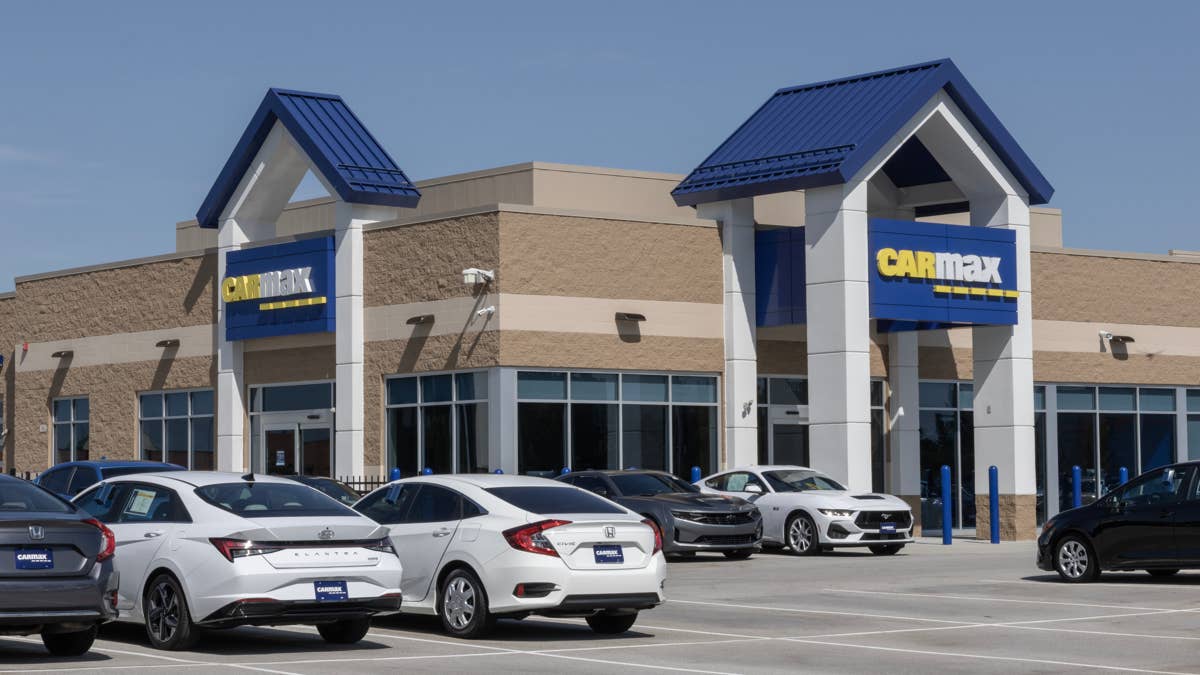
Cost is the real weapon. Morgan Stanley estimates CarMax (KMX) will earn about $740 less in gross profit per vehicle than Carvana in 2026, with franchise dealers trailing by about $1,100. That cushion lets Carvana cut prices to win an agent’s comparison without breaking its unit economics.
More Morgan Stanley:
- Morgan Stanley resets AMAT stock price target by $79
- Morgan Stanley gives SpaceX a B+ grade after Flight 14
- Bank of America reveals hidden moat that makes Morgan Stanley a buy
Carvana’s second-quarter retail sales hit a record of about 197,000 units, up 38% from a year earlier, the company said in a press release. CEO Ernie Garcia said that still equals just 1.5% of the U.S. auto market.
Morgan Stanley rates Carvana Overweight with a $90 price target, about 38% above the stock’s price in the note. For investors, that is the bet: agents could speed up a share grab already underway.
Regulators tried to force honest car prices first
The note skips a regulatory twist. The Federal Trade Commission tried to curb hidden dealer fees with its CARS Rule. A federal appeals court vacated that rule in January 2025, the National Law Review reported.
FTC staff published nonbinding guidance on Tuesday, September 15, 2026, saying advertised car prices must include every mandatory dealer fee. Guidance works only when someone checks. An agent reading every fee on every listing checks automatically.
An agent weighing prices, fees, financing and trade-ins at once could make an uncompetitive offer harder to sustain, the note says. Software may enforce what the rulebook could not.
Six franchise groups screen as more challenged, per the note: Asbury Automotive (ABG), AutoNation (AN), Group 1 Automotive (GPI), Lithia Motors (LAD), Penske Automotive (PAG) and Sonic Automotive (SAH). Dealers get partial offsets from AI cost savings, the analysts wrote.
Retailers can still shut agents out. Amazon blocked Muse, which the note says shows that retailers control agent access.
Agents also still make mistakes. A Toronto YouTuber said Muse took a lowball offer on his CA$15 keyboard, according to Moneywise.Agents also still make mistakes. A Toronto YouTuber said Muse took a lowball offer on his CA$15 keyboard, according to Moneywise.
CarMax is the wild card heading into November
Morgan Stanley calls CarMax a wild card. Its ChatGPT app, launched in February, mostly worked as a lead generator, the note says.
Comparable used vehicle sales rose 13% last quarter, beating analysts’ 5.6% expectation, and shares climbed, Bloomberg reported.
CarMax hosts a strategic update on Tuesday, November 3, 2026, according to its earnings release. Morgan Stanley warns that trading share for margin again could send agent-led buyers elsewhere.
Car buying could become an “offer wins” market
Morgan Stanley calls this an “offer wins” market, where price and fulfillment beat brand awareness. That means ad budgets and familiar names could buy less, the note says.
Trust is the bottleneck. An agent that fumbles a CA$15 keyboard sale is not ready to close a car deal. Yet the thesis only needs agents as the first stop.
Morgan Stanley sees the most risk for retailers that profit from buyers who cannot see the whole deal. The next buyer may send a machine that sees nothing else.