American shoppers have been dealing with higher prices for groceries and household essentials. Even everyday products such as toothpaste, soap, and deodorant are not immune.
Now, one of the world’s largest consumer products companies is signaling that further price increases may be necessary.
Colgate-Palmolive, the company behind Colgate toothpaste, Palmolive dish soap, Softsoap, and Speed Stick, is struggling with rising manufacturing and transportation costs. This is happening as demand for its products weakens in the United States.
The company raised prices across its North American business during the third quarter, but the increase was not enough to prevent sales from declining. And according to CEO Noel Wallace, inflationary pressures could make additional pricing necessary in the coming months.
The development comes as Colgate-Palmolive works to turn around its U.S. business while investing in more expensive, premium products to attract customers.
Colgate-Palmolive faces declining demand in the U.S.
Colgate-Palmolive reported $5.37 billion in global revenue for the third quarter of 2026, an increase of 4.6% from the previous year.
However, its North American business told a different story. According to the company’s Oct. 30 earnings report, North American sales declined 1.7% to $905 million.
Sales volume fell 3.7%, even as higher prices contributed 2.2% to sales.
More Retail:
- Struggling home goods chain closing more stores
- Verizon makes changes to be more like T-Mobile used to be
- Home Depot drops generous offers as customers grow harder to win
The company attributed the region’s organic sales decline primarily to weaker performance in the United States, particularly in toothpaste, body wash, and underarm protection products.
Competition remains intense, although Wallace said Colgate had begun seeing improvements in its U.S. toothpaste market share.
North American operating profit also dropped 11% to $177 million as higher raw material and packaging costs weighed on the business.
The slowdown is particularly concerning because these products are household essentials that consumers regularly replenish, unlike discretionary purchases that can be postponed.
But shoppers are evidently becoming more selective about which brands deserve a place in their carts.
A September report from NielsenIQ and World Data Lab found that U.S. consumers are increasingly divided between paying more for products they consider worthwhile and seeking less expensive alternatives.
The research suggests mainstream brands face a growing challenge as consumers compare the benefits of premium products against cheaper options, including store brands.
That creates additional pressure for established manufacturers such as Colgate-Palmolive, which must justify higher prices while retaining price-sensitive customers.
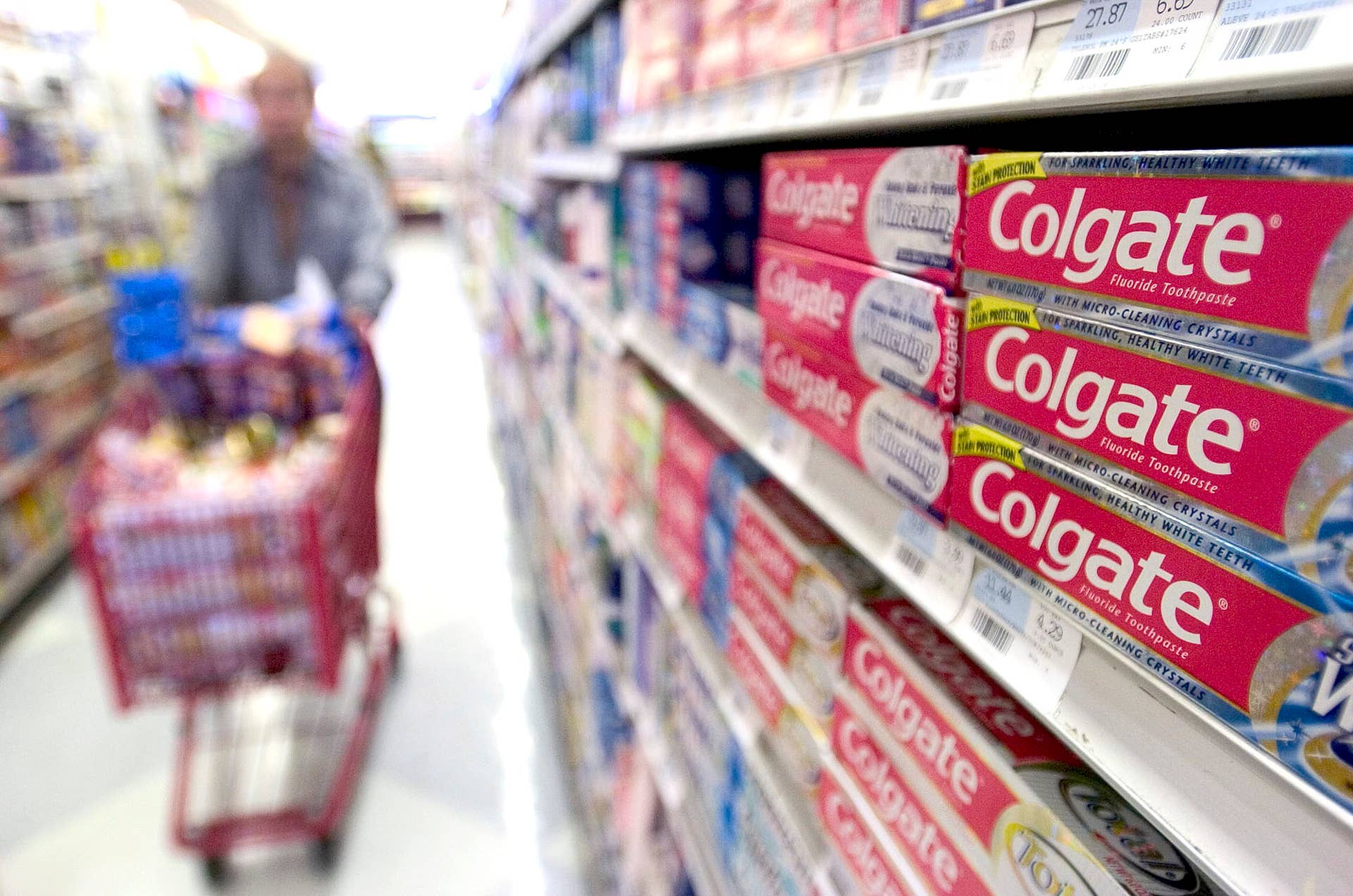
Colgate-Palmolive CEO signals more pricing pressure ahead
During the company’s earnings call, Wallace acknowledged that rising costs remained a challenge across the consumer products industry.
“My expectation is that you’ll have to see some pricing,” Wallace said, referring to the need for manufacturers to address rising raw material and logistics costs.
The CEO did not announce specific price increases for individual Colgate-Palmolive products or provide a timetable for additional changes.
However, he indicated that elevated costs are likely to remain a concern heading into 2027.
He also drew a distinction between developed and emerging markets. In countries such as the United States, Wallace expects more pricing opportunities to come through new premium products, while emerging markets could see more direct increases in existing product prices.
The company expects inflationary pressure on commodities to intensify during the fourth quarter, while tariffs and shipping expenses add to the burden.
Colgate-Palmolive CFO Stan Sutula warned that the fourth quarter would likely bring the company’s highest logistics costs of the year, both in dollars and as a percentage of sales.
Following the third-quarter results, UBS analyst Peter Grom raised Colgate-Palmolive’s 12-month price target from $106 to $112, while maintaining a Buy rating.
In a Nov. 1 research report shared with TheStreet, Grom said the company’s stronger performance demonstrated its ability to navigate a difficult cost environment through pricing, productivity improvements, and new products.
UBS also raised its 2027 earnings-per-share forecast to $4.16 from $4.01, expecting the company to continue improving profitability despite inflationary pressures.
The investment bank forecasts 3.4% organic sales growth in 2027, above the Wall Street consensus estimate of 2.8%. However, UBS cautioned that a recovery in North America could take time.
The analysts expect growth in emerging markets and improving results at Hill’s Pet Nutrition to help offset continued weakness in the U.S. business.
Colgate-Palmolive plans more premium products
Rather than relying solely on pricing, Colgate-Palmolive is preparing a broader effort to improve its U.S. business.
Wallace said the company plans to accelerate the introduction of premium products, increase advertising and improve how it reaches consumers through traditional retailers, digital platforms and social commerce.
The strategy places greater emphasis on products that offer specific benefits and can command higher prices. Colgate has already been expanding its premium oral care offerings, including its Optic White and Colgate Total product lines.
Management expects another wave of innovation in 2027, with additional investments in artificial intelligence and consumer data to improve marketing and product development.
Wallace said the company is also changing how its commercial teams work with retailers and digital platforms to better reach shoppers.
“We’re restructuring to win that connection,” Wallace said during the earnings call, describing Colgate’s efforts to connect its product innovation with changing consumer shopping habits.
The changes come amid wider questions about the company’s brand portfolio.
As TheStreet previously reported, Colgate-Palmolive has reportedly explored selling several mass-market personal care brands, potentially including Softsoap, Irish Spring, and Speed Stick.
The possible divestitures could generate more than $1 billion, although the company has not confirmed any sale.
Meanwhile, Colgate-Palmolive’s Hill’s Pet Nutrition business has emerged as a stronger performer, with third-quarter sales rising 5.6%, supported by demand for specialized pet food.
Wallace said Hill’s Prescription Diet products for cats recorded double-digit growth, while the company is also seeing demand for wet food and products designed for smaller pets.
Colgate-Palmolive is also gradually introducing new fresh pet food products in the U.S., with the rollout expected to continue into 2027.
The contrast highlights the challenge facing the company’s U.S. household brands as Colgate-Palmolive prioritizes higher-value products and more profitable growth opportunities.
For shoppers, that strategy could mean more specialized toothpaste, personal care and pet products reaching store shelves in 2027.
But with manufacturing costs remaining elevated and consumers increasingly comparing prices, whether those products can persuade Americans to spend more remains a significant test.