The basic mechanics of financial markets have stayed largely unchanged for decades. Stocks open and close at set times. Trades settle the next business day. Investors move assets through a chain of brokers, custodians and clearinghouses that have operated roughly the same way across multiple generations of market participants.
That arrangement is now being tested in ways that were not possible a few years ago. New platforms can offer access to U.S. equities and other assets outside regular market hours. New settlement infrastructure is shortening the time it takes to complete a trade from days to seconds.
Investors who have grown used to around-the-clock access in parts of their portfolio are starting to push back on why the rest of it still closes on weekends.
The largest exchanges and financial regulators are paying attention. Institutions that have operated the same infrastructure for decades are now making formal bets on new technology, and a new generation of companies is raising capital to build what they describe as a faster, more accessible version of the existing system.
The trading schedule investors have outgrown
The pressure on the existing structure is coming from several places at once. Investors outside the United States still navigate multiple layers of intermediaries to hold a stake in a U.S. company, incurring additional costs at each step.
Capital held during settlement windows cannot be deployed elsewhere, and that drag compounds for institutions running large portfolios. The expectation of continuous access to financial assets, once limited to specific corners of the market, is now spreading more broadly.
Also read: Goldman Sachs sees something Wall Street may be missing on Nvidia
Himanshu Sahay, co-founder and CRO at Arch Lending, a firm that lends against digital asset holdings, told TheStreet he sees the mismatch play out regularly with clients.
“The main pressure is that investors now hold assets that trade at every hour, and they expect the rest of their portfolio to work the same way,” Sahay said. “Bitcoin doesn’t close for the weekend, and most of the traditional system still runs on fixed trading hours and next-day settlement.”
The gap between what investors can access in one part of their portfolio and what the rest of the market offers is creating demand that existing infrastructure was not designed to meet. That demand is reaching both the largest incumbents and a newer set of challengers simultaneously.
Regulators are clearing the way for a faster market
The Securities and Exchange Commission approved a three-year pilot program allowing the Depository Trust Company to begin settling securities on new technology infrastructure. It is the clearest signal yet from regulators that the market’s settlement layer is due for an overhaul.
The largest exchanges are moving in the same direction. Nasdaq (NDAQ) has committed $100 million to building tokenized equity infrastructure, according to Fortune.
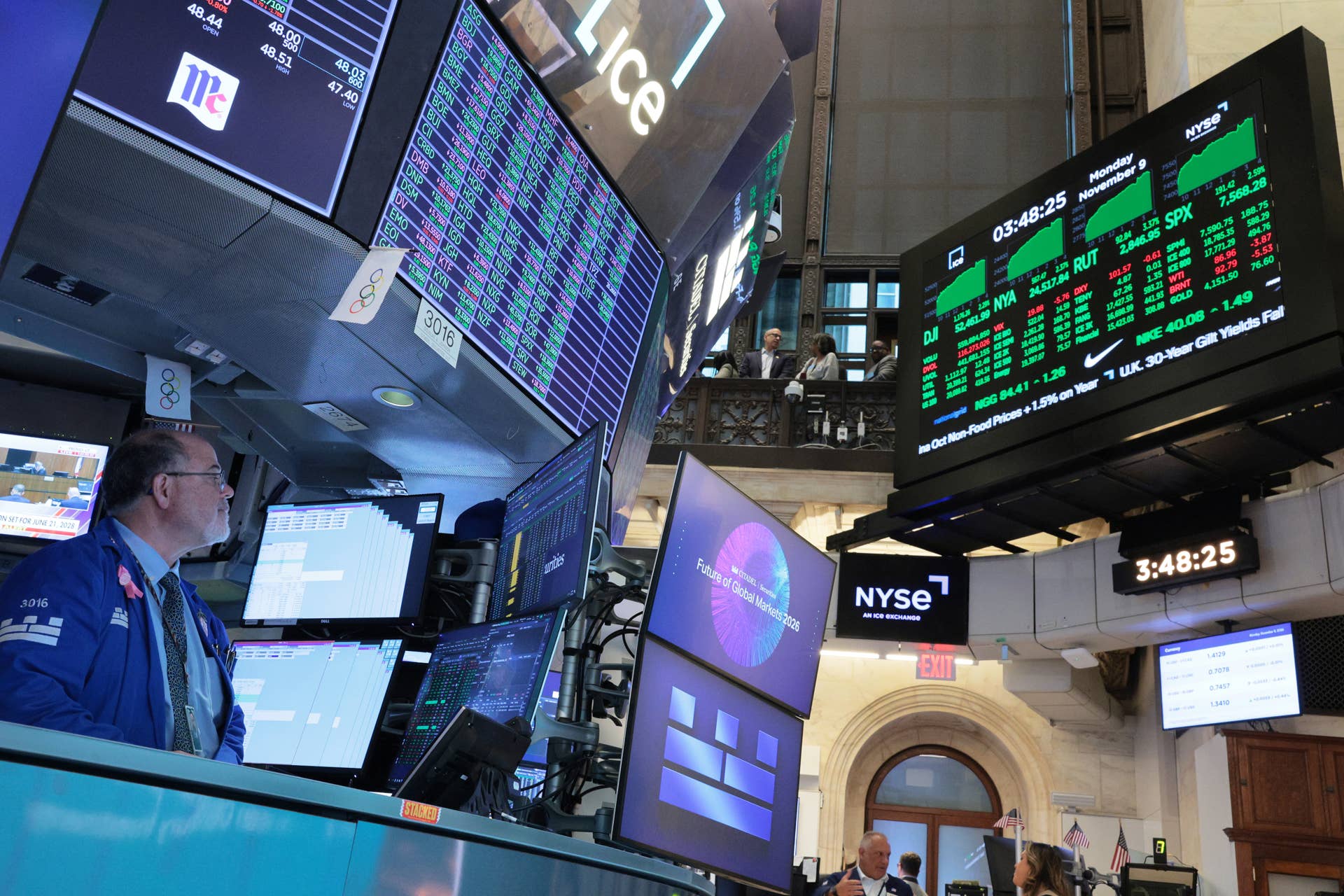
Intercontinental Exchange, the parent of the New York Stock Exchange, has made a similarly scaled bet on new infrastructure for tokenized NYSE-listed stocks, also reported by Fortune.
What regulatory approval and institutional investments share is a common premise: the technology layer between investors and the assets they hold is due for a rebuild. The question the market is now working through is not whether that happens but how fast.
The venues are building a market that never closes
A separate set of companies is approaching the same problem from scratch rather than adapting what already exists. The difference is structural: instead of layering new tools onto established systems, newer entrants are building trading and settlement infrastructure designed from the start for continuous, faster operation.
Sky Guo, CEO of DeepSigma, a derivatives exchange for real-world assets, told TheStreet the asset itself does not need to change for the structure around it to shift.
“The biggest change is that the asset stays familiar, but the wrapper changes,” Guo said. “Someone who wants exposure to the S&P 500, gold or Treasuries can get it through a perpetual contract or a token that trades around the clock, in small sizes, from a single account.”
DeepSigma announced this month a fundraising round of up to $10 million through Republic, structured for verified U.S. accredited investors under Regulation D Rule 506(c), to fund the development of its platform, according to a company statement.
More Wall Street:
- Arista Networks stock gets fresh backing from Jim Cramer and Wall Street
- Oracle stock sinks as Wall Street confronts a $20 billion AI problem
- Wall Street just got a candid look at who is winning the AI race
New entrants face a harder path than established names making similar moves. Building regulatory standing, volume, and investor trust from zero takes considerably longer than an institutional investment or partnership by a name that already holds all three.
The platforms that survive this phase will likely be those that resolve the custody and compliance questions most investors will want answered before moving assets anywhere new.
The ownership gap investors may not see coming
The shift toward new trading infrastructure is raising questions that neither regulators nor investors have fully worked through. Much of the debate will eventually be legal: who is responsible when something goes wrong, what rights a holder actually has, and what happens when a platform built outside established regulatory structures creates problems inside them.
A central issue is what a tokenized product actually gives its holder. Many products marketed as tokenized versions of an equity do not transfer actual ownership of the underlying asset, leaving investors with a contractual claim on the issuer rather than a direct stake.
That distinction carries real consequences if an issuer encounters financial difficulty. Leverage is another area drawing scrutiny, as new derivative structures make large positions available to retail investors without the friction that historically limited access.
“For investors, the first question is what the token actually gives them,” Sahay said. “Some tokenized stocks are the share itself, and others are a contractual claim on an issuer that holds the share, and that affects shareholder rights and what happens if the issuer fails.”
The legal framework around new market products has not kept pace with how quickly those products are reaching investors. That is where the most significant regulatory debate over the next several years is likely to be fought.
Related: Elon Musk sends a strong signal to SpaceX stock investors