Here’s the thing about big, splashy initial public offerings.
Everybody gets excited about the offering. The price when trading starts is bigger and then gets bigger. The company’s future prospects seem guaranteed.
This was the biggest IPO ever and, as Yahoo Finance noted, larger than all the IPOs in 2000 combined. And the clamor for Anthropic shares was intense.
An IPO can give you two shots at buying in
What could possibly go wrong? How about all of the above?
More often than not, a company sells its shares, and a funny thing happens. Everybody who really, really wanted to buy the stock has done it. Everybody who couldn’t buy the stock on day one is disappointed, maybe more than a bit annoyed. And they may not be so excited on Day 2.
And their revenge — I guess revenge is the best word to use — is to let the stock price fall until it reaches a level that pulls in investment dollars.
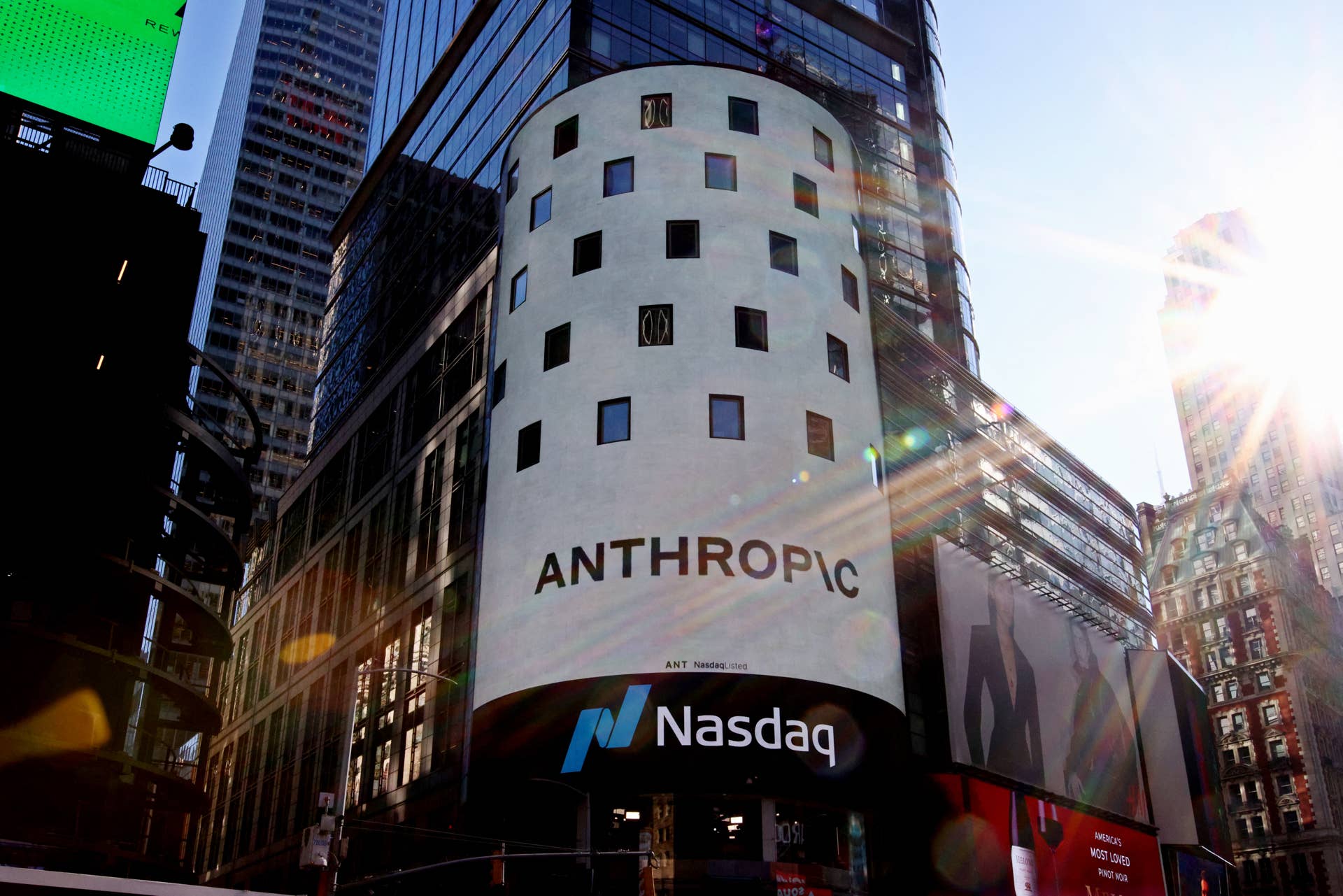
Which brings us to Anthropic (ANT), the artificial intelligence company known for its Claude family of AI tools.
Founded in 2021, Anthropic priced its IPO at $83 a share on Nov. 18 with a market capitalization of about $1.5 trillion. It opened at 11:48 a.m. the next morning at $111.50 and quickly rose to $115.10, up 38.7% from the IPO price. But only up 3.2% from the first trade, and, by 11:55 a.m., the shares were heading lower.
Anthropic closed at $97.17, still up 17% from the IPO pricing, but off 15.6% from the day’s peak. With its first trade, the market capitalization hit about $2 trillion.
At the close, the market cap on a fully diluted basis was about $1.76 trillion to $1.8 trillion. In the process, according to Forbes magazine, the offering created 7 to 10 billionaires, 400 to 600 centi-millionaires, 2,400 to 4,800 millionaires.
Well and good.
Notice what happened to the stock as the day went along: It went down. Probably because everyone eager to get in early was able to get their stock. And many buyers held back — for now.
Often it pays to wait
They should wait.
Elon Musk’s Space Exploration Technologies Corp. (SPCX) went public on June 11 at $135, opened the first day of trading (on June 12) at $150 and surged to $176.52 before closing at $160.95.
Four days later, it peaked at $225.64 before closing at $201.80. Along the way, Musk became the world’s first trillionaire.
On Nov. 19, Space X finished at $138.43, down 3.5% on the day and only 2.5% above its IPO price. Musk is no longer a trillionaire, but, with a net worth of $873 billion, he’s not broke.
Maybe Anthropic pulled the air out of the market
Anthropic’s IPO is generally viewed as a big success. The demand for the offering was huge, and many would-be buyers couldn’t get any shares. Among the successful buyers, however, was actor Ashton Kutcher, whose venture capital firm, Sound Ventures, secured shares in Anthropic when it was still private. The stake is now valued in the billions.
But the Anthropic IPO came after tech stocks had sagged starting in October.
The Standard & Poor’s 500 Technology Sector was down nearly 2% on Nov. 19.
That only hints at the problem.
The sector has fallen 19.5% since peaking on Oct. 6 and 13.1% in the last month. Nvidia’s startling fall, with the forced resignation of Jensen Huang, accounted for a large share of the decline. Nvidia shares are off nearly 33% in the last four weeks.
More IPO:
- Goldman Sachs sees $66 billion problem with Anthropic’s blockbuster IPO
- Anthropic IPO Overshadows ‘Historic’ Trump-Xi-Putin Summit
- Anthropic IPO Was a Success and a Nasty Trap for the Rest of the Market
An unusual ownership structure
Like many technology companies, Anthropic puts control of the company in the hands of its seven cofounders: CEO Dario Amodei; his sister Daniela Amodei, the company’s president; and fellow cofounders Tom Brown, Jack Clark, Jared Kaplan, Sam McCandlish, and Christopher Olah.
All had worked at OpenAI, the rival AI company, before leaving to start Anthropic in 2021.
The seven are members of Founder LLC, whose one share of Anthropic controls 50.1% of the stock. The seven vote shareholder questions as a group, and a simple majority decides how the vote is cast.
In addition, the company is a for-profit Public Benefit Corporation (PBC) legally required to balance shareholder profit with specific social, environmental, or public-good goals.
Related: Why Nvidia’s steep sell-off could be a buying opportunity—with just one catch