Sometimes, a business has to get smaller in order to grow, or at least that’s what executives including Wendy’s CFO Ken Cook say when they’re explaining closing locations.
“We’re focused on improving restaurant-level economics, taking a hard look at underperforming restaurants in our system from both the financial and customer experience perspective and working with franchisees to improve those, transfer those to another operator or potentially closing them,” he said during the chain’s third-quarter earnings call.
Closing up to 350 restaurants, he said, will improve the financials of those that remain and leave franchise operators with cash to invest in their remaining locations.
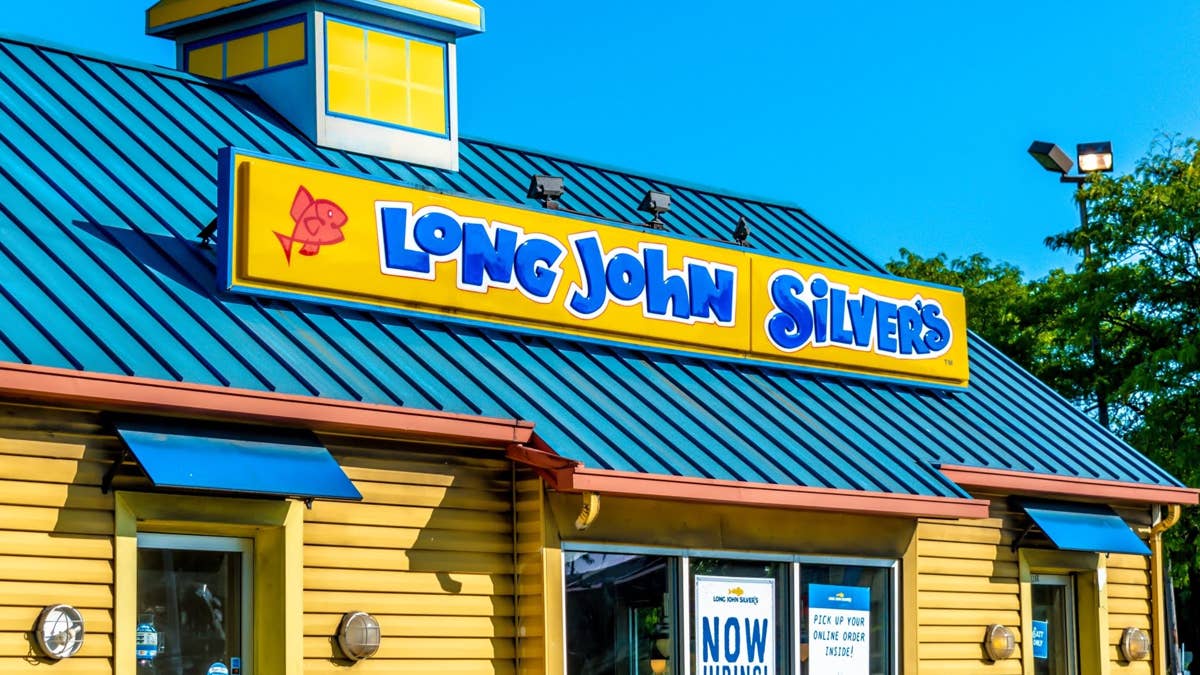
Long John Silver’s, an iconic fast-food chain like Wendy’s, has also been closing locations — dropping from over 1,000 units in 2015 to fewer than 500 currently, per research from food and beverage data firm Datassential.
At its peak, the chain operated over 1,400 restaurants, according to Food Republic.
The company’s Senior Vice President Tony Ellis, much like Cook, believes that the closures, at least the ones over the past three years, have actually put the seafood chain in a strong position to return to growth.
Long John Silver’s has shrunk
Tony Ellis told SeafoodSource that Long John Silver’s has closed “roughly 110 to 120 locations over the past three years.” He said the company now operates 214 company-owned restaurants and around 262 franchised units, which matches the total on the company’s restaurant locator page.
Long John Silver’s Chief Marketing Officer Laura Ellis said that not all of the closures were due to financial performance.
“We want our in-restaurant experience to be as positive as the taste of our food, so we’ve spent a ton of time remodeling our footprint,” Laura Ellis said. “As you can imagine, our brand has been around since 1969, so some of our restaurants were in dire need of a facelift. This means some of those restaurants are temporary closures, and some are a departure from historical strategy.”
Tony Ellis explained that nearly 70 of the closures came from the chain exiting co-branded locations with Taco Bell, KFC, and A&W, which he said aligns with “broader industry trend of major chains increasingly preferring single-brand locations,” he said.
The chain also survived a 1998 Chapter 11 bankruptcy filing.
“The company listed liabilities of $457.3 million and assets of $329.1 million in the Chapter 11 filing late Monday in U.S. Bankruptcy Court in Delaware,” the Tampa Times reported.
That filing was due to its 1989 leveraged buyout saddling the company with debt.
Why has Long John Silver’s shrunk?
QSR Pro published an extensive analysis of Long John Silver’s decline in March.
“There’s no single villain in this story. What’s happening to Long John Silver’s is structural, compounding, and instructive for anyone who operates or considers investing in legacy QSR franchises,” the website reported.
Food Costs, QSR Pro noted, created a systemic problem for the chain.
“Food costs are the first problem. Commodity beef prices are volatile, but seafood is in another category entirely. Wild-caught fish supplies are subject to fishing quotas, weather events, ocean temperature shifts, and international trade dynamics,” it shared.
Not being able to pivot to chicken or beef during times when fish prices are high also created unique challenges for the chain.
More Restaurants:
- Major Taco Bell franchisee sells 44 restaurants
- Chick-fil-A opens restaurant customers can’t eat in
- 57-year-old fast-food seafood chain closed over 700 locations
“McDonald’s can quietly shift its beef blend when spot prices spike. There’s no equivalent move available when your entire brand promise is fish.,” QSR Pro added.
The seafood brand also has a traffic pattern problem.
“Seafood has historically been a dinner-leaning daypart, with a secondary spike during Lent. That leaves enormous breakfast and lunch capacity sitting idle, a structural waste that commodity chains like McDonald’s or Taco Bell solve by spanning all three dayparts. Long John Silver’s has never cracked breakfast at scale,” the trade publication shared.
Shutterstock
Restaurants are struggling broadly
“The restaurant space has been tough. There’s a lot of competition, so it’s a very saturated market to begin with,” Black Box Chief Insights Officer Victor Fernandez told Restaurant Dive.
It’s a number of negative headwinds impacting businesses at the same time, Ari Felhandler, an equity analyst covering the consumer sector at Morningstar said to Restaurant Dive.
“In addition to ballooning food and labor costs, operators are dealing with higher insurance premiums, further straining their finances, said At the same time, the industry has remained stubbornly reliant on value promotions, further squeezing margins,” he said.
Long John Silver’s is in the middle of a comeback
“The good news is that we are not struggling,” Laura Ellis told SeafoodSource.
She explained that the company just celebrated 16 consecutive quarters of comparable sales growth, marking a milestone “we are very proud of as a brand.”
Tony Ellis added that the chain’s sales increased from approximately $400 million at the end of 2022 to nearly $430 million at the end of 2025.
Four Oaks Partners purchased Long John Silver’s in 2022, according to Franchise Times.
“Four Oaks Partners has its sights set on international expansion, with a particular focus on the Southeast Asian market. It has continuously operated multiple locations in Singapore since 1983, and in recent years, has opened new locations in Thailand, Indonesia, and Malaysia,” according to Food Republic.
Laura Ellis, who spent eight years at Yum Brands, thinks the brand has domestic growth potential as well.
“Sometimes you work for a brand that’s nostalgic and people say, ‘I used to love that, but I don’t like it anymore.’ When I tell people I work for Long John Silver’s, that’s not the reaction I get at all. It’s, ‘I love Long John Silver’s. I didn’t know there was one nearby me anymore,’” she told Franchise Times. “We’re really driving awareness and reminding people that we’re here and opening new locations.”
Related: Discontinued Pepsi soda brand quietly returns to stores