Higher oil prices mean it costs airlines more to operate and, in many cases, airlines pass those costs on to customers.
United Airlines Chief Commercial Officer Andrew Nocella said that’s exactly what his airline has done.
“Late in the first quarter, we implemented 5 broadly successful price increases, along with an increase in baggage fees that began to offset the increase in the price of jet fuel. Price increases in response to the increase in jet fuel have been significant and across the board,” he said during United’s first-quarter earnings call.
American Airlines’ CFO Devon May said the airline had seen $4 billion of incremental fuel expense.
“Historically, airlines recover that additional fuel expense either by increasing revenue or by reducing marginal capacity. We have been encouraged so far by the pace with which revenue has been recaptured,” he said during the airline’s first-quarter earnings call.
CFO Michael Leskinen shared how the airline has been slowly adding to how much of the costs it passes on.
“As we’ve experienced over the last two months, the world can change quickly, but in both higher and lower fuel price scenarios, we expect to recapture 40% to 50% of the increased fuel cost in the second quarter, 70% to 80% in the third quarter and 85% to 100% by the fourth quarter,” he shared.
Comments like that suggest that consumers are seeing higher prices. Data from Deutsche Bank, however, shows that’s not the case.
Here’s how much airlines dropped airfare by
“Advance purchase, domestic airfares (for Friday, October 16) were all lower week-over-week, except for Hawaiian (+12.2%, to $370 one-way). We note that the previous week reflected a challenging comparison given that it was the start of the Columbus Day holiday weekend,” according to Deutsche Bank.
The week-over-week fare declines were as follows:
- Southwest: -30.5%, to $168 one-way
- JetBlue: -25.1%, to $206 one-way
- Allegiant: -19.2%, to $169 one-way
- United: -8.6%, to $276 one-way
- American: -5.9%, to $308 one-way
- Delta: -3.1%, to $297 one-way
- Alaska: -1.8%, to $266 one-way
Fares by geography were also mostly lower week over week:
- Hawaii (+7.0%, to $388 one-way) was the only geography with a fare increase.
- Intra-West Coast -8.9%, to $152 one-way.
- Mexico (-6.0%, to $343 one-way), and transatlantic (-5.4%, to $979 one-way) decreased by single digits.
- Latin America -57.7%, to $494 one-way.
- Florida -26.2%, to $182 one-way.
- Transpacific -24.4%, to $816 one-way.
- Transcontinental -12.1%, to $287 one-way.
- Caribbean (-10.4%, to $391 one-way) saw double-digit declines.
Fares have actually been falling
OAG’s latest analysis of the top U.S. domestic and international routes in Q1 2026 versus Q1 2025 shows year-over-year fare declines on the majority of markets.
Key findings of the report included:
- In Q1, fares had declined year over year on 13 of the top 20 U.S. domestic and international routes.
- The largest domestic fare change was on Atlanta (ATL) to Fort Lauderdale (FLL), down 42% year over year.
- Internationally, the largest fare change was on LaGuardia (LGA) to Toronto Pearson (YYZ), where fares declined by 45%.
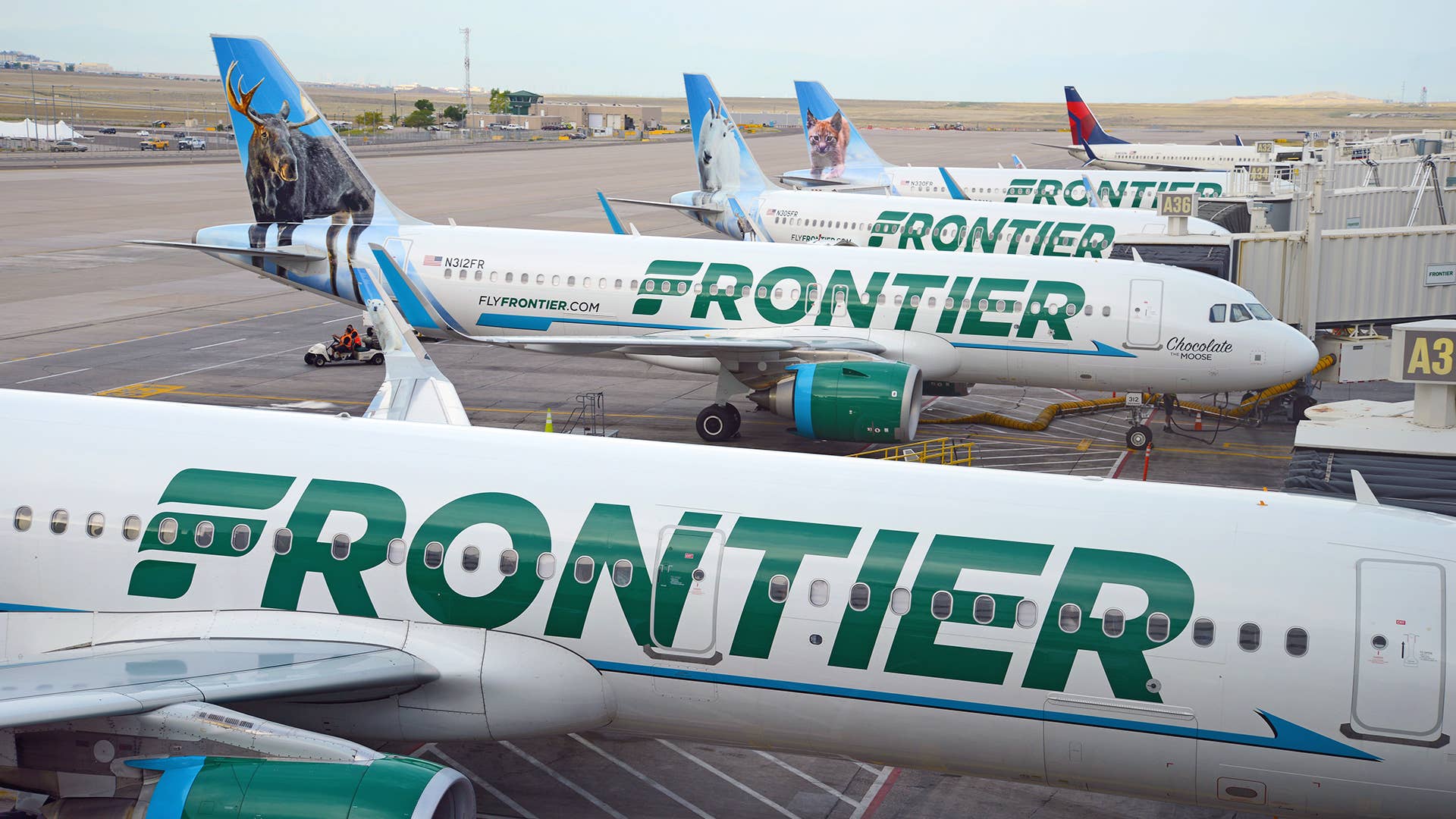
“OAG’s Q1 2026 analysis of the top U.S. domestic and international routes points to a divergence in fare trends. On many leisure-oriented routes, increased ultra-low-cost carrier (Frontier) capacity has contributed to year-on-year fare reductions, often on routes where Southwest has reduced its presence. In international markets, modest capacity reductions on core transatlantic routes have supported fare stability or slight increases, reflecting steadier demand from business travelers,” OAG shared.
The data did show a pattern.
“Across the top domestic routes, prices have decreased where capacity was added, broadly speaking. On JFK-LAX, Frontier’s entry alongside a 26% capacity increase from American Airlines contributed to outbound fares declining from $245 to $199. However, on LAS-LAX, capacity fell 11% while fares also declined, suggesting some softening in underlying leisure demand rather than a supply-side effect alone,” the company reported.
Frontier, RTM Nexus CEO Dominick Miserandino noted, has stepped into many markets that Spirit Airlines once served.
“Spirit helped keep everybody honest on price. Take that competitor away at the same time fuel costs are rising, and it becomes a lot easier for the airlines left standing to raise fares without being undercut,” he said.
Frontier taking over in many of those markets, he added, brings that honesty back.
Walk-up fares were mixed
The difference between walk-up and advance fares can be dramatic. That’s partially because once the supply becomes small, prices rise.
About a month ago, my aunt passed away, and my mother needed to fly from Boston to Fort Lauderdale with about a day’s notice. Her fare was more than $1,000 on JetBlue.
This week, we looked at fares to bring her on the same flight in late January, and JetBlue had seats under $350 (before luggage), while Delta had a no-frills economy ticket for $225.
Average walk-up domestic airfares for Friday, Sept. 25, were mixed week over week, according to Deutsche Bank’s research:
- United: -0.9%, to $462 one-way
- Alaska: -2.8%, to $451 one-way
- American: -3.6%, to $439 one-way
- Allegiant: -16.1%, to $245 one-way
- Delta: Unchanged at $551 one-way
The week-over-week fare increases were as follows:
- JetBlue: +0.9%, to $396 one-way
- Hawaiian: +1.2%, to $430 one-way
- Southwest: +3.6%, to $372 one-way
ALSO READ: Southwest Airlines passengers can avoid this money mistake