Investors spent much of 2026 treating virtually every stock market wobble as a chance to pounce.
Bank of America is not so sure the next one will be that simple.
According to TheFly, following a sharp first-half rally that pushed the S&P 500 near the bank’s more aggressive upside levels, the firm’s technical team is warning that the setup has become more fragile.
For perspective, after a momentous first-half rally, the S&P 500 and Nasdaq hit record closing highs in late May, led by the relentless AI optimism, according to Reuters. The S&P 500 closed at 7,599.96 on June 1, according to MarketWatch, before cooling to 7,354.02 by June 26, according to Yahoo Finance.
The issue for BofA isn’t just about valuation, covering momentum, positioning and seasonal pressure that can potentially turn a crowded rally into a major test.
Consequently, Bank of America sees a summer that compels investors to protect gains first.
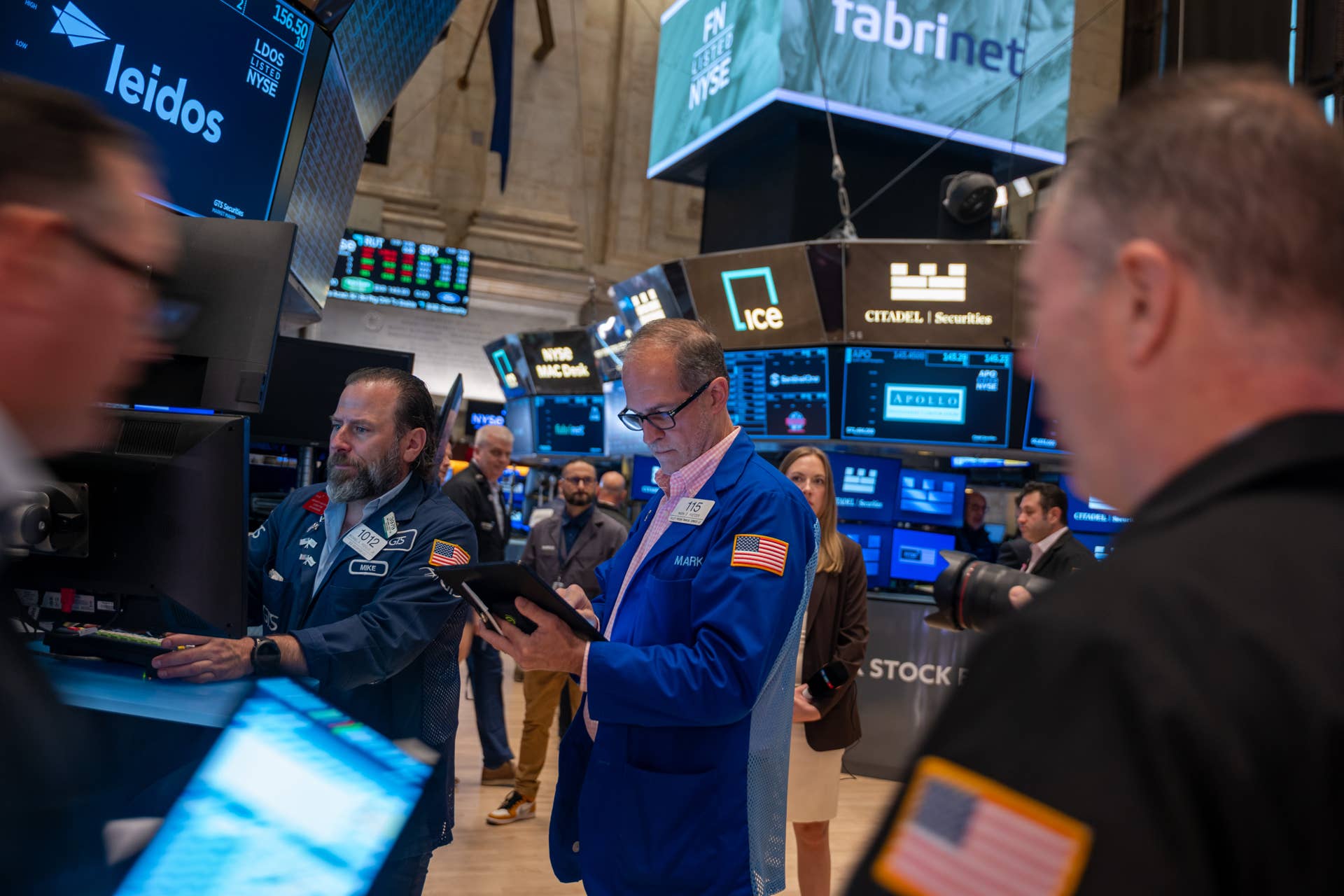
Spencer Platt/Getty Images
Wall Street’s latest S&P 500 price targets
- Citigroup raised its 2026 year-end S&P 500 target to 8,100, citing stronger earnings and AI momentum, according to Reuters.
- Goldman Sachs lifted its target to 8,000, saying earnings growth has powered the market’s advance, according to Reuters.
- J.P. Morgan raised its S&P 500 target to 7,800, pointing to AI investment and resilient economic conditions, according to Reuters.
- Barclays and Stifel each moved to 7,800, citing a stronger earnings outlook and clearer AI capex visibility, according to Reuters.
Sources: Reuters brokerage forecast tracker, Reuters reports on Citi, Goldman Sachs, J.P. Morgan, Barclays, and Stifel.
What Bank of America says could hit stocks this summer
Bank of America technical strategist Paul Ciana says the stock market is entering a more difficult Q3 stretch after a robust first-half rally that pushed the S&P 500 near the firm’s most bullish levels.
More Personal Finance:
- Bank of America offers critical debt elimination plan
- Fidelity challenges long-standing retirement savings rule
- Gallup data expose record financial anxiety in the U.S.
The S&P 500 has already reached Bank of America’s 2026 target of 7,431 and came near its more “frothy” target of 7,741 after hitting a record high of 7,621 in early June.
Naturally, that leaves a lot less room for disappointment if we see sluggishness.
Ciana’s concern is that stretched valuations, softer technical indicators, and weaker summer seasonality could trigger a corrective phase.
As a result, Bank of America advised clients since late May to add hedges during rallies and reassess conditions later in the year.
The bank sees potential support around 7,122 but warned that the index could even fall below 7,000 if selling pressure builds. It also said any brief move toward new highs near 7,741 could turn into a “bull trap”.
Another warning sign is margin debt, which rose 54% year over year through May. Bank of America said a move above 60% would raise correction risk, noting similar surges before the 2000, 2007, and 2021 market peaks.
Why earnings still support the AI-led rally
- The market’s biggest risk is also its biggest engine. Reuters reports that the Magnificent Seven and the tech sector each make up about one-third of the S&P 500.
- Q1 was already a powerful earnings quarter. FactSet’s completed scorecard showed S&P 500 earnings rose 28.8% year over year, while revenue rose 11.9%.
- The profit setup remains strong for Q2. FactSet now estimates S&P 500 earnings growth of 23.1% and revenue growth of 12.3%, up from 18.8% and 9.5% on March 31.
- Tech is doing the heavy lifting. FactSet expects information technology earnings to rise 63.2%, with semiconductor earnings up 131% and tech revenue up 34.2%.
- Goldman Sachs offers a bull case against Bank of America’s caution, raising its S&P 500 target to 8,000 and 2026 EPS to $340, citing AI-led earnings strength according to Yahoo Finance.
- J.P. Morgan also lifted its target to 7,800, with 2026 EPS at $350, though it warned the path higher would be “non-linear” according to Investing.com.
Sources: Reuters, Yahoo Finance, Investing.com, FactSet.
What has to happen for a year-end rally
For BofA’s year-end rally setup to work, the summer pullback needs to look more like a reset and not the start of a broader earnings or liquidity hiccup.
The first test is profits.
FactSet’s June 26 earnings insight points to a strong Q2 setup, with S&P 500 earnings expected to rise 23.1% and revenue expected to grow 12.3%. More importantly, positive guidance is unusually strong: 63 companies issuing positive EPS guidance for Q2, compared with 48 negative warnings. That adds to the bullish case that the rally is still earnings-led.
Margins are the second test.
FactSet expects a Q2 net profit margin of 14.2%, below Q1’s 14.8% but still above the year-ago 12.9% level. If we see businesses continuing to protect their margins effectively despite higher rates and input costs, the market can then better absorb a valuation reset.
The macro side is harder.
The BEA said May PCEinflation jumped to 4.1% year-over-year, with core PCE up 3.4%, keeping pressure on the Fed. The BLS said payrolls rose 172,000 in May and unemployment held at 4.3%, so investors need labor cooling without a recession scare.
The final piece is rates.
Reuters’ June poll showed most economists expect the Fed to hold at 3.50% to 3.75%, even as markets price a hike risk.
Speaking of that risk, BofA analysts have actually called for the Fed to hike rates by 25 basis points in September, October and December. Moreover, Deutsche Bank also moved toward hikes, while Reuters said most brokerages now expect no cuts this year, showing Wall Street has turned a lot more cautious on policy.