If you have watched Sandisk over the last year, you already know it has not behaved like a sleepy storage name. It has traded like a story stock, climbing more than 280% year to date after returning roughly 580% in 2025, putting it at or near the top of the S&P 500 over that stretch, according to Yahoo Finance.
Bank of America thinks that even after that move, the math signals more upside.
BofA Securities analyst Wamsi Mohan recently lifted his Sandisk price target to $1,080 from $900 ahead of the company’s third quarter earnings and reiterated a Buy rating, citing “NAND pricing strength” and a backdrop where “supply remains tight,” TipRanks reported.
For me, that kind of reset always sparks the same questions: Is this just an analyst chasing the chart, or is the underlying business really stepping into a new gear?
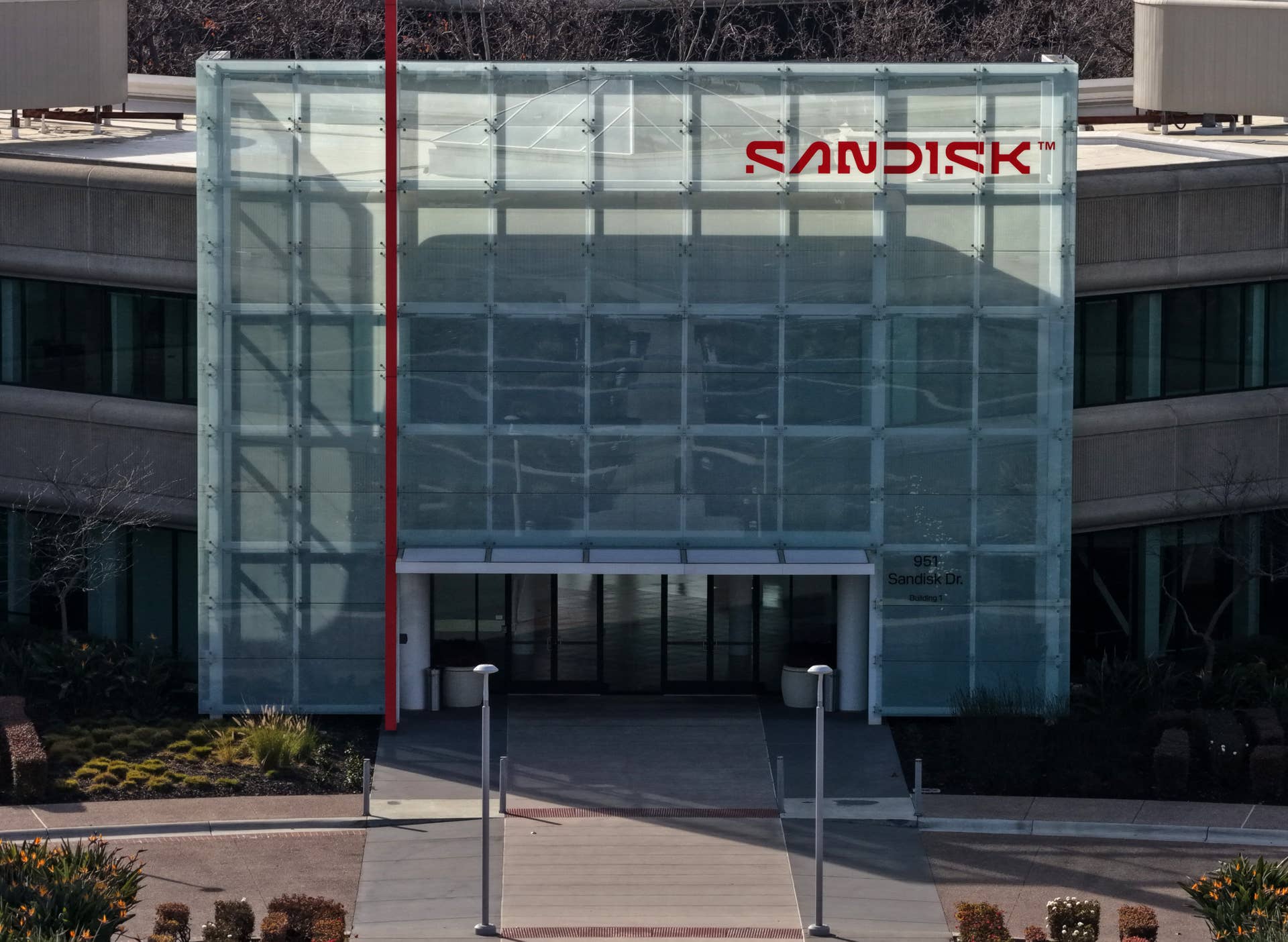
What Bank of America is actually saying about Sandisk
Let’s unpack it.
Bank of America raised its Sandisk target to $1,080 while keeping a Buy, arguing that NAND pricing is “stronger than previously anticipated” and that the company is “a prime beneficiary of AI‑driven storage demand,” according to an Investing.com write‑up of the call.
Related: Morgan Stanley has a message for ServiceNow investors
Mohan is quoted as saying “NAND supply remains tight” and that Sandisk’s exposure to enterprise and hyperscale storage positions it to capture outsized benefits as pricing rises, the TipRanks brief noted.
More Tech Stocks:
- Morgan Stanley sets jaw-dropping Micron price target after event
- Nvidia’s China chip problem isn’t what most investors think
- Quantum Computing makes $110 million move nobody saw coming
When I read that alongside the new price target, what I hear is this: BofA is not only reacting to the stock’s momentum but also updating its model for a world in which NAND pricing stays higher for longer than it assumed even a few months ago.
That is a real shift, not a cosmetic one, and it matters if you own or are considering owning SanDisk shares.
The backdrop is a full‑blown NAND shock
To understand why Bank of America is resetting its outlook, you have to look at what is happening to the product Sandisk sells: NAND flash.
One industry breakdown put it bluntly. NAND flash contract prices jumped 33% to 38% in the fourth quarter of 2025, then another 85% to 90% in the first quarter of 2026, and are forecast to rise 70% to 75% again in the second quarter, according to an analysis of SSD pricing trends by DropPreference, which cited TrendForce data.
The same piece notes that NAND now accounts for about 90% of an SSD’s cost and that contract prices have multiplied by roughly four to four and a half times in nine months, as AI data centers from Google, Microsoft, Meta, and OpenAI absorb most of the available supply.
That is the environment in which Sandisk is operating.
Bank of America is effectively taking that logic and extending it further out. Its $1,080 target sits atop an industry that has shifted from oversupply to a hyper‑tight cycle faster than most of us expected.
How Sandisk’s fundamentals are changing with the cycle
What makes this feel different from older memory cycles is that Sandisk’s numbers are actually lining up with the story.
Sandisk expects demand to remain above supply through at least 2026, and analysts now model adjusted gross margins climbing into the mid‑60s in the third quarter, with EPS more than doubling sequentially, reflecting how quickly the pricing environment has flipped, according to a recent forecast on Yahoo Finance.
Zacks estimates that Sandisk’s revenues in fiscal 2026 will reach about $10.45 billion, up roughly 42% year over year, driven by a PC refresh cycle that increases NAND content per device and by growth at the edge, according to a January report on the company’s outlook.
In other words, this is not just multiple expansion. The earnings power is changing.
Meanwhile, the supply side still looks disciplined. Counterpoint Research and other firms have said that memory makers are exercising unusually tight control over capacity expansion, with DRAM and NAND supply growth expected to remain below past boom cycles even as AI demand surges, TheStreet reported in a broader piece on memory pricing.
When I put those pieces together, I can see why BofA feels comfortable lifting its Sandisk target for the rest of 2026. The company is catching a rare moment where both pricing and discipline are working in its favor.
What this means if you already own the stock
If you bought Sandisk on the way up, this is where the emotional part kicks in. You are sitting on big gains. You are now reading that BofA and others are raising price targets into the four digits.
It is tempting to treat BofA’s reset as a green light to simply stay put or even add. But I think it is more useful to read it as a prompt to check three things:
- Position size.
After a move of 200% to 300% or more, Sandisk might be taking up a much bigger slice of your portfolio than you intended. The fact that big firms are raising targets does not change your risk tolerance. - Time horizon.
BofA’s case relies on NAND remaining tight through at least 2026 and AI infrastructure demand staying hot. If you know you will panic at the first 20% correction, you are not investing on the same timeframe as the note. - Cycle awareness.
Memory has always been cyclical. The difference this time is the scale of the AI story and the supply discipline, but even Counterpoint expects pricing to cool after 2026, with growth normalizing.
When I look at BofA’s reset through that lens, I do not see a simple “buy more” sign. I see a reminder to be intentional about how much of this cycle you want to be exposed to.
What if you are thinking about buying now
If you are on the outside looking in, BofA’s new target can almost feel like a taunt: “You missed the easy money.”
That is not how I would frame it.
The StockAnalysis.com forecast page shows that Wall Street’s average 12‑month price target on Sandisk still sits well below the highest estimates, with a consensus rating around “Moderate Buy” rather than “Strong Buy,” reflecting that some analysts are getting cautious after the rally.
A similar split is seen in TipRanks round‑up: some firms see more upside from AI‑driven storage demand and tight supply, while others worry about valuation risk and the eventual turn in the cycle.
So if you are thinking of initiating a position, I would ask myself:
- Am I buying this as a short-term momentum trade or a multi‑year AI infrastructure bet?
- How would I feel if the stock corrected 30% while the long-term thesis stayed intact?
- Do I understand enough about memory cycles to recognize when the fundamental story changes?
Bank of America resetting its Sandisk target for the rest of 2026 does not answer those questions for you. It just tells you that one of the biggest players on Wall Street has updated its math for a world where NAND pricing strength and AI demand are not flukes.
If you can align that with your own risk tolerance and time horizon, their call becomes a useful input rather than a source of FOMO.
Related: Top analyst drops eye-popping new price target on SanDisk stock