For three years, plenty of ordinary portfolios ran on seven engines. Anyone with an S&P 500 index fund leaned on the tech giants known as the Magnificent 7, whether they meant to or not.
That reliance got a rude reminder on Thursday, Nov. 5, 2026. The group lost more than $1 trillion in market value in one session, CNBC reported, on fears that the AI data center buildout could slow.
Bill Ackman had already been taking chips off that table. Pershing Square Inc. (PS), the firm he runs, sold about a third of its Microsoft (MSFT) shares in the third quarter, according to its latest 13F filing and the one before it. It also trimmed Meta Platforms (META) by roughly 11%, the filings show.
Also read: Billionaire Bill Ackman’s market warning resurfaces as stocks plunge
The more telling number is what stayed.
Leaving aside its own firm and fund, Pershing held about $14 billion in stocks outside the Magnificent 7 on September 30, 2026, based on the latest filing. Those stakes make up nearly 70% of the portfolio.
Ackman trimmed Big Tech while it was rallying
The timing is the interesting part. Microsoft rallied hard in the quarter, so selling a third of the shares only shrank the position from about $2.3 billion to $2.1 billion, per the two filings. Meta’s stake even grew in dollar terms.
That looks like housekeeping, not a verdict on Big Tech, and it came weeks before the November rout.
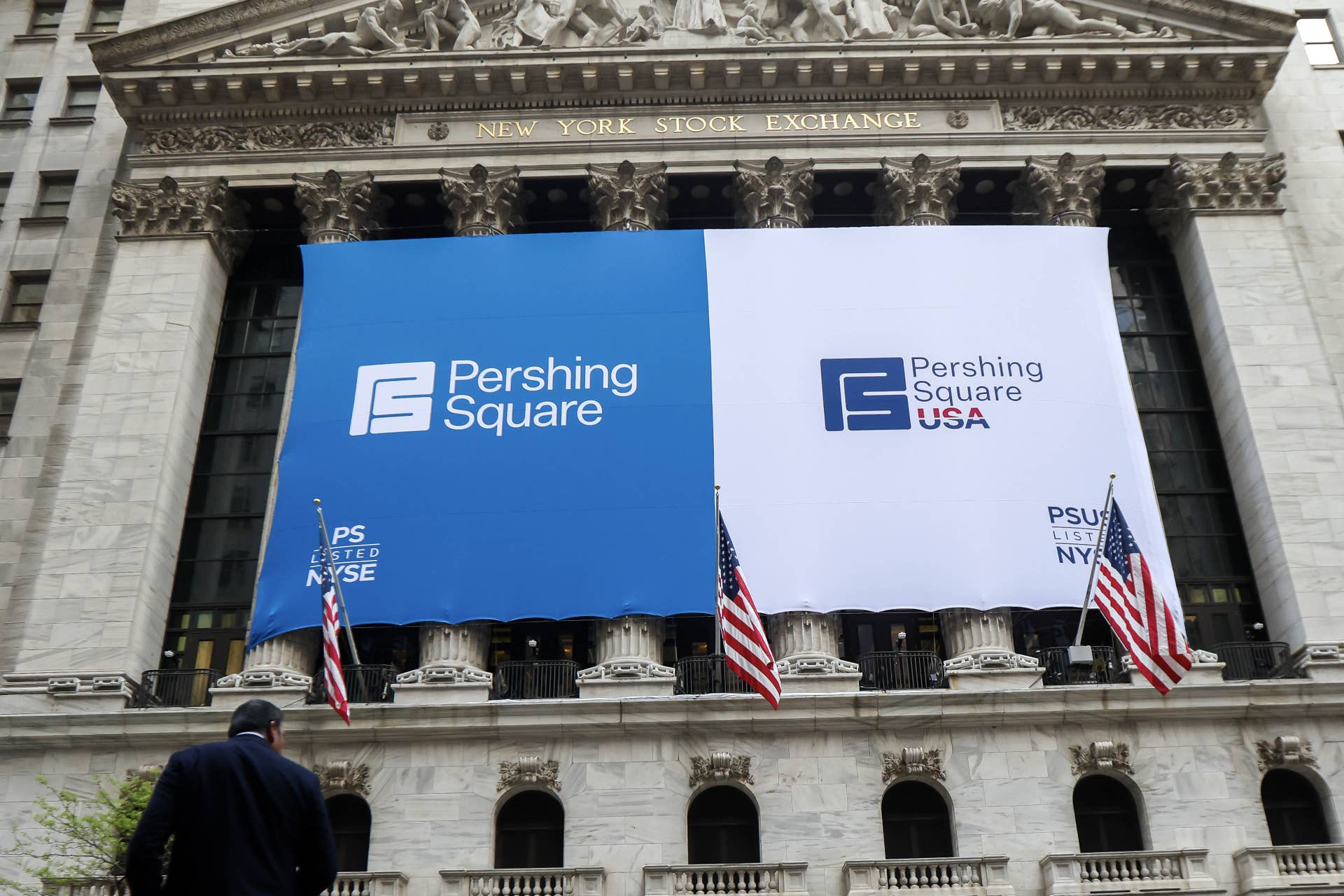
At Sept. 30 prices, the Microsoft shares sold were worth about $1.1 billion, based on the filings. Pershing’s new Intercontinental Exchange (ICE) stake was worth about $1 billion, per the 13F.
Ackman effectively swapped a slice of Microsoft for the owner of the New York Stock Exchange.
ICE and Alcon are the newest names in the book
Neither appeared in the June filing, and the semiannual report of Pershing Square USA (PSUS), the firm’s listed fund, says both were bought after June 30. Pershing called ICE a simple, predictable cash generator whose shares fell on worries it sees as unwarranted.
The second buy was Alcon (ALC), the Swiss maker of contact lenses and eye surgery gear. Pershing’s stake was worth about $954 million at quarter-end, per the 13F.
The report argues that Alcon’s roughly 20% operating margin sits well below its potential.
Netflix (NFLX) was the only existing holding Ackman added to. Pershing raised its stake by about 18% to 15.4 million shares, per the filings, even as the stock slipped.
The firm, which briefly owned Netflix in 2022, wrote that the company “has since effectively won the streaming wars.”
Other changes were smaller:
- No shares of ratings and index firm S&P Global (SPGI) were bought or sold, per the filings.
- Trims of 11% to 12% hit Visa (V) and Mastercard (MA), the filings show. Each stake still tops $1 billion.
- A leftover Hertz Global Holdings (HTZ) stake, worth about $34 million in June per the earlier filing, is gone.
Pershing’s estimates say growth lives outside Big Tech
Many investors assume leaving the Magnificent 7 means giving up growth. Pershing’s math disagrees.
Its semiannual report projects that Uber Technologies (UBER), the firm’s largest outside holding, will grow earnings per share by about 25% a year over the next three to five years, the highest in the portfolio.
More Investing:
- How smart investors use ETFs to legally bypass IRS wash sale rules
- Vanguard renames key funds to highlight Morningstar benchmarks
- Popular ETFs carry hidden tax rules that surprise retail investors
Amazon.com (AMZN) is next at 24% in the same table. At midyear, investors paid about 27 times forward earnings for Amazon versus 19 times for Uber, by Pershing’s count.
Across the portfolio, Pershing expects earnings per share to grow roughly 20% a year, against 12% for the S&P 500, according to the report.
Those are the manager’s own forecasts. Still, the pitch is clear: similar growth, lower prices and less exposure to the AI spending race.
Concentration risk is changing how investors diversify
Nov. 5 showed how quickly trouble in a few giants spreads into everyone’s index fund. Ackman kept Big Tech at a little under a third of his stock portfolio, per the latest 13F. Much of the rest sits in companies that take a small fee whenever people pay, trade, borrow or ride.
A 13F is a snapshot, and Ackman may have moved since Sept. 30. His February filing will reveal whether he bought Big Tech back cheaper or kept building toll roads.
Either way, it will show where he thinks the next decade of returns lives.