A familiar convenience store brand is leaving an entire market, ending a presence that had become part of many customers’ daily routines, from morning coffee runs to grabbing pizza on the way home, as it reshapes its store portfolio and focuses expansion efforts elsewhere.
The decision marks a notable moment for a retailer that has long emphasized its small-town identity and mission “to make life better for communities and guests every day.”
But the move also reflects a broader shift across the convenience-store industry, where operators are increasingly evaluating locations based on long-term returns, operational efficiency, and growth opportunities rather than maintaining a presence in every market.
Founded in 1968 in Boone, Iowa, Casey’s has grown into one of the nation’s largest convenience retailers and the fifth-largest pizza chain in the U.S. Today, the company operates more than 2,900 stores across 19 states.
Casey’s sells 10 stores and exits an entire market
Casey’s General Stores (CASY) has sold 10 convenience stores in Mississippi, marking both the company’s exit from the state and its first full withdrawal from a market after establishing operations there.
The move follows a broader asset divestiture effort. Earlier this year, Casey’s sold 41 convenience stores across several states for $42 million. Those locations were acquired in late 2024 through Casey’s $1.14 billion purchase of Fikes Wholesale, the parent company of CEFCO Convenience Stores, a transaction that expanded Casey’s footprint to approximately 2,900 units, according to the National Association of Convenience Stores (NACS).
During the company’s latest earnings call, Casey’s CFO Stephen Bramlage said the Mississippi stores were evaluated after the acquisition closed.
“We acquired 10 or so stores as part of that total transaction in the state of Mississippi, and upon further review, decided that just wasn’t the right place for us to fly the flag at the moment, given that location and the capital returns that we expected,” said Bramlage.
Bramlage added that Mississippi represented the “highest profile decision” among the 41-store divestiture.
According to company leadership, the remaining 31 stores sold include a mix of former CEFCO locations and stores acquired through earlier transactions.
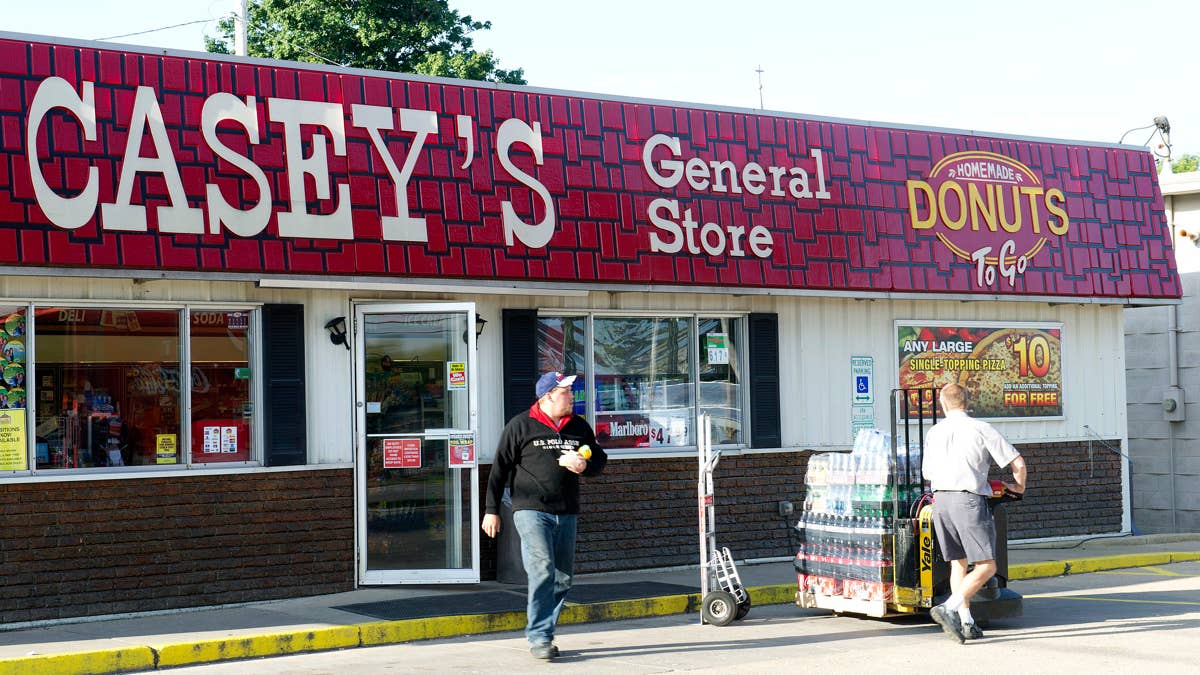
Why convenience stores continue expanding despite market pressure
Casey’s decision comes as convenience retailers continue navigating fuel price volatility, changing consumer behavior, and rising operating costs.
Industry data from Gas Station Equipment suggests that fuel sales typically generate relatively thin margins of 1% to 3% per gallon after wholesale costs, transportation, taxes, and other operating expenses are considered.
That dynamic has led operators to place greater emphasis on higher-margin categories such as prepared food, coffee, beverages, and convenience purchases.
Industry data also indicate that inside-store purchases account for a disproportionate share of overall profits. According to the NACS:
- Approximately 80% of U.S. gas stations operate a convenience store.
- About 44% of fuel customers enter the store during a visit.
- About one in three makes a purchase.
- In-store sales generate roughly 30% of revenue but account for about 70% of profit.
The data help explain why many convenience retailers have continued investing in foodservice programs, loyalty initiatives, and acquisitions that increase operating scale and diversify revenue.
Industry analysts have noted that larger networks can spread fixed operating costs across more locations while creating additional opportunities to grow higher-margin categories.
“Gas stations are struggling to make a profit from selling gas alone,” said industry analysts at Hacsys. “By diversifying their revenue streams, gas stations can stay afloat and make better use of the real estate they already own.”
Analysts also said that maintaining cost discipline remains important as operators expand.
Casey’s reported revenue and inside sales growth in the fourth quarter
Despite exiting one market, Casey’s latest results indicate continued business growth.
During the fourth quarter of fiscal 2026:
- Net revenue increased 14.5% year over year.
- Inside sales rose 7.4%.
- Inside gross profit was up 10.5%.
- Total fuel gallons sold climbed 3.6%, supported by store growth and same-store gains.
At the same time, expansion created additional cost pressures.
Total operating expenses increased 10.1% during the quarter. Casey’s said operating approximately 40 more stores than the prior year contributed about 2% of that increase.
Expansion remains central to Casey’s strategy
Even after the sale, Casey’s total store count increased by 20 locations between the third and fourth quarters, according to the company’s earnings report.
The retailer expects to open at least 120 stores in fiscal 2027 through a combination of mergers and acquisitions and new construction, representing around 4% annual growth.
Here’s some of my previous coverage on the gas station and convenience store industry:
- 44-year-old gas station chain makes rare closure after 26 years
- Iconic convenience store chain shares growth plans (here’s where)
- Popular convenience store chain closing locations
That target would return Casey’s to its historical expansion pace after integration work tied to the CEFCO acquisition slowed progress in fiscal 2025.
Casey’s said 50 acquired locations have already been rebranded and that the company expects to return to its more typical pace of store growth.
CEO Darren Rebelez said the company’s guidance reflects a return to its traditional expansion model and long-term growth approach.
What this means for Casey’s
Casey’s exit from Mississippi does not necessarily signal a broader retreat.
Instead, the move reflects a larger trend across the convenience-store industry in which operators are becoming more selective about capital allocation while continuing to invest in markets that align with long-term return expectations.
For Casey’s, the move aligns with management’s stated focus on return expectations, operational efficiency, and continued expansion in higher-priority markets.