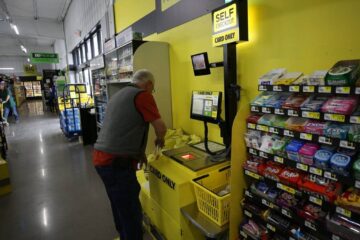
Are your grocery bills finally getting some relief — or is more price pressure on the way? In this episode, we sit down with Dr. David Anderson, economist and professor at Texas A&M University, to break down what’s really happening with food prices in America.
Jeffrey Snyder, Broadcast Retirement Network
Well, joining me now is David Anderson. He’s an economist and professor at Texas A&M University.
Dr. Anderson, it’s always great to see you. Thanks for joining us this morning. Hey, good to see you too.
And a little bit different background for you and a little bit different format for me. I’m trying out this new format. So we’re both trying to change things up and that’s good for middle-aged Americans.
So I guess my first question is, I love talking to you because we can kind of mix in prices, but also economics. So let’s start with the recent July CPI inflation data. What did you glean from that?
It looks like inflation cooled or muted a little bit during the month of July.
David Anderson, PhD., Texas A&M University
Yeah, it did. That’s basically what the data showed us. You know, some, at least not the fast, as fast a growth as we’ve seen in some past reports.
So that’s, you know, that’s kind of the positive news. I tend to kind of dig into some of the other things. You know, the big factor there was lower fuel prices.
And remember that, that report’s backward looking by a month. And so we may also be noticing some higher prices just recently at the pump, but that’s a big part of what that number shows us. I think that’s an important part of it.
And then of course I dig into the food and some of the meat stuff more so than others.
Jeffrey Snyder, Broadcast Retirement Network
So let’s talk about that because, and I agree here in Charlotte, I know you’re in Texas, or at least that’s where you live. Prices kind of climb back up. I think I paid 389 for 87 octane gas.
That’s a little bit lower than what it was, but a little bit higher also what it was. But let’s talk about some of those food prices. I know one of your areas of expertise, because you have many, is beef.
That’s a big staple for Americans as we’ve discussed. How are cattle prices, beef prices, excuse me?
David Anderson, PhD., Texas A&M University
Yeah, so on the beef side, if we look at the CPI report, which reflects across a bunch of cuts from ground beef to some steaks to roasts, just a variety of cuts at the grocery store. Prices have been basically fairly flat, just a small increase over the last about four months. The comparison to a year ago is getting smaller.
The change year over year is getting smaller. As prices sort of flatten out today, we’re comparing against the rapid rise that really started in the second half of last year. So that sounds like maybe something better for us consumers.
At least we don’t have that rapid increase in prices that we’ve seen. If we look at some of the other meats, the competing meats would be chicken and pork. Both of those categories saw prices that are below a year ago.
So chicken and pork in this CPI data are reflecting some lower prices. You know, we’re increasing chicken production in the US because it’s been profitable to do so. And that’s really resulting in lower prices.
Jeffrey Snyder, Broadcast Retirement Network
Let me go back to the beef prices and we can talk about chicken, your comments on chicken. Let’s talk about beef. I have a big concern, I know you do as well, for the cattlemen out there and ladies, cattle people, that are out there building the herds, I don’t know what you call the work, but you know, working with the herds.
How are they doing? Because as you have told us, there’s drought conditions, it’s been difficult to build up these herds. How are our cattlemen and women doing?
David Anderson, PhD., Texas A&M University
Well, prices have been very good. In fact, they’ve been record high. And even with rising costs to produce cattle, these prices have been delivering profits.
And that’s really what happens in this cyclical industry when cattle numbers are very low, as they are today. Prices go up and it’s cattle producers that are profitable. Other segments get squeezed, like our restaurants, particularly meat packers, beef packers.
They get squeezed on that margin, but we’ve certainly had some good prices for the rancher cattle producer community.
Jeffrey Snyder, Broadcast Retirement Network
Yeah, well, very important, because if there’s not an incentive to do the work, we’re not gonna have beef.
David Anderson, PhD., Texas A&M University
They’ve gotta be profitable, because that’s the market signal to expand our herds, if you can, is making money. And there are times in this cyclical industry that cattle producers lose money, and that’s when they start reducing the number of cattle that they have, because they’re losing money. And so now we’ve got the profits that we need to grow.
We just need things like rainfall and drought to go away, and some of those things that allow us, that really become the constraining factor in allowing us to grow.
Jeffrey Snyder, Broadcast Retirement Network
Let me ask you now about what I like. I love chicken, but also chicken and pork. I would have expected that demand would have gone up, because I guess, based on the data you’ll tell us, that people maybe have shifted tastes a little bit to chicken and to pork.
So wouldn’t you expect those prices to go up? Or has the market gotten the signal, the producers gotten the signal that we need more, and therefore they’re gonna produce more?
David Anderson, PhD., Texas A&M University
Well, I think that’s a really interesting thing that we see. We think about these meats that are competing with each other at the meat case, when you go to the grocery store, but also the restaurant segment. And so, one of the things I think we see over time is that we’ve had growing demand for beef.
And so what we see is prices have gone up. Folks don’t necessarily quit buying beef. They may move to a less expensive beef cut.
You’ll move from a higher end steak price cut to maybe a lower value cut, a different cut of beef, more ground beef. And so I think we tend to stay in that segment more, so then switching to a different meat like we used to. So I think that’s a longer term kind of subtle trend in the marketplace, which is certainly helping the beef side of things.
But overall, I think it’s fair to say we have very good demand for all of these meats really across the board, but certainly the growth in chicken, we’re producing more, it’s been profitable to do so. If you look at restaurants, chicken prices are lower than beef prices. And so you think of a restaurant that’s got to have an assortment of items for folks to choose from that are competitively priced with their other restaurant competitors that folks could go to.
Yet, which ones of those maybe deliver a better margin or better profit margin for the restaurant? And that’s often the chicken part, right? And so we certainly have growing demand for chicken.
It’s versatile in so many different things.
Jeffrey Snyder, Broadcast Retirement Network
Let me ask you, this is not necessarily in your warehouse. But it is about food and prices. Let’s talk about lettuce, because as I’m sure you have read in the news, I’ve read in the news, the audience has read the news and seen the news, there’s been a cyclospora contamination of certain types of lettuce.
I wonder what the impact is that you’ve seen in the numbers.
David Anderson, PhD., Texas A&M University
Well, I am very fortunate in that my experience with this is by reading only. Me too, me too on that, good point. More personal experience.
But you know what, the data has shown a sharp decline in lettuce sales. And because of that, we’ve got prices that have dropped dramatically in some of this data. And I think that really shows the power of changing demand.
Folks are not buying as much lettuce. But the problem with that is they’re not buying because they’re a little worried about what else they might get with it. And so I think it really highlights kind of the power of demand and how that can change really overnight.
But it’s not really, we’re not changing demand for a good thing here, we’re changing demand because we’re worried about other things. And so there’s both, you know, we might see that price change and say, well, gosh, that’s really good, lower prices. But then if we stop and think about why, then maybe it’s not such a good thing after all.
Jeffrey Snyder, Broadcast Retirement Network
Yeah, how does it impact? So this is not just to be clear for the audience, Cyclospora was found in certain types of lettuce offered by certain manufacturers. I think that the FDA and governmental agencies and the companies that are impacted are working on this.
But how does this impact the other producers of lettuce? I guess they’re pickers really, not really producing anything, they’re just picking and cleaning and putting out. So how does this impact the other competitors in the marketplace?
David Anderson, PhD., Texas A&M University
Well, they certainly are, you know, farmers that grow lettuce. And then the lettuce is harvested and goes either to, you know, into your grocery store or food service, you know, our restaurants and things. So there are a number of producers.
I think we’ve seen as the federal government goes through and tries to do the trace back to figure out where this came from and to stop this problem, get those products off the market. You know, there are multiple producers here, but, you know, sometimes these kinds of problems really hit everybody because people don’t buy lettuce. Do they necessarily distinguish or is it, you know, in the restaurant, it may not say where that lettuce has come from.
And so it can kind of hit everybody. Although, you know, if you’re a producer supplier that is not part of this problem, that can be good for you, given that you don’t have this problem, your products aren’t recalled, you don’t have this problem, but that overall demand drop may affect you as well. You know, I think it’s important to recognize too that many of our farms that produce lettuce, for instance, they are producing in California and Arizona and Mexico.
And the reason it gets to a real simple thing called, you know, our growing season. The growing seasons are different geographically. Going from North to South, and it helps us supply lettuce year round.
You know, prior to the ability to do this, you know, many of our fruits and vegetables were highly seasonal. You didn’t see these in the store year round. And in our ability to grow these crops in different regions of the world and then import them allows us to have, you know, year round supplies of a lot of these fruits and vegetables.
Jeffrey Snyder, Broadcast Retirement Network
That’s a perfect segue to fertilizer. And I know, obviously there’s the war going on with Iran. There’s the war between Russia and Ukraine.
That has an impact, Dr. Anderson, not only on oil and gasoline prices and refining, but also on fertilizer. How are we doing, because you mentioned the growing season, how are we doing on the creation and the purchase and use of fertilizer?
David Anderson, PhD., Texas A&M University
Well, certainly there’s a lot of the worldwide fertilizer supplies, particularly nitrogen fertilizer that comes from that part of the world. And while we produce a lot of nitrogen fertilizer in the U.S., we are importers. And so we’re affected by these world prices.
One of the things that, you know, when the war started back in the spring, many farmers had already bought fertilizer, pre-booked it for this growing season because we were already getting started in the growing season in many parts of the U.S. But the effects of higher fertilizer prices has a longer term effect because that’s part of our production costs of growing crops. And it’s something we tend to not think about is we have a lot of improved pastures that cattle graze on, meaning they’re improved grass varieties. We’ve chosen and selected ones that are more productive and those are often fertilized.
And so fertilizer affects our fundamental beef production as well, where the cattle are, particularly in the Eastern half of the U.S. And so the whole fertilizer segment becomes a little more of a longer term effect as we start to have to go buy more fertilizer, realize higher prices, higher production costs, and then that’s reflected in our production and prices in the future.
Jeffrey Snyder, Broadcast Retirement Network
And even just to carry it forward, I guess, even if the war were to end tomorrow, the prices just don’t adjust. There’s, you know, coming back online, there’s continuing, right? So it takes time for those prices to adjust.
Doctor, if you could just pull back to the macro for a second, I think the USDA came out with some projections on food prices. It looks like food prices will, at some rate, increase for 2027. Does that align with your thinking and analysis?
David Anderson, PhD., Texas A&M University
Well, I think it probably does. We have a lot of these economic things going on. We talk about inflation, wage rates, fuel costs, all of these things that, there’s long time lags in the economy and from an event happening to the full effects of it being realized into the, you know, over time.
And so some of this is just simply the time lags involved in the costs showing up, producing the next season’s crop, getting it to in front of us at restaurants and grocery stores. And so, you know, I think that builds up some inertia for rising prices, even though different items within the total food complex may be going up and down. Food prices and energy prices in our inflation data tend to be more volatile.
So you’ll see in the inflation data, they talk about a core rate, and then they talk about kind of energy and food that do go up and down a lot more. So, you know, there’s just some long time lags in much of this.
Jeffrey Snyder, Broadcast Retirement Network
Yeah, and I know people are feeling the brunt of this, myself included, yourself included. You know, I guess we’ll have to check in with you again next month. Dr. David Anderson of Texas A&M University. Thanks so much for joining us, and we look forward to having you back again on the program very soon, sir.
David Anderson, PhD., Texas A&M University
Hey, it’s great to be with you, thanks.