Anyone with a credit card balance knows how lenders think. Nothing backs that debt, so the rate is steep. A mortgage costs far less because the house is collateral.
CoreWeave Inc. (CRWV) has used both kinds to build its AI cloud, and the expensive kind is now the problem. Its total debt climbed from about $21 billion at the end of 2025 to roughly $47 billion by Sept. 30, according to its third-quarter earnings release.
Its third-quarter interest bill of $846 million was about four times its operating income, the release showed.
Investors noticed. The shares traded as high as about $138 and as low as about $41 over the past year. That is a roughly 70% drop from peak to trough, worsened by an October debt scare.
Now CoreWeave has a clear message for investors. On its Nov. 10 earnings call, CEO Michael Intrator said the company “will not use the unsecured debt market to fund our business at current yields.”
Also read: Banks that raced to fund neoclouds like CoreWeave are now hesitating
Shares jumped as much as 24% the next day before giving back some ground.
Instead, it is taking the mortgage route. CoreWeave is seeking at least $4 billion through an investment-grade loan led by Morgan Stanley and Mitsubishi UFJ Financial Group, Bloomberg reported on Nov. 11. Chips and a Meta Platforms (META) contract would back it, the report said.
Why this loan costs less than CoreWeave’s bonds
CoreWeave’s own debt is junk. Meta’s credit profile is expected to win the loan a high-grade rating anyway, Bloomberg reported.
In March, the same two banks arranged an $8.5 billion investment-grade loan facility with a fixed portion priced at about 5.9%, according to a press release.
CFO Nitin Agrawal said that the next contract-backed loan should yield 7% to 7.5% at current rates. That is roughly half of the recent yields on its existing junk bonds.
Borrowing $4 billion at 7.5% instead of about 15% would save about $300 million a year, or roughly $75 million a quarter. That is more than a third of CoreWeave’s $207 million third-quarter operating income, according to its release.
Even so, CoreWeave’s average borrowing cost was already 7.9% at the end of September, Intrator said, so the loan mostly keeps it from rising.
CoreWeave borrows now and gets paid later
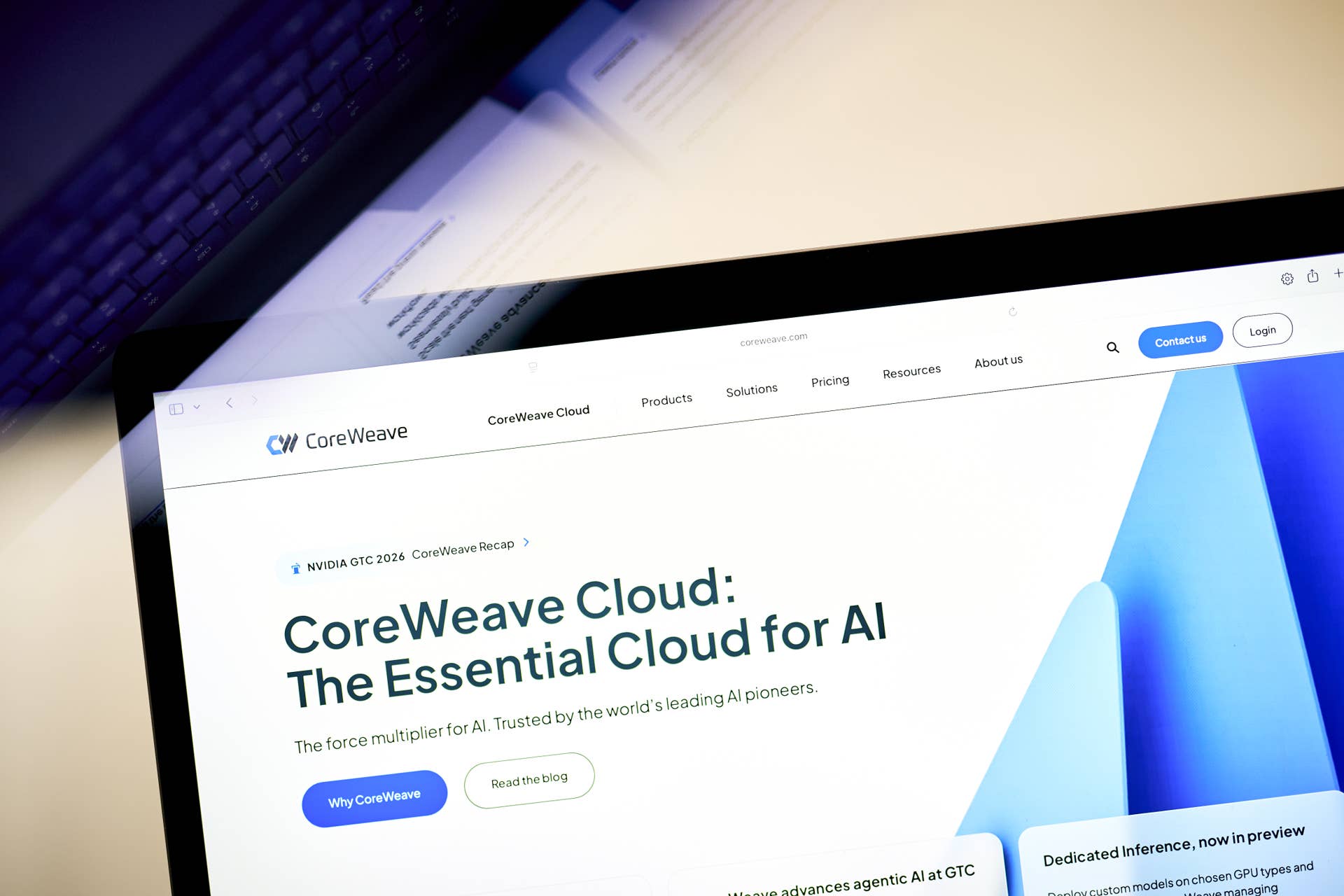
CoreWeave is a full-stack AI cloud provider. In addition to GPU infrastructure, its platform includes orchestration, managed inference, storage, networking, observability, and developer tooling.
AI labs and tech giants use it to build, run, and scale their AI models, mostly under multi-year contracts. That makes the stock a direct bet on AI demand.
That model needs debt. CoreWeave pays for chips and data center buildouts long before customers finish paying. It spent about $9.4 billion on equipment and facilities in the third quarter, more than double its $3.66 billion in revenue, according to its release.
Four numbers explain the borrowing:
- Spending plans were raised to a range of $37 billion to $39 billion for 2026.
- Demand keeps piling up, with backlog at about $132.5 billion as of Sept. 30.
- Interest keeps climbing, with $1.05 billion to $1.15 billion expected in the fourth quarter, the company said.
- Customers should chip in about $9 billion in prepayments and deposits within three months.
Debt also shapes the valuation. CoreWeave’s market value was about $26 billion in early November, according to Stock Analysis, little more than half of its debt. When lenders have more at stake than shareholders, small changes in borrowing costs swing what is left for the stock.
Wall Street analysts are not giving up on CoreWeave
In late October, 32 of 42 analysts tracked by Stock Analysis rated the stock a Buy or a Strong Buy. Only three rated it a Sell or worse.
Some firms trimmed targets in October, yet the average was still about $132 in early November, close to the stock’s 52-week high, according to Stock Analysis.
CoreWeave’s raised 2026 revenue forecast of $13 billion to $13.3 billion has helped ease concerns about its debt-heavy business, Seeking Alpha reported.
The deal is not final, and marketing could start as early as the week of Nov. 16, the report said.
More CoreWeave:
- CoreWeave stuns Wall Street as Nvidia scandal deepens
- Banks that raced to fund neoclouds like CoreWeave are now hesitating
- CoreWeave left one thing out of its friendly letter to Texas
Chips are becoming a new kind of collateral
Lenders have long financed airplanes and office towers this way. CoreWeave wants AI chips treated the same way, with a customer contract carrying the weight. Banks have grown cautious about neoclouds, yet CoreWeave’s secured loans still trade near face value, Agrawal said.
That carries a quiet risk. The March loan runs until 2032, according to CoreWeave, and chips age far faster than planes. As more of its debt leans on single-customer contracts, those customers may matter more to lenders than CoreWeave’s own results.
The next test comes soon. The banks plan to sell the loan to other lenders and investors in phases, and marketing could start as early as the week of Nov. 16, Seeking Alpha reported.
If the loan’s yield lands inside the 7% to 7.5% range Agrawal described, CoreWeave will have shown that contract-backed debt can continue funding its buildout while its bonds remain expensive.
A higher rate would signal that lenders want more cushion, even with a blue-chip customer behind the loan. Either way, the result could become a reference point for other AI cloud companies hoping to borrow against their chips.