If you’ve ever written a letter to a new boss, you know to keep the request subtle. You open with congratulations, agree with everything you safely can, and save the real ask for the end. CoreWeave Inc. (CRWV) just sent Texas’ incoming governor that kind of note.
On Nov. 7, I wrote that Texas was turning against data centers. That piece followed Bloom Energy (BE) as it landed its largest international project.
Gina Hinojosa had just won the governor’s race after pledging a statewide data center moratorium, Bloomberg reported.
That same day, CoreWeave chief executive Michael Intrator sent her a letter. She had made it clear that data center growth must work for Texas, he wrote, adding, “We strongly support those principles.”
He closed by offering to help with “the responsible completion of permitted projects” and with standards for future development.
Also read: Bloom Energy wins abroad while Texas turns against data centers
That closing line is the tell. It covers projects with permits and projects that will follow future rules, but skips everything in between. That middle ground, projects still waiting for approval during a freeze, is where CoreWeave’s real risk sits.
CoreWeave agreed to pay its own way in Texas
The concessions are real. In the letter, CoreWeave said it pays for the substations and transmission upgrades its new sites need. The point, it said, is to keep the cost of its growth from landing on neighboring households.
Water got the same treatment. CoreWeave said its closed-loop liquid cooling uses about as much water as a similar-sized office building, or less. The letter also lists six active Texas locations, including Plano, Round Rock, and Dickens County.
Those promises speak to voters. They don’t answer the question investors care about most, which is timing.
Unbuilt capacity is where the freeze could bite
Contracted power is all the electricity capacity CoreWeave has signed up for, including sites still under construction. CoreWeave had about 4.2 gigawatts of it as of Aug. 11, according to an investor presentation filed with the SEC. The same filing shows only about 1.5 gigawatts active as of June 30.
So most of the power CoreWeave has lined up isn’t switched on yet. Revenue backlog, the money customers have committed to spend, stood at $104.2 billion as of June 30, according to the presentation. That money only arrives as new data centers come online.
The presentation’s sample timeline shows partners spending 12 to 18 months on land, buildings and grid hookups before CoreWeave installs its chips. A pause on approvals hits the start of that clock. For any project caught in it, each month of delay can push revenue back by a month.
The letter never says how much of that unbuilt capacity sits in Texas, or how much already holds permits. Without those two numbers, investors can’t size the Texas risk.
CoreWeave stock already trades like Texas got harder
The letter on its own is unlikely to lift the stock, because it changes no rules. What it does is boil the Texas question down to how long the freeze lasts.
Shares fell nearly 10% on each of the two trading days after the Nov. 3 election. That timing points to the vote, though the same data show the slide started in late October.
The Nov. 6 close left CoreWeave stock about 66% below its 52-week high of $138.25, according to StockAnalysis. It also sat only about 14% above its 52-week low of $40.58. Much of the bad news looks priced in, but the cushion above the low is thin.
Analysts are still bullish on paper. StockAnalysis shows a consensus Buy rating from 42 analysts, with an average price target of $131.53. That target sits roughly 183% above the Nov. 6 close, which suggests many forecasts haven’t caught up with the sell-off.
The latest calls listed there all came before the vote. Raymond James analyst Josh Beck kept a Buy rating on Oct. 26 but cut his target to $75 from $125. Morgan Stanley’s Adam Wood rated the stock a Hold with a $70 target on Oct. 23.
HSBC’s Abhishek Shukla is the most cautious, reiterating a Sell rating and a $39 target on Oct. 20. That target sits below the Nov. 6 close, so HSBC still sees room to fall.
More CoreWeave:
- CoreWeave appears to have a lender problem, not a customer one
- Goldman Sachs sends CoreWeave shareholders a surprising signal
- Nebius vs. CoreWeave: Which neocloud stock has more debt?
CoreWeave’s letter may be the industry’s new playbook
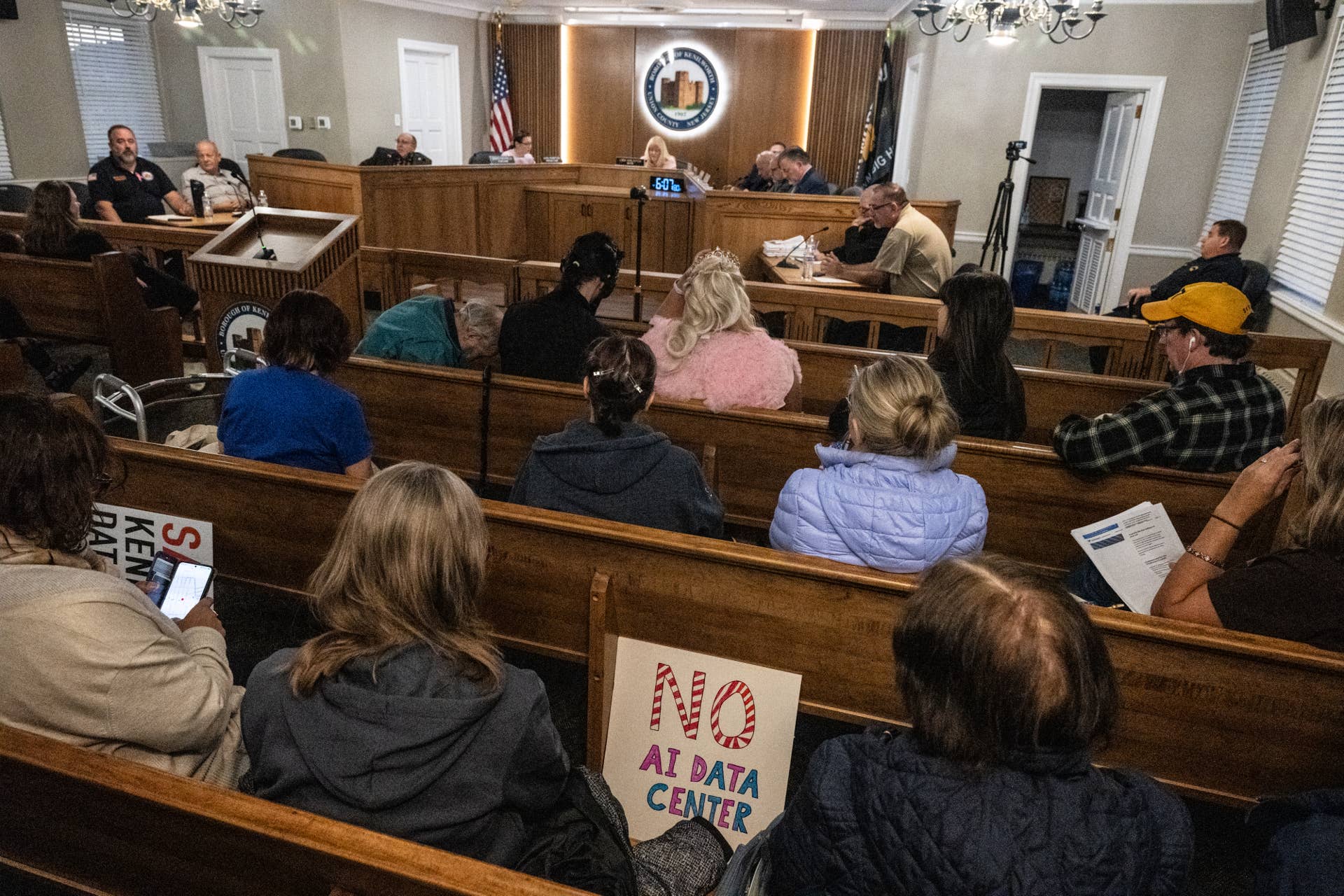
Texas won’t be the last test. Democrats now control 29 governors’ mansions, and many are calling for statewide moratoriums on data center construction, Bloomberg reported.
CoreWeave’s letter reads like a first draft of how the industry will bargain with those states. It agrees to pay the costs voters see on their bills to protect the timelines investors can’t see.
The next clue arrives quickly. CoreWeave reports quarterly results on Nov. 10. How it describes its Texas pipeline on that call will hint at whether the AI buildout’s bottleneck is shifting from power to permission.