Radio host and bestselling personal finance author Dave Ramsey has a blunt warning for Americans saving for retirement.
Many people wonder if their 401(k) plan is properly preparing them financially for their post-career lives, or whether other investment tools such as Individual Retirement Accounts (IRAs) might be necessary.
“So, is your 401(k) enough?” Ramsey asks. “It might be if you have access to a Roth 401(k), solid investment options and are able to invest 15% of your income.”
But Ramsey adds a strong word of caution.
“It might not be if one or more of those above points aren’t true in your case,” he wrote on Ramsey Solutions. “You may need to look at options outside your workplace retirement plan, like a Roth IRA.”
Ramsey explains that, through his company’s National Study of Millionaires, he found that eight out of 10 millionaires invested in their company’s 401(k) plan.
“It’s not the most exciting way to invest,” he wrote. “But it is exciting to become a millionaire!”
It’s not the most exciting way to invest. But it is exciting to become a millionaire!”
Even so, Ramsey urges workers to invest in Roth IRAs — accounts where people pay taxes upfront so they can watch their accounts grow tax-free and withdraw funds without paying those taxes when they retire.
“The best tool you can use for investing beyond your 401(k) is a Roth IRA,” Ramsey wrote. “We surveyed more than 10,000 millionaires in our National Study of Millionaires. A huge majority (74%) said they invested outside of their workplace retirement plan. This isn’t an either/or situation — it’s both/and.”
Tony Robbins says Roth 401(k)s are a key investment tool
Motivational speaker and philanthropist Tony Robbins champions the financial advantages of using Roth 401(k)s for employees at companies that offer them.
“The secret to the 401(k) is simple,” Robbins wrote in his “Money: Master the Game” book. “You have to do it.
“But you have to do it within a cost-efficient plan and take advantage of the Roth 401(k) (especially if you believe taxes will go up for you in the future),” he added. “Most people won’t make the commitment to save more today, but they will make the commitment to save more tomorrow.”
Ramsey emphasized that he agrees with that approach.
“If you have access to a Roth 401(k), you should always pick that option,” Ramsey wrote. “Nobody knows what tax rates will look like in the future, so it’s smart to pay taxes now — before your money has a chance to grow. That way, you can enjoy tax-free withdrawals in retirement.”
IRS outlines 2026 401(k), IRA contribution limits
These 401(k) plans and IRAs are available to retirement savers, but they have contribution limits.
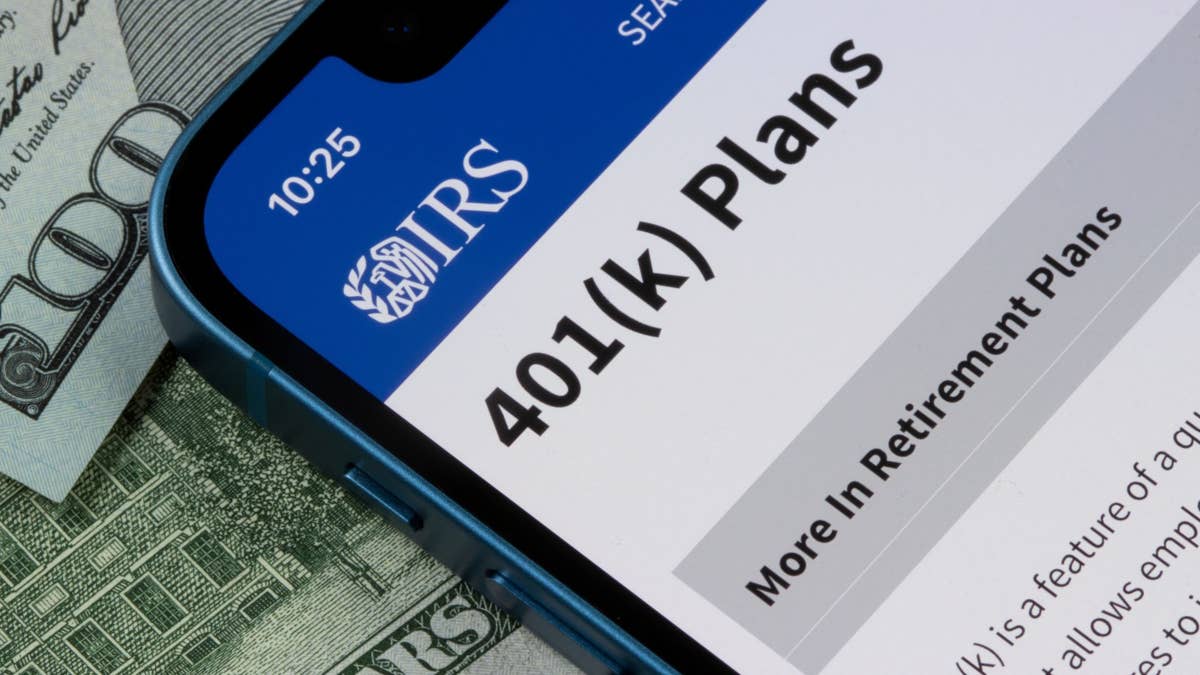
For 2026, the maximum employee contribution for 401(k) plans has risen to $24,500, up from $23,500 in 2025, according to the Internal Revenue Service (IRS).
More on personal finance:
- Charles Schwab, Fidelity alert workers to forced 401(k) rule
- Dave Ramsey warns Americans on 401(k)s, IRAs (he’s not wrong)
- Congress research arm warns Americans on 401(k), IRA penalty
The IRA contribution limits include catch-up contributions for older savers.
“The limit on annual contributions to an IRA is increased to $7,500 from $7,000,” the IRS explained. “The IRA catch‑up contribution limit for individuals aged 50 and over was amended under the SECURE 2.0 Act of 2022 (SECURE 2.0) to include an annual cost‑of‑living adjustment is increased to $1,100, up from $1,000 for 2025.”
Shutterstock
Dave Ramsey warns on traditional 401(k) plans
Ramsey includes a scenario retirement savers should be aware of.
“Let’s say you’re retired and have both a traditional 401(k) and a Roth IRA,” he wrote. “It’s time to start making withdrawals, and you want to withdraw $25,000 from each account for $50,000 of annual income.”
“Because your IRA is a Roth plan, you can take out $25,000 every year and not owe any taxes on it,” Ramsey continued. “No problem there! Since most Roth IRA withdrawals in retirement do not count as taxable income, it puts less stress on you at tax season too.”
But Ramsey warns people about a pitfall regarding traditional IRAs.
“Your traditional 401(k) is a different story,” Ramsey wrote. “Those withdrawals do count as taxable income. If your retirement income puts you in the 12% tax bracket, you’ll actually have to withdraw around $28,000 from your 401(k) every year to cover your taxes and still get the income you need.”
“An extra $3,000 might not seem like much, but it adds up over time,” he emphasized.
“If your retirement lasts 30 years, you’ll end up withdrawing almost $100,000 more from your 401(k) than your Roth IRA just to maintain your income.”
Dat Ngo, a licensed CPA and personal finance professional at Vetted Prop Firms, adds another important note.
“A good way to go about saving for retirement is to slowly increase your contribution amount rather than wait for a time when you might be able to make a substantial increase,” Ngo wrote in an email to TheStreet.
“A good example of this would be to increase your 401k contribution each time you get a raise.”
Related: AARP warns Americans on 401(k), IRA costly mistakes