With inflation up 3.4% over the past year and food prices still climbing, shoppers have every reason to look for bargains.
From keeping tabs on Amazon Prime Deal days to Walmart Deals, we are all on the lookout to make the budget shrink, somehow.
And on an everyday basis, this means turning to discount stores where a grocery cart can cost less.
Grocery Outlet is working hard to become that destination for many, with several changes underway.
The changes follow a difficult stretch that included layoffs, abandoned expansion plans, and dozens of store closures.
The timing could be important for shoppers as grocery prices remain a pressure point for American households.
And according to Bank of America analysts, the possibility of this pressure increasing further is high.
A model that uses wages, fuel, and commodity costs indicates that food-at-home inflation could reach the 7%-8% range over the next 6 months, compared with the current 2.1%, according to a note shared with TheStreet.
Also read: Your grocery bill could rise again, analysts warn
Against this backdrop, Grocery Outlet is returning its attention to what set the chain apart: heavily discounted products and the possibility that shoppers will find different deals every time they visit.
BofA analyst Robert Ohmes said Grocery Outlet is rebuilding its “treasure hunt” experience and restoring its supply of opportunistically purchased merchandise, excess or closeout inventory that the company can acquire cheaply and sell at steep discounts.
Grocery Outlet can price its strongest deals as much as 40% to 70% below those at conventional supermarkets, according to BofA.
In the past, the discount model has worked particularly well for Grocery Outlet when consumers are under pressure.
The discount chain posted comparable-sales growth of 12.3% in 2008 and 14.7% in 2009, giving it a 27% two-year stack during the recession, according to BofA.
The retailer also significantly outperformed several major retail peers over that two-year period, the analysts found.
Grocery Outlet closed dozens of stores after expanding too quickly
Grocery Outlet entered 2026 with a major cleanup strategy
In March, the company unveiled an optimization plan, under which it closed 36 financially underperforming stores after reviewing its nationwide store portfolio.
CEO Jason Potter said at the time that Grocery Outlet had expanded too quickly and needed to focus on stores with a sustainable path to profitability.
Here’s some of my coverage on changing grocery business:
- Aldi: The discount grocer is rapidly expanding across the U.S. as shoppers continue looking for lower prices.
- Kroger: Kroger has been adding exclusive products and new reasons for customers to visit stores as competition from Walmart, Amazon and discount chains intensifies.
By the end of the second quarter, all 36 locations included in that plan had closed.
Grocery Outlet closed 12 stores during the quarter alone, including 9 tied to the optimization plan, and ended the period with 547 stores across 16 states.
Overall, the company closed 40 stores during the first half of fiscal 2026, including the 36 stores specifically targeted by the optimization program.
An earlier restructuring that included headcount cuts and the termination of 28 leases resulted in about $45 million in charges in the first half of fiscal 2025, including roughly $1.5 million in severance and benefits, according to its latest earnings report.
Now the company is shifting its attention from cutting back to rebuilding the shopping experience inside the stores that remain.
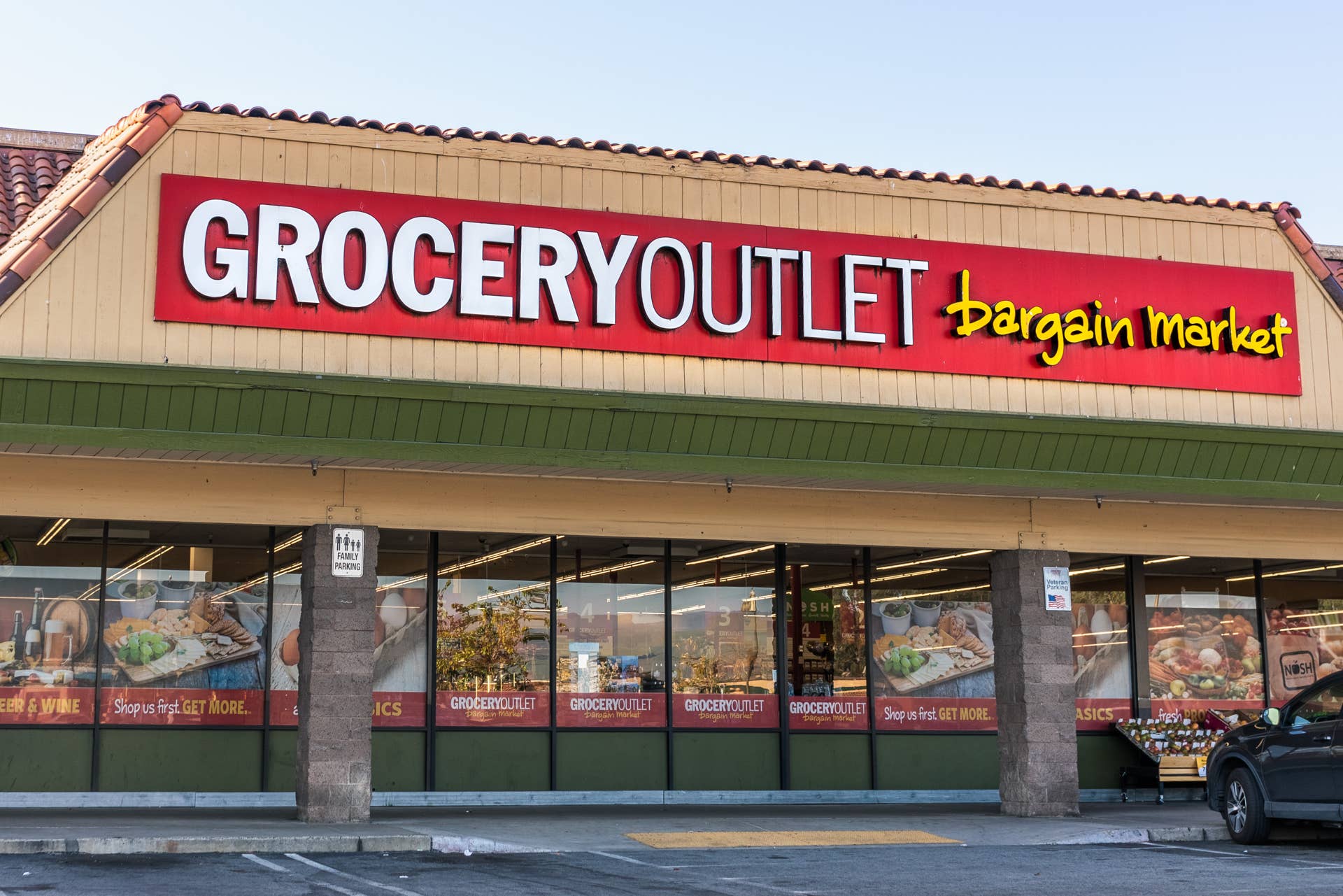
Grocery Outlet brings store prices to online shoppers
One of the biggest changes is happening outside the physical store.
Grocery Outlet recently joined retailers offering no-markup pricing on Instacart, bringing its regular in-store prices to the delivery platform.
Instacart announced the change on Sept. 24, alongside similar moves by Bashas’, Fareway, Raley’s, and Super King Markets.
The company said more than 90% of its U.S. customers now have access to at least one retailer offering products without an additional online markup.
Grocery Outlet Chief Marketing Officer Jim Porterfield said bringing its in-store prices to Instacart was an extension of the company’s focus on value.
BofA said Grocery Outlet has also introduced in-store price parity through DoorDash and Uber Eats.
An effort analysts believe could make its bargain positioning more accessible to consumers who increasingly buy groceries online.
Grocery Outlet tries to restore its bargain-hunting appeal
The company is making changes inside stores as well.
Grocery Outlet brought back veteran executive Paul Miller in June to lead purchasing and merchandising.
Miller previously spent more than 25 years with the company and helped build its opportunistic buying operation and supplier relationships.
BofA said the amount of opportunistic merchandise available at Grocery Outlet bottomed earlier this year but has since recovered roughly halfway towards an ideal level.
Why is this important? Because Grocery Outlet’s model differs from that of a conventional supermarket.
The retailer operates with a rotating assortment of roughly 5,000 items and sources about half of its products at deep discounts through its opportunistic purchasing model.
Instead of carrying exactly the same assortment week after week, Grocery Outlet can purchase excess inventory from manufacturers and suppliers and pass some of those savings on to shoppers.
The company is also improving ordering systems, working to restore the flow of opportunistic merchandise, and considering new categories such as food service.
The early signs remain mixed.
Grocery Outlet’s second-quarter comparable sales declined 0.3%, as the average amount spent per transaction fell 2.1%.
But customer transactions rose by 1.8%, suggesting more people were coming through its stores even as spending per trip declined.
For President and CEO, Jason Potter, the results are optimistic.
“Comparable-store sales trends improved over the first quarter,” said Potter, citing improvement in basket for the positive traffic.
Further noting, “This progress reinforces our confidence that restoring the core strengths of our business and better supporting our independent operators can build a stronger foundation for sustainable, profitable long-term growth.”
The changes were enough for BofA to upgrade Grocery Outlet to Buy from Neutral, citing an improving merchandise mix and online price parity.
Meanwhile, for shoppers, Grocery Outlet’s reset comes down to a simple question: Can the chain once again make the trip worth it?
Related: Publix faces customer backlash over an unusual discount policy