California farmers are facing the aftereffects of losing a local employer, which, on the surface, may seem like the loss of some jobs. But for farmers in California, a major food-processing plant can mean much more.
It means losing a buyer for crops that took years to cultivate, forcing difficult decisions about what to grow, how much to produce, and whether an agricultural business can remain financially viable.
And this has already become a reality for some California peach growers following the closure of a major Del Monte Foods cannery earlier this year.
Now, another familiar American fruit brand is preparing to shut down a processing facility in the state.
Dole Packaged Foods plans to permanently close its Atwater, California, facility, eliminating approximately 404 jobs, according to a November 17 Worker Adjustment and Retraining Notification (WARN) notice reviewed by TheStreet.
The company is also closing a nearby laboratory in Livingston, extending the impact across Merced County.
The shutdown adds to concerns about the loss of food-processing capacity in California’s Central Valley, where agriculture supports livelihoods not only for farmers but also for factory workers, transportation companies and businesses throughout the food supply chain.
Dole Whip maker to close California food-processing plant
Who hasn’t heard of Dole Whip, the popular pineapple frozen treat? From its fruit cups and canned pineapples to juices and frozen fruit, Dole Packaged Foods has been a familiar name in American grocery aisles for decades.
The company operates the Dole Sunshine packaged-foods brand and is separate from publicly traded Dole plc.
More Layoffs:
- Canva CEO apologizes to workers, makes unusual promise amid layoffs
- Disney eyes thousands more layoffs as major cost-cutting push widens
- Popular website builder cuts 19% of jobs as CEO signals major shift
Its Atwater facility has been involved in processing agricultural products, including apricots, peaches, strawberries, cantaloupes, melons, and carrots.
A 2024 filing with California’s Central Valley Regional Water Quality Control Board detailed how peach pits generated during processing were distributed to several ranches in Merced County for use as soil amendments and dust control.
The filing illustrates the connection between the processing facility and surrounding agricultural operations, although it does not establish where Dole sources all the fruit processed at Atwater.
Now, operations at this Atwater facility and Livingston laboratory would conclude in March 2027.
In a statement provided to the Los Angeles Times, Dole said it was consolidating its frozen-fruit processing and packing operations to streamline its supply chain and improve long-term competitiveness.
“We did not make this decision lightly,” the company said.
The company’s WARN notice identifies 11 phases of permanent job reductions beginning January 20 and continuing through August 27, 2027. The largest round is scheduled for March 26, when 191 workers are expected to lose their jobs.
The affected positions include production workers, product inspectors, maintenance technicians, forklift operators, quality-control employees, supervisors and managers.
Dole also said seasonal employees who might otherwise have returned for the February 2027 season would not be recalled. The decision highlights the uncertainty facing seasonal workers across America’s agricultural supply chain.
As I previously reported, Washington fruit grower Borton & Sons disclosed plans to lay off 928 farm workers following the harvest season, with no confirmed recall dates or staffing requirements for 2027.
While seasonal employment typically fluctuates with agricultural production, plant closures can eliminate the possibility of workers returning to jobs they previously relied on.
The Dole notice identifies 404 affected positions at Atwater but does not provide a separate employment count for the Livingston laboratory.
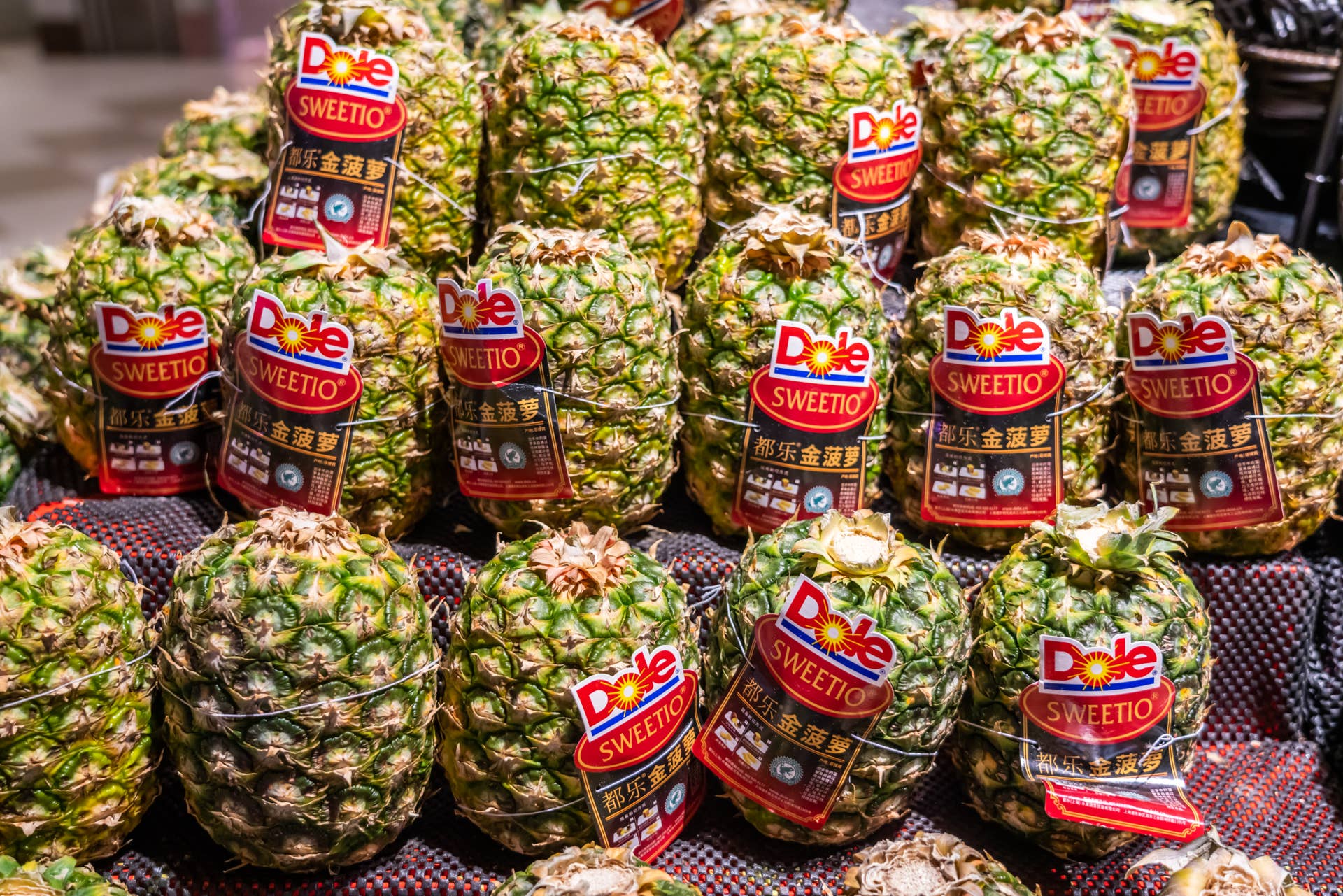
Dole had already been pursuing supply-chain changes
The company’s efforts to improve operational efficiency predate its latest closure announcement.
In May 2025, Dole appointed Todd Stillwell as vice president of supply chain and manufacturing.
According to the company’s original announcement, Stillwell was tasked with improving supply-chain efficiency, strengthening partner relationships and overseeing the company’s U.S. frozen-food manufacturing, warehousing, distribution and transportation operations.
The appointment was part of a broader effort to streamline operations and support the company’s growth.
However, Dole has not said whether the Atwater closure is directly connected to those earlier initiatives or identified where all the affected production will move.
The company will continue operating other facilities, including operations in Southern California and Georgia.
California food-processing closures are changing the future for farmers
The significance of losing a food-processing facility extends beyond the jobs inside the plant.
Agriculture is central to Merced County’s economy, supporting employment across farming, manufacturing, transportation, and other industries.
A 2025 economic study commissioned by Merced County found that agricultural production, food processing, and their broader economic effects contributed approximately $9.93 billion to the county economy in 2023.
Together, those activities supported approximately 38,800 jobs, including 22,862 directly connected to agricultural production and processing.
The study also estimated that locally sourced, value-added food processing generated approximately $3.98 billion in economic activity and supported 15,185 jobs when indirect and induced employment were included.
Agriculture ranked as Merced County’s largest industry by direct economic output and employment.
This dependence makes any plant closure particularly consequential for communities whose economies rely on businesses buying, processing and distributing agricultural products.
When a major processing facility disappears, farmers may need to find alternative buyers, adjust crop production or absorb additional transportation costs.
The disruption can be particularly serious for perennial crops such as peaches, where orchards require years of investment before generating commercial yields.
Recent developments involving Del Monte Foods demonstrate how quickly those concerns can become financial problems for growers.
Related: Boeing’s 2,500 job cuts come with a troubling unanswered question
Del Monte closure leaves California peach growers without buyers
Earlier this year, Del Monte Foods permanently closed its Modesto, California, fruit-processing plant following its Chapter 11 bankruptcy proceedings and subsequent asset sales.
As TheStreet previously reported, the closure affected 765 workers. The company also shut its nearby Hughson facility.
But the consequences extended beyond the employees losing their positions.
According to the U.S. Department of Agriculture’s July 2026 Fruit and Tree Nuts Outlook, Del Monte’s Modesto operation previously processed roughly one-third of California’s clingstone peaches, or approximately 70,000 tons.
Its closure removed a major buyer from an industry where most peaches are grown specifically for processing.
A July 31 federal rule revealed that Del Monte’s bankruptcy and rejection of future contracts had left more than 5,600 acres of clingstone peaches without processor contracts. Some of those orchards had been planted only recently under long-term agreements intended to support future production.
Unlike crops that can be replanted each season, peach trees take several years to reach commercial production, and such situations leave farmers with significant investments in orchards that may no longer have a reliable buyer.
The effects were visible in California’s 2026 production figures.
According to the USDA’s September 2026 Fruit and Tree Nuts Outlook, approximately 151,700 tons of clingstone peaches were delivered to processors during the season, a 28% decline from the previous year.
The agency said the removal of productive orchard acreage, likely in response to the cannery closure, was the primary driver of that decline, although lower yields and smaller fruit also contributed.
The challenges facing California peach growers also reflect longer-term changes in the industry.
The USDA’s July federal rule noted that California had 11 canned-peach processors during the 1980s. Following decades of consolidation and plant closures, only one processor entity operating 2 facilities remained.
The agency identified declining demand for canned peaches, increasing competition from imports, and rising production costs as among the pressures faced by domestic growers.
Those challenges have made the loss of another major processor particularly difficult for an industry already struggling to balance production with demand.
USDA offers $9 million to California farmers to remove peach trees
The problems facing California’s clingstone peach growers became serious enough to prompt federal intervention.
On July 31, the USDA established a Clingstone Peach Diversion Program, making up to $9 million in federal funding available to eligible growers who voluntarily remove peach trees.
The California Canning Peach Association requested federal support following Del Monte’s bankruptcy and the loss of long-standing grower contracts.
Under the program, eligible farmers can receive compensation for removing clingstone peach trees, including certain young orchards planted under contracts.
The USDA estimated that approximately 3,000 acres of orchards could be removed through the program. Participating growers must also agree not to replant clingstone peach trees on the cleared land through May 31, 2036.
The program illustrates the lasting consequences that can follow the disappearance of a major agricultural buyer.
Instead of simply directing their harvests to another processing facility, some farmers are being offered financial assistance to stop producing the crop altogether.
However, the two closures do not necessarily create identical problems for growers.
Dole’s Atwater operation focuses on frozen-fruit processing, while Del Monte’s Modesto facility was a major cannery, meaning no comparable agricultural disruption resulting from Dole’s planned closure has yet been established.
Nevertheless, looking at the impact on California’s clingstone peach industry, you can see how the loss of processing facilities can have lasting consequences for regional agricultural production.
Dole has not disclosed whether growers supplying its Atwater operation will retain existing contracts, whether production will be transferred to other California facilities or whether suppliers may need to find new markets.
Related: Intel announces more layoffs as workforce shrinks by 7,300