Money runs on trust, not on metal or paper. A dollar buys what it buys because enough people agree it will, and because the country standing behind it has spent the better part of a century being the safest bet in the room.
For most of your life, that safest bet had a specific address. When a foreign government took in more than it spent, it generally bought United States Treasuries, the IOUs of the American government.
Treasuries were the financial equivalent of a savings account that could not bounce. Germany did it. Japan did it. Even China did it, parking trillions in the debt of the country it was busy competing with.
That quiet arrangement is a big reason Washington can borrow enormous sums cheaply, and a big reason the dollar in your wallet carries weight in nearly every airport on Earth.
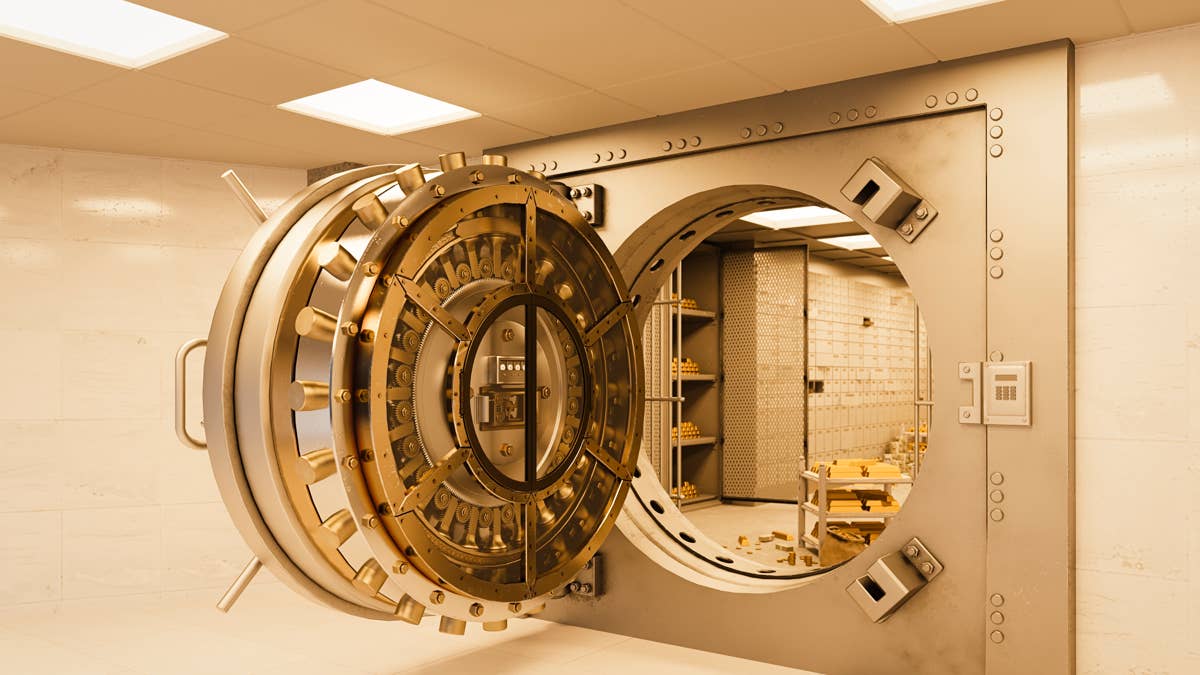
So it matters that the world just changed its mind. For the first time since 1996, central banks now hold more of their reserves in gold than in U.S. Treasuries, according to the European Central Bank.
The metal had not outranked American government debt in official vaults since the Clinton administration.
How gold finally overtook U.S. Treasuries
Two forces did the work, and only one of them is really about gold.
The first is price. Gold climbed about 66% in 2025 and briefly traded above $5,500 an ounce in January 2026, which inflated the value of every bar already sitting in a vault, according to Barron’s.
More Gold & Silver
- Bank of America has stark message for Silver investors
- State Street declares gold must-hold asset
- How much gold you should hold in your retirement portfolio
The second is buying. Central banks added roughly 863 tonnes of gold in 2025, less than the 1,000-plus tonnes they bought in each of the previous three years but still far above the long-run norm, according to the World Gold Council.
The National Bank of Poland was the biggest buyer, adding 102 tonnes to push its hoard to 550 tonnes, the World Gold Council reported.
Stack those together and foreign central banks closed last year holding an estimated $3.93 trillion in gold, just ahead of the roughly $3.9 trillion they held in Treasuries, Barron’s calculated.
Joe Kalish, chief macro strategist at Ned Davis Research, wrote in a research note that “nobody trusts anyone’s fiat currency,” according to Barron’s.
Here is how the world got here:
- 1996: The last year foreign central banks held more gold than U.S. Treasuries, before the dollar’s modern grip took hold, according to the World Gold Council.
- 2022: Central bank gold buying hit a record 1,136 tonnes, the most since at least 1950, according to the World Gold Council.
- January 2026: Gold topped $5,500 an ounce, a record, according to the European Central Bank.
- Late 2025: Gold reached 27% of global reserves against 22% for Treasuries, retaking the crown, according to the European Central Bank.
When I compared those figures to the longer record, what stood out was not how far gold pulled ahead. It was how close the race had quietly become while American headlines fixated on stocks.
Why the gold shift should worry Washington
The uncomfortable part for the United States is the motive behind the buying.
Much of it traces to 2022, when Washington and its allies froze Russia’s dollar reserves after the invasion of Ukraine. The move became the spark for a broader effort to step away from the dollar, the Financial Times reported.
That freeze taught every other government a lesson. Money held in dollars can be switched off by the country that prints them.
Related: This $10B ‘gold rush’ could transform the U.S. economy
Gold locked in your own vault cannot be frozen from abroad. “Geopolitical tensions continue to drive strong central bank demand for gold,” ECB President Christine Lagarde wrote in the report.
The buyers since then read like a map of countries hedging against U.S. power. China has added more than 350 tonnes, followed by Poland at 320, Turkey at 220, and India at 130, the European Central Bank reported.
One detail says it all. The single largest gold buyer in 2025 was not a country but the stablecoin company Tether, which scooped up more than 100 tonnes, the ECB noted.
What gold’s rise means for your money
Here is where a central banker’s spreadsheet reaches your kitchen table.
The U.S. government funds its deficits by selling Treasuries, and for decades, foreign central banks were among the steadiest buyers in the room. When that appetite fades, Washington has to win over other buyers, usually by paying higher interest.
Higher Treasury yields do not stay in Washington. Mortgage rates, auto loans, and credit card rates are all priced off government debt, so a world cooler on Treasuries can quietly lift the cost of your next loan.
In my analysis, the number Washington should fixate on is not the 27% gold now claims. It is the 22% Treasuries have fallen to, because that is the line that pays the nation’s bills.
Before anyone panics, the dollar has not been dethroned. Counting every dollar asset, not just Treasuries, the greenback still makes up about 42% of global reserves and remains the world’s dominant currency, the European Central Bank reported.
Some of gold’s jump came from price rather than any rush for the exits. Central banks are “not insensitive to price dynamics,” the World Gold Council noted, even as their long-term interest in gold holds firm.
For a regular investor, the move is not to copy a central bank. It is to notice what the most cautious money on the planet is doing with its safety net. Gold-backed funds like SPDR Gold Shares (GLD) exist for that purpose, though chasing a metal already up 66% in a year carries real risk of its own.
The deeper story is about trust, the thing the dollar was always built on. Every tonne of gold a central bank buys instead of Treasuries is a quiet vote that American debt is a shade less untouchable than it once was.
This does not crack the system overnight. The dollar’s lead is huge, and a single rough year for gold could close the gap again.
But the 1996 line has been crossed, and the buyers who crossed it are not day traders. They are the slow, conservative institutions that almost never change their minds, which is exactly why Washington should be watching where they park their money next.