Oil is the one price nobody votes for, but everybody pays for. It sits underneath the grocery run, the summer road trip, the box that lands on the porch, and the airfare that somehow costs more than it did last spring.
Most of the time it fades into background noise, a number scrolling across a screen that feels like somebody else’s problem. Then a shipping lane on the other side of the planet hiccups, and the cost of moving anything, anywhere, starts creeping back into everything you buy.
For a few weeks this summer, that background noise had gone quiet. A deal between Washington and Tehran reopened the Persian Gulf, tankers that had been trapped for months finally moved, and the fear premium that once had crude flirting with $120 a barrel drained away.
The market exhaled. Banks that had spent the spring racing each other to raise price targets started quietly walking them back down.
That calm did not last. In a note out this week, Goldman Sachs told clients the recovery it had been counting on has gone into reverse, and the bank is once again flagging fresh upside risk to oil prices.
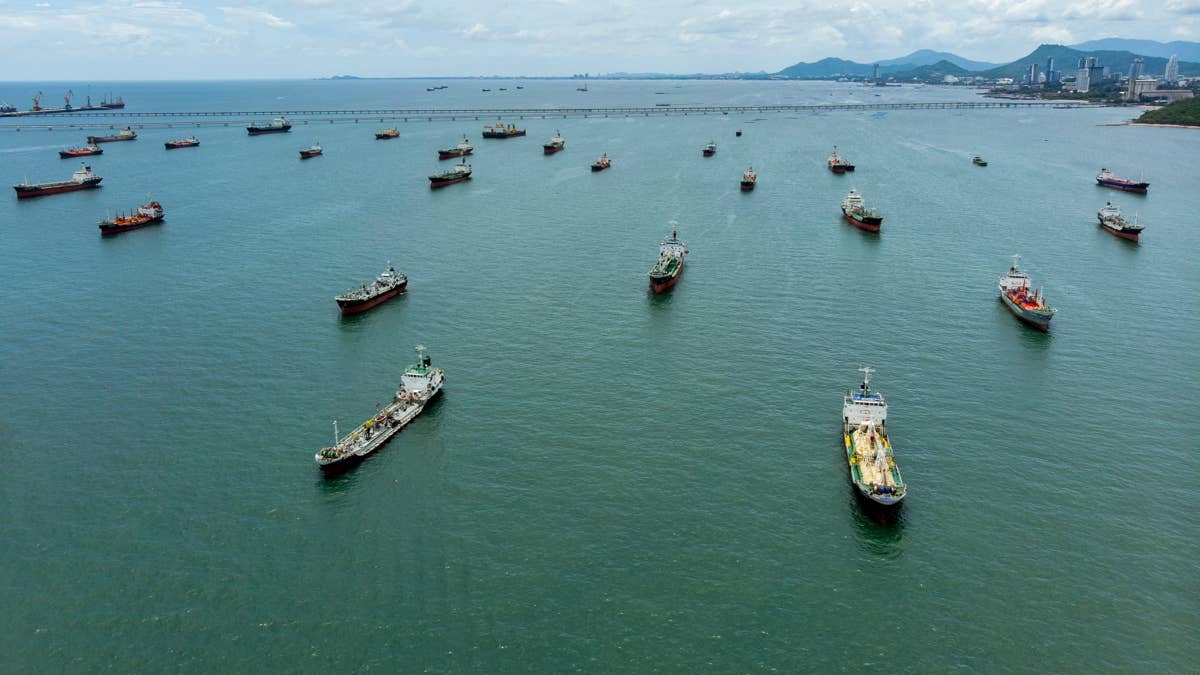
Why Gulf oil flows went into reverse
The setup matters. For most of the spring, the story was closure. A conflict that began in late February shut the Strait of Hormuz, the narrow channel that carries close to a fifth of the world’s crude, and prices ripped higher on the fear that barrels simply could not get out.
Then came the thaw. Gulf exports clawed back to more than 80% of pre-war levels in the first two weeks after the deal, and traders started betting the worst was behind them, according to Investing.com.
That bet is now unraveling. Renewed attacks on tankers in the strait have pulled flows back below 50% of pre-war levels, or roughly 11 million barrels a day, and the United States has reinstated a naval blockade of Iranian ports, according to Investing.com.
More Oil & Gas:
- As Middle East tensions explode, oil and gas prices reset
- Gas-price questions remain even with end to Iran conflict in sight
- JPMorgan sends blunt verdict on oil, economy
Saudi Arabia and the United Arab Emirates, which have the biggest tanker fleets and the highest-quality fields, did most of the heavy lifting on the rebound through early June, according to Investing.com. Even with their help, other production losses against February levels may still run near 9 million barrels a day.
None of this is a clean read, either. Some tankers slip through the strait with their transponders switched off, then signal again once they are clear, which means the official flow data probably understates how much is actually moving. Mid-June estimates were later revised up 1.1 million barrels a day, or 10%, once those ghost cargoes showed up, according to Investing.com.
When I lined up this week’s note against the one Goldman put out a week earlier, the shift was hard to miss. On July 8, the bank was still calling the risk two-sided and expecting flows to normalize by month’s end. Shippers “may hesitate to cross under the currently unclear ceasefire status,” its analysts wrote at the time, according to OilPrice.com.
What Goldman’s oil warning means for prices
Here is where it gets uncomfortable for anyone hoping crude keeps drifting lower. Goldman estimates the market is now short 13.4 million barrels a day of Persian Gulf flows, a gap it says would likely force either sharper demand destruction or renewed inventory draws unless tensions cool soon, according to Investing.com.
The bank did not blow up its base case. It kept Brent at $80 a barrel for the fourth quarter of 2026 and $75 for 2027, the same numbers it landed on when it quietly walked its targets down in June, as TheStreet reported. What changed is the shape of the risk around those numbers.
Related: OPEC, Saudi Arabia share a signal on where oil is headed
That earlier caution was already building. “Hormuz disruptions could slow down the production recovery,” Goldman’s analysts wrote in that July 8 note, with Gulf output still about 10.5 million barrels a day below pre-war levels, Bloomberg reported.
Now the bank says the balance is “skewed to the upside in the near term,” according to Investing.com. It sketched out just how wide the range has become:
- Base case: Brent averaging $80 a barrel in the fourth quarter of 2026 and $75 in 2027.
- Upside case: Brent overshooting $110 a barrel this quarter if the Gulf recovery keeps stalling.
- Downside case: prices sliding into the $60s by year-end if production beats forecasts and demand recovers slowly.
Source: Investing.com
Why China’s oil demand is the wild card
There is a counterweight buried in the note, and it sits in China. Goldman said Chinese crude imports may have bottomed after sliding 5 million barrels a day year over year in June, according to Investing.com. The bank is not looking for an urgent rebound, since China is sitting on stockpiles of about 1.9 billion barrels, enough to cover roughly 117 days of demand.
Still, it expects Chinese buying to pick up as Middle Eastern producers cut official selling prices for July and August to move barrels. If that demand returns while Gulf supply stays choked, the squeeze Goldman is describing gets tighter, not looser.
How an oil squeeze reaches your wallet
In my analysis, the figure that matters most is not the price target, it is the 13.4 million barrels. That is roughly the daily output the world would have to conjure from somewhere else to erase the shortfall, and there is no spare tap that size sitting idle.
You feel a number like that at the pump first. Every $10 move in crude works its way into gasoline, diesel, and jet fuel within weeks, which is why a barrel priced in London lands on the receipt at a gas station in Ohio.
From there it spreads. Diesel moves the trucks that stock the shelves, so a sustained oil spike quietly reprices groceries, delivery fees, and flights, the everyday costs that had finally started to settle.
It also complicates the one thing a lot of households have been waiting on, which is cheaper money. The Federal Reserve has been inching toward rate cuts. A fresh oil-driven jump in inflation makes that path harder to justify, so a stalled shipping lane in the Gulf can end up deciding whether your next car loan or mortgage gets any cheaper.
What to watch in the oil market next
So what actually tips this? The whole call hinges on whether the tanker attacks ease or escalate.
If negotiators pull the strait back from the edge, flows recover and the $80 base case holds, maybe even slips toward that $60s scenario. If the blockade hardens and shippers keep steering clear, the 13.4 million barrel hole gets deeper and $110 stops sounding far-fetched.
I have tracked every one of Goldman’s oil revisions this year, and the pattern is its own kind of warning. The bank raised targets into the spring panic, cut them into the summer thaw, and is hedging again, all in the space of a few months. That whiplash is the real signal.
For readers, the move is not to trade the headline. It is to watch the strait, not the price target. The barrels crossing Hormuz over the next few weeks will tell you where your fuel bill, and a chunk of next year’s inflation, is heading long before any bank puts out its next note.
Related: U.S. blocks Strait of Hormuz: Here’s what’s next for oil prices