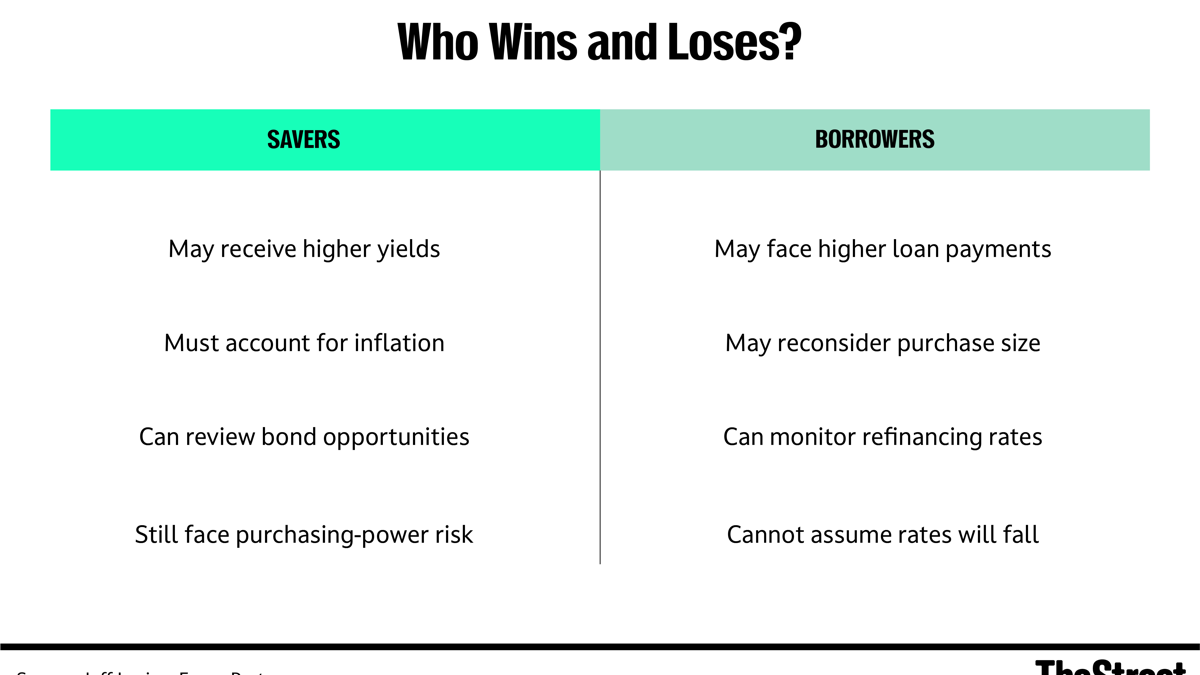
Higher interest rates create winners and losers. Borrowers may pay more for homes, cars and other purchases, while savers may earn more from bonds and other fixed-income investments.
But a higher yield does not necessarily produce a higher standard of living. If inflation matches or exceeds the return, an investor’s account balance may rise even as its purchasing power falls.
In a recent interview, Jeff Levine, chief planning officer for Focus Partners, discussed how inflation, interest rates and a weaker dollar can affect retirement spending, bond holdings, mortgages and everyday purchases. He also identified steps households can take, from stress-testing retirement plans to monitoring refinancing opportunities.
Below is a transcript of the interview with Levine, edited for brevity and clarity.
Why higher rates create winners and losers
Bob Powell: People are worried about the position the Federal Reserve and Treasury appear to be in. If the Fed raises interest rates, the Treasury may have to pay more to borrow. Higher rates can also affect mortgages, auto loans and other household expenses. What should consumers do?
Jeff Levine: It depends on which side of the fence you sit on.
Higher interest rates are clearly a negative for borrowers. Someone buying a car or house is in a tougher position as rates rise. You can refinance if rates come down, but refinancing can be expensive and time-consuming, and lower rates are not guaranteed.
On the other hand, people living on fixed incomes may benefit if they can invest at higher interest rates for an extended period.
When you can get 5% guaranteed from the federal government for 30 years, a lot of people look at that and say, “I can live with that.”
Why inflation can erase higher income
Bob Powell: What is the risk of focusing solely on that 5% return?
Jeff Levine: That 5% is a nominal figure. It does not account for inflation.
If inflation is higher than your return, earning 5% does not look nearly as attractive because you are losing purchasing power on a real basis.
Your dollar balance may be rising, but what you can buy with it may be declining. You might be able to buy a dozen eggs this year, 11 eggs next year and 10 the year after that.
That is the challenge. The Fed is charged with addressing inflation, and one way to reduce inflationary pressure is to make borrowing more expensive. People may then borrow less and spend less.
But if people buy less, the economy may slow. That can affect businesses and jobs. Everything connects to something else, and it is difficult to know how far the effects will extend.
Bob Powell: There are two jobs I wish I had pursued when I was younger: economist and weatherman. You can be wrong 50% of the time and still keep your job.
Jeff Levine: That is not a bad deal compared with some other work.
How a weaker dollar reaches your wallet
Bob Powell: Some people are also predicting a decline in the dollar. Does a weaker dollar matter to household finances?
Jeff Levine: We operate in a global economy, so we have to consider the United States in relation to other countries.
When the dollar is strong, it is cheaper for Americans to buy goods from other countries. When the dollar weakens, imported goods become more expensive.
A weaker dollar can make U.S.-produced goods more competitive by comparison. But many consumers are simply looking for the lowest price, regardless of where a product was made. If the dollar loses value relative to other currencies, that can make importing goods more expensive and affect the broader economy.
What retirees should review now
Bob Powell: When I ask what someone should do, your standard answer is often, “It depends.” Is that the answer here?
Jeff Levine: It does depend on your personal situation, but there are several interest-rate and inflation protections to consider.
If you have a retirement plan, examine how higher-than-expected inflation could affect your ability to spend. You may decide to spend a little less early in retirement so that higher inflation does not force you to take more investment risk later.
In some cases, you may want to reconsider your portfolio allocation.
Bond prices tend to fall when interest rates rise. Existing bonds may pay less than newly issued bonds, making the older bonds less attractive by comparison. Investors might consider individual bonds instead of bond funds, examine other areas of their portfolios or favor higher-quality bonds over lower-quality bonds.
All those choices can affect the outcome.
How borrowers can respond
Bob Powell: What should consumers with debt consider?
Jeff Levine: Monitor your debt and think carefully about major purchases.
If you are buying a home, you might consider a 15-year mortgage instead of a 30-year mortgage because the rate may be lower. You might buy a smaller house.
Or you may decide to buy now and accept the current rate. If so, monitor interest rates so you are prepared to refinance if they fall enough to make refinancing worthwhile.
There is no one-size-fits-all answer. But on a home purchase, a decline of about 1 percentage point in prevailing mortgage rates can sometimes make refinancing worthwhile. Some homeowners may refinance three or four times during a 30-year mortgage if rates begin high and decline enough over time.
Bob Powell: The Treasury and the Fed may be in a bind, but our listeners don’t have to be.
Jeff Levine: Not if they send us their questions. Email us at [email protected].
Related: Fed rate-hike odds surge as Warsh faces inflation-weary markets