Sanctions are supposed to hurt the country they target. In practice, the pain rarely stays inside the lines drawn in Washington.
Oil makes that obvious. A barrel pulled out of one market has to be replaced by a barrel from somewhere else, and whoever does the replacing usually pays more for it.
For more than four years, the U.S. has tried to squeeze Moscow’s oil income without shaking global fuel prices. That balancing act has produced price caps, tariff threats, a trade deal and, most recently, a law that turns the threat into a written power.
The buyer caught in the middle has almost always been India. Its refiners went from buying almost no Russian crude before 2022 to becoming Moscow’s biggest seaborne customer, and both U.S. administrations since have had to decide whether that is a problem or a pressure valve.
Now one of Wall Street’s loudest voices has picked a side, and it puts him at odds with the direction Congress just took.
JPMorgan Chase (JPM) CEO Jamie Dimon told CNBC-TV18 in Mumbai on Tuesday, Sept. 22, that the U.S. should think twice before using its new tariff powers against India over Russian oil.
What Jamie Dimon told CNBC-TV18 in Mumbai
Dimon was in India for JPMorgan’s annual investor conference and meetings with some of the country’s largest conglomerates, reported Asian News Channel.
His comments on Russian oil were blunt by banker standards.
“I think hopefully America will sit down and understand all those issues and, you know, not end up punishing India and the world oil markets while doing what we need to do to combat Russia,” Dimon said, according to Bloomberg.
He went further. “I’m not sure I think we should be putting any kind of tariffs on the oil,” Dimon said in the CNBC-TV18 interview, reported Business Today.
Related: Middle East, Ukraine just dealt another blow to your wallet
His core argument was mechanical rather than political. Refineries are built to run specific grades of crude, he said, so an Indian plant told to stop buying Russian barrels can’t simply swap in another supply and keep running the same way.
My read is that the setting matters as much as the message. Dimon said this at a JPMorgan event, in front of Indian clients, in a country where his bank wants to grow. That doesn’t make him wrong, but it does make him an interested party.
Why a 100% tariff on India is suddenly on the table
Trump signed the Lindsey O. Graham Sanctioning Russia and Iran Act of 2026 (SRIA) on Sept. 18, and it lets him impose tariffs of up to 100% on countries that buy Russian oil and gas, including India and China, reported The Week.
The bill cleared the Senate 86-11 on Aug. 7 and the House 262-159 on Sept. 16, according to Congress.gov. The president decides which countries actually get hit.
More Tariff & Trade Deals:
- Bessent just declared an ‘economic D-Day’ on Iran
- Tariffs just pushed Hyundai deeper into America
- Bessent is sitting down with Iran’s biggest oil customer
India has been here before. In August 2025, Trump doubled tariffs on Indian goods to 50%, with half tied to Russian oil. Treasury Secretary Scott Bessent called the trade “the Indian arbitrage” and said India had made “$16 billion in excess profits,” reported CNBC.
The penalty tariff came off in February. Trump removed it “in recognition of India’s commitment to stop purchasing Russian Federation oil,” according to the White House.
Russian crude came roaring back once Hormuz turned dangerous
That commitment ran into a war. The conflict with Iran squeezed tanker traffic through the Strait of Hormuz, and Indian refiners leaned on the one big supplier that didn’t need that route.
Here is how India’s Russian oil imports have moved:
- Before 2022, Russian crude made up less than 1% of India’s oil purchases, according to Baird Maritime.
- In April 2026, India was taking 2 million to 2.25 million barrels a day, Petroleum Minister Hardeep Singh Puri said, reported Baird Maritime.
- June and July set records of about 2.6 million barrels a day, according to Kpler data cited by Business Standard.
- August eased to about 2.08 million barrels a day, still 45% of India’s crude imports, according to Kpler data reported by EcoNiti.
- September could slip to about 1.9 million barrels a day, according to preliminary Kpler data reported by Swarajya.
“Russian crude oil has become the backbone of India’s energy security, allowing refiners to sustain high utilisation rates while reducing dependence on Hormuz-transited supplies,” said Sumit Ritolia of vessel-tracking firm Kpler, according to Business Standard.
By my analysis, this is the part both Dimon’s fans and critics skip. India promised in February to wind down Russian oil, then a war made Russian oil the most reliable barrel it could get. Washington now has to decide whether that looks like defiance or survival.
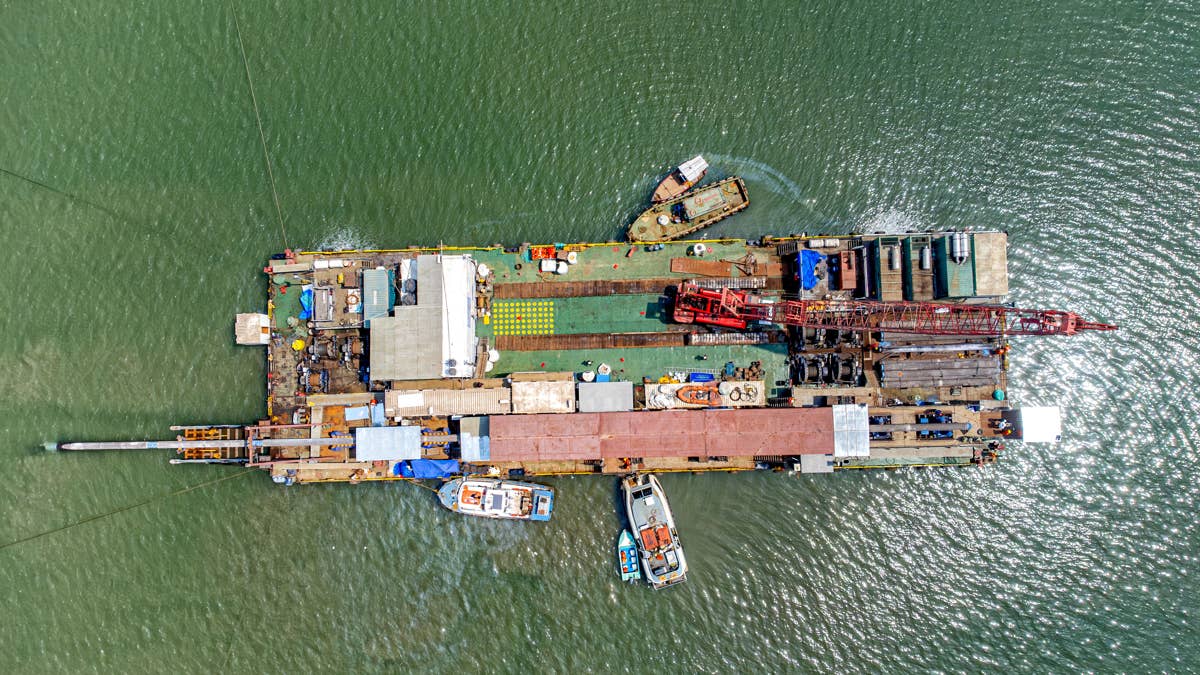
Puneet Vikram Singh, Nature and Concept photographer, / Getty Images
Your gas tank feels the fight before New Delhi does
Tariffs on India sound like a foreign-policy story until you look at the pump. The national average for regular gas was $4.48 a gallon on Sept. 24, according to AAA.
I ran that against the eight-year average of $3.07 a gallon tracked by Finder. The gap works out to about $1.41 a gallon, or roughly $21 more every time you fill a 15-gallon tank.
Oil is doing the damage. Brent crude has swung around $100 a barrel this week and is up about 47% from a year ago, according to Trading Economics.
Now picture the knock-on effect. If India is pushed off roughly two million barrels a day of Russian crude, its refiners go shopping in the Middle Eastern and Atlantic markets that set global fuel prices. That competition shows up at pumps everywhere, including yours.
There is a second channel, too. The February framework promised to remove reciprocal tariffs on Indian generic pharmaceuticals once an interim deal closed, according to the White House. I trained as a pharmacist before I covered markets, so that line jumped out at me. India is one of the biggest sources of the cheap generic drugs in American medicine cabinets.
The waiver is where this story gets decided
The law gives Trump a power, not an obligation. That leaves room for exactly the conversation Dimon asked for.
Indian External Affairs Minister S. Jaishankar met Secretary of State Marco Rubio in New York on Sept. 23 and “reiterated India’s interests and concerns with regard to SRIA,” reported ANI.
The two sides “discussed sanctions that could be levelled against states that engage economically with Russia and Iran,” the State Department said, according to Business Standard.
For investors, the signal to watch is which way that discretion breaks. Sparing India would ease one pressure point on oil. Using the full 100% would test how much pain Washington will accept to hurt Moscow.
Dimon also suggested Trump would not want to disrupt global energy markets, reported Asian News Channel. With gas above $4 and a new tariff weapon on the books, you’re about to find out whether he read the president right.
Related: Oil executives declared a fuel crisis, and diesel agrees