When Antonio Filosa first took the helm of Stellantis a year ago, he inherited a mess from his predecessor that the company is only now emerging from. On Thursday, May 21, Filosa outlined a plan for the now 5-year-old company to leverage its much older car brands back into profitability for the entire conglomerate.
Stellantis was created in January 2021 after Fiat Chrysler merged with PSA Group, combining 14 different American, Italian and French car brands. Despite some hiccups after a strong start, the stock peaked at just under $30 per share in March 2024. But over the last 2+ years, shares have lost more than 75% of their value.
That swoon cost former CEO Carlos Tavares his job and led to the hiring of Filosa, who cut his teeth in the American market and has previously promised to reinvigorate the company’s U.S. profile.
The company’s “FaSTLAne 2030” plan will see it invest 60 billion euros ($69.7 billion) in its car brands and research and development over the next five years.
“We have great people, the muscle of global scale, unmatched brands that connect and inspire, the deep local roots of our regions and dealer partners to meet our customers’ distinctive needs, and a relentless focus on innovation and excellence in execution,” Filosa said. ” With these strengths, we are uniquely positioned to offer delight, functionality, and affordability.”
While Filosa and his team sound excited about the plan, Fastlane 2030 seems to be leaving investors underwhelmed, as Stellantis shares dropped nearly 6% on the news Thursday.
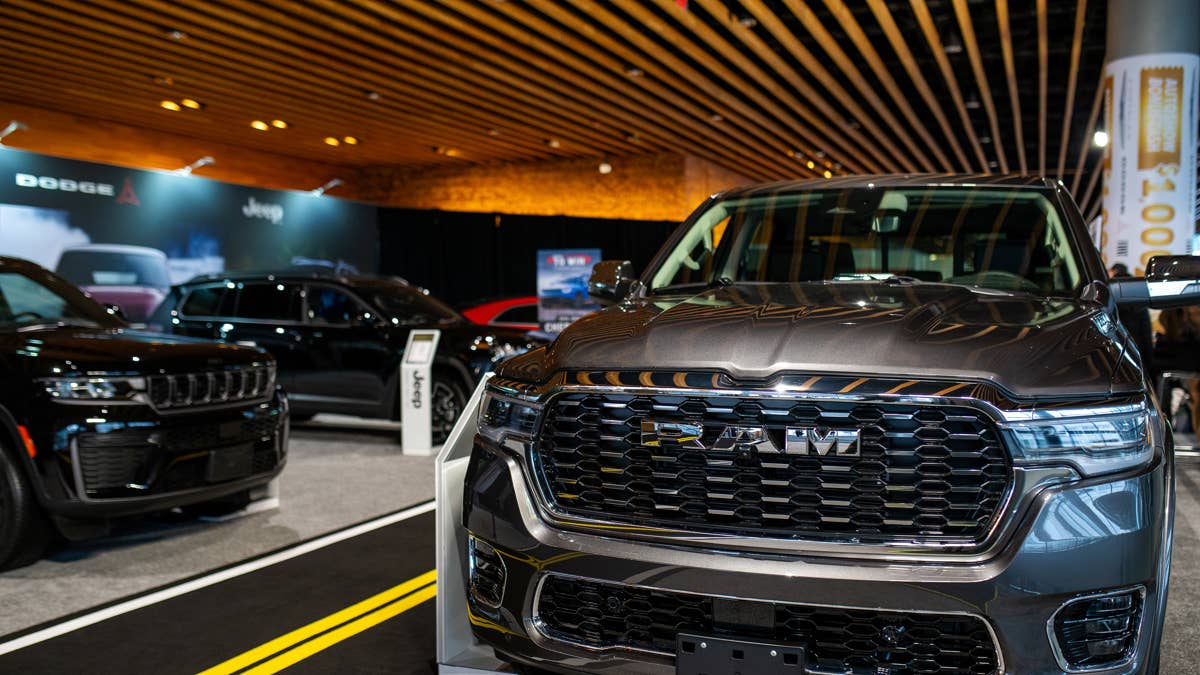
Why are investors rejecting Stellantis’ turnaround plan, Fastlane 2030?
Stellantis shares were down 5.6% to $7.10 at last check Thursday following the big reveal of Fastlane 2030.
The biggest issue investors may have with the plan is that it keeps all 14 of the company’s car brands intact despite many of them being money losers for Stellantis. Instead, the new plan designates the moneymakers, Fiat, Jeep, Ram Trucks, and Peugeot as “global brands,” while some of its less successful brands, like Chrysler, Dodge, Citroen, Opel, and Alfa Romeo, will be designated as “regional brands.”
Last year, there were rumblings that the company might sell its Maserati luxury unit amid years of declining sales. However, the company called out Maserati specifically in its announcement, calling it a “pure luxury brand with a unique customer legacy and a powerful lineup.” Two new EV segment vehicles are planned for the Italian marque in the near future.
By rightsizing production and capital allocation, the company says it will be able to launch more than 60 new vehicles between now and 2030, along with 50 “significant refreshes” across all its brands. The innovation blitz will feature 29 battery-electric vehicles, 15 plug-in hybrids or range-extended EVs, 24 hybrid electric vehicles and 39 ICE vehicles.
Instead of shrinking its footprint, Stellantis says its “global scale is one of its core strengths,” but it plans to allocate its resources based on levels of importance.
The company plans to reduce its European capacity by 800,000 units while increasing production in the U.S., where it hopes to achieve 80% capacity utilization by 2030. It is targeting 25% revenue growth in North America by expanding market coverage by 50% with 11 new vehicles and 35% more volume. Seven of those new products will start under $40,000, and two will range under $30,000.
In fact, 60% of the 36 billion euros the company plans to invest in its global brands will be allocated to North America.
New Stellantis CEO Antonio Filosa prioritizes U.S. roots
Last year, Stellantis announced that Antonio Filosa would relocate the company’s CEO office to Detroit, Michigan. Additionally, the company revealed that it will build a $388 million “megahub” in Van Buren Township, just outside Detroit.
It will take more than money invested in the States to win back customers, and Filosa acknowledged this fact during the earnings call last year.
“For sure, one important root cause of our market deterioration, both in North America, especially, but also in Enlarged Europe, is the fact that in the past we decided to phase out many important, relevant, and successful nameplates,” Filosa said.
Filosa went on to name seven popular vehicles that were phased out during his predecessor’s tenure, including Jeep Cherokee, Jeep Renegade, Chrysler 300, Ram DS Classic, Ram ProMaster City, Dodge Charger and the Challenger.
Stellantis held 20% of the European market share in 2021, while its U.S. market share was 12%. However, by last year, those numbers eroded to 14.3% and 7.7%, respectively.
That drop contributed to the dismissal of former CEO Carlos Tavares in late 2024.
Stellantis sees strategy work with Q1 shipments
On April 15, Stellantis reported global Q1 shipments of 1.4 million, a 12% year-over-year increase. Additionally, the company said the increase was driven by “enlarged Europe and North America.”
The company shipped 379,000 vehicles in North America in the first quarter, 54,000 vehicles more than it did a year ago. But its success wasn’t limited to the West.
The company’s European operations saw shipments increase by 69,000 units, or 12%, to 637,000.
The North American growth was driven by strong Ram 1500 Hemi V8 shipments, the refreshed Jeep Grand Wagoneer, and the new Jeep Cherokee, which accounted for more than 100% of year-over-year growth.
When Filosa took over last June, the company reported a 14% year-over-year decline in revenue as consolidated shipments fell 9% to 1.2 million. At the time, the company blamed the declines on lower North American production.
This year’s results are a complete reversal from Stellantis Q1 results a year ago, when the firm reported a 12% decrease in U.S. sales, despite a 16% increase in Ram brand sales and a 1% increase in Chrysler brand sales. Jeep brand sales increased by 2%.
Related: Stellantis sees major shift in Ram 1500, Jeep customer behavior