The Inverse Cramer trade has its own ETF. That tells you everything you need to know about how people feel about Jim Cramer’s stock picks.
Every time he goes on “Mad Money” and calls something a buy, a corner of the internet starts watching to see how badly it ages. July 14 gave them a lot to work with.
On July 9, Jim Cramer had gone on “Mad Money” and told a caller to buy IBM. He called it inexpensive. He praised the CEO. He said buy some now and add more on any dip.
It was a confident call on a stock that had been beating estimates for four straight quarters and looked like it had momentum going into Q2. Then July 14 happened, and the IBM story changed completely in about four hours.
What Jim Cramer said about IBM on Mad Money before the crash
“I want you to buy the stock,” Cramer told a caller on July 9. “You buy some now and then, it’s been having these kind of panic fits, just panic attacks. You buy the rest then. I think IBM’s terrific. It’s inexpensive and Arvind Krishna is doing a fantastic job.”
He wasn’t just guessing. IBM had beaten earnings for four straight quarters going into this. Q1 revenue came in at $15.917 billion, up 9.5% year over year, according to IBM. Software revenue rose 11.3%. Red Hat was up 13%. The Z mainframe surged 51%. The generative AI book of business crossed $12.5 billion.
At 23 times forward earnings, IBM was growing close to 10% and trading at a fraction of what other AI names carried. That was the case Cramer was making. Going into Q2, the numbers backed it up.
What IBM’s Q2 warning said and why the stock fell so hard
IBM put out a preliminary Q2 letter before the market opened on July 14. Revenue came in at $17.2 billion, up just 1% year over year and well short of the $17.85 billion Wall Street was expecting, according to Yahoo Finance. Adjusted EPS of $2.93 missed the $3.02 estimate.
Infrastructure revenue fell 7%. The Z mainframe business, which grew 51% in Q1, went the other way. Software was up 5% but that’s a long way from the 11% Q1 pace. Consulting was flat.
More AI:
- The new Chinese AI model rattling U.S. tech investors
- Anthropic restores access to Mythos 5 for select organizations
- SoftBank CEO offers stinging critique of Musk’s AI bet
Krishna called it “disappointing.” He said clients shifted spending toward servers, storage, and memory in late June ahead of supply concerns. Large deals didn’t close on time. He also said some enterprises got distracted by cybersecurity spending following a wave of incidents in June. The stock went from about $290 to around $215 in a single session, according to StreetInsider.HSBC downgraded IBM to Reduce with a $191 target.
The irony is that Dell and HP Enterprise, the companies that benefited from clients buying more servers and storage, both saw their stocks rise on July 14. IBM’s loss was their gain in a pretty literal sense. The AI infrastructure spending didn’t disappear. It just went somewhere else for one quarter.
What Cramer said after IBM crashed on July 14
Cramer was on Squawk on the Street the morning of the crash. He said the warning shows how AI spending is moving toward infrastructure and cybersecurity, according to CNBC. He didn’t repeat the buy call. Hard to blame him.
The bear case on IBM, that clients were drifting toward hyperscaler-native AI and away from IBM’s stack, showed up worse in Q2 than anyone expected. Going from 51% mainframe growth in Q1 to a 7% decline in Q2 in one quarter is a big swing. It raises real questions about whether the Z17 cycle is already rolling over.
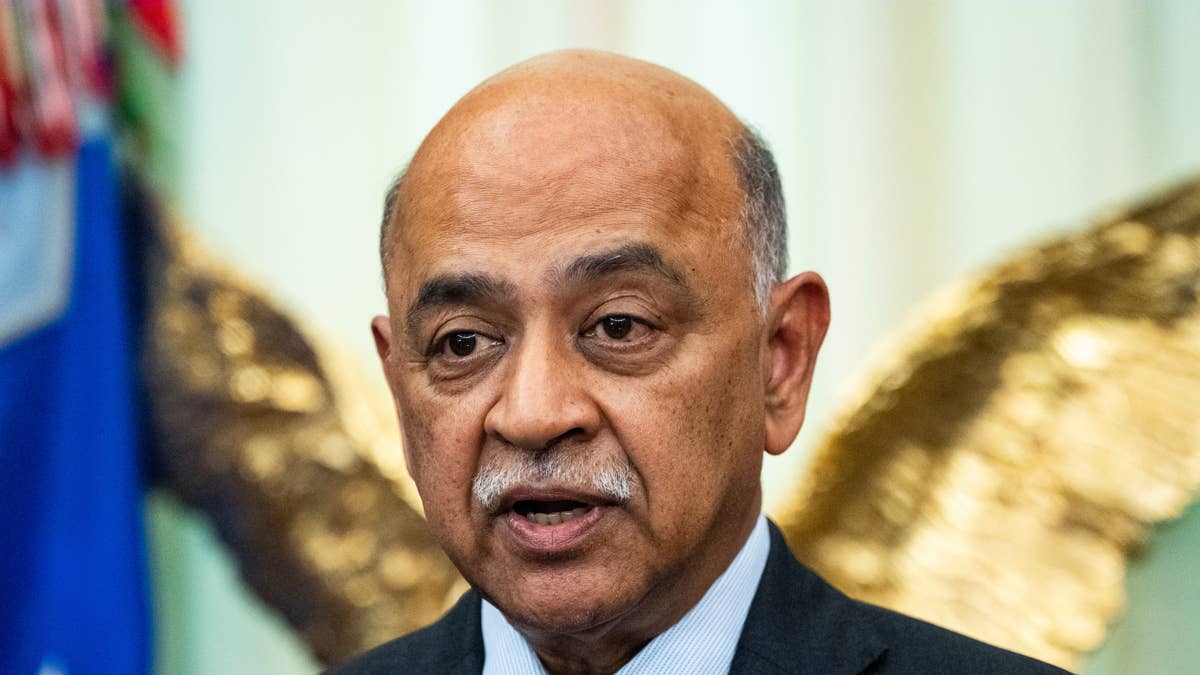
Bonnie/Getty Images
Why the IBM bull case isn’t completely dead despite the crash
Red Hat still grew 11%. Free cash flow year to date is $4.8 billion. The business isn’t in freefall. The mainframe pulled back hard but consulting didn’t collapse, and the software segment is still growing, just not fast enough to offset everything else in one quarter.
IBM also still carries a 2.28% dividend yield backed by 31 consecutive years of increases. The company has a $66.4 billion debt load after the Confluent acquisition, but it’s generating enough cash to service it. The financial structure isn’t under stress the way it would be if the business were actually broken.
There’s also the quantum computing angle. IBM has been building out its quantum infrastructure for years and has a genuine head start over most competitors. It’s not generating meaningful revenue yet, but it’s the kind of long-term asset that gets ignored when a stock is getting hammered on near-term numbers and remembered when sentiment turns.
Some people bought the dip. KKM Financial’s Jeff Kilburg called it an opportunity. Hightower’s Stephanie Link said IBM is still well set up in quantum and enterprise AI. Capital Wealth’s Kevin Simpson said the software concerns take time to work through, according to CNBC.
What IBM investors should watch at the July 22 earnings call
IBM’s full Q2 call is July 22. That’s where Krishna has to explain whether the late-June capex rotation was a one-quarter thing or something more structural. If clients are permanently shifting away from mainframe-centric infrastructure toward servers and storage, that changes the IBM story in a meaningful way.
Three things matter most. Can software reaccelerate toward 10% growth? Does consulting show any improvement? And how does management frame the mainframe deceleration? The preliminary letter raised the questions. July 22 is when IBM has to answer them.
Full-year guidance is also on the table. BofA said before the call that it expects IBM to lower its full-year expectations, particularly in software. If that happens on July 22, the stock probably has another leg down. If management can credibly defend the annual outlook and explain the Q2 miss as a timing issue rather than a structural one, the picture looks different.
Cramer’s July 9 buy call looks bad right now. Whether it ends up being wrong or just early is something the next few quarters will decide. IBM at $215 is a very different stock than IBM at $290, and some of the people who wouldn’t buy it at $290 are now looking at it differently at $215.