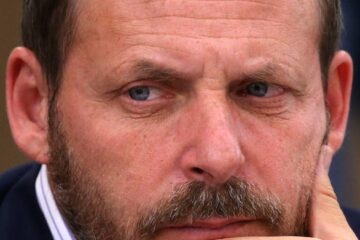
Kevin O’Leary has never been subtle about how he thinks investors get it wrong. Most people focus on what to buy. He focuses on the risks first.
On Aug. 30, the “Shark Tank” investor and billionaire posted five rules to X (the former Twitter) that strip his investing philosophy down to its core.
No hot tips. No market timing. Just the framework he says keeps capital alive and working.
The 5 rules O’Leary says every investor needs
“My top 5 rules of investing are simple,” O’Leary wrote on X. The rules he listed:
- Never get too concentrated.
- Keep debt under control.
- Stay liquid.
- Protect the principal and live off the cash flow.
- Never own an investment that does not pay you.
The through line connecting all five is risk management rather than return chasing. O’Leary is not telling investors to swing for the fences. He is telling them how to avoid getting wiped out before the fences even come into view.
“Wealth is not just about how much you own,” he wrote. “It is about protecting your capital, staying flexible, and making sure your money keeps working for you.”
Why concentration and debt are the two things that get people in trouble
Most investors who blow up a portfolio do it with one of two mistakes. They put too much into one thing, or they borrowed too much to do it.
Concentration is the one people underestimate when things are going well. A single stock that has doubled feels like a good reason to hold more of it. Then it halves. A portfolio that was 40% in one name just lost 20% overall, and that is before counting anything else that went wrong.
O’Leary’s own limits are specific: no more than 5% of a portfolio in any single stock, and no more than 20% in any one sector. When a position runs past those thresholds, he trims it back down, TheStreet reported.
More Personal Finance:
- The tax rules that can quietly ruin your Roth IRA conversion strategy
- Choosing an annuity for retirement rests on hidden features, risks
- One index exposes your bigest retirement fears
Debt makes it worse. An investor who borrows to invest can survive a bad year if they can hold on. The problem is that margin calls do not care whether you want to hold on.
If the position moves against you far enough, you get forced out at the worst possible moment. The loss becomes permanent. That is how temporary market declines turn into lasting damage.
O’Leary has watched this pattern play out repeatedly across the companies that come through “Shark Tank.”
The ones that fail are not always the ones with bad ideas. Some of them have good ideas and bad capital structures. They run out of runway before the business has a chance to prove itself.
The income rule and why O’Leary will not budge on it
His final rule is the one that draws the most pushback. Plenty of successful investors hold assets that generate no current income at all.
Berkshire Hathaway does not pay a dividend. Bitcoin generates nothing. Gold sits there.
O’Leary does not care. He has argued publicly for years that an asset that does not pay you requires you to time your exit perfectly to get anything out of it. You have to be right twice. Once when you buy and once when you sell. An asset that pays dividends, interest, or rent gives you a return even when you are wrong about the direction of the price.
That preference also shapes how O’Leary thinks about liquidity, his third rule. Staying liquid is not just about having cash on hand. It is about not being forced to sell an income-generating asset before you want to because something unexpected happened.
The income cushions the waiting. Without it, every dip becomes a pressure test.

How O’Leary’s advice compares with Buffett, Bezos, and Dalio
O’Leary is not alone in this framework. Warren Buffett has argued for decades that temperament matters more than intellect in investing, and that the first rule is: Never lose money. The second rule, he has said, is Don’t forget the first rule.
Jeff Bezos has highlighted Buffett’s “get-rich-slowly scheme,” noting that thinking in seven-year periods and deferring gratification creates advantages most short-term traders give up.
Ray Dalio has recommended building 10 to 15 good, uncorrelated, risk-balanced return streams to improve the ratio of returns to risk, and has warned that recovering from large losses requires disproportionately larger gains than most investors realize, Yahoo Finance reported.
The overlap is not accidental. Diversification, discipline, income, and avoiding catastrophic loss show up in every serious long-term investor’s framework. O’Leary just tends to say it louder.
What investors should take from this
The rules are not complicated. That is the point.
Most investing mistakes do not come from a lack of sophistication. They come from concentration, borrowed money, and holding assets that generate nothing while you wait for them to pay off.
The question worth asking is how many of O’Leary’s five rules a given portfolio currently violates. Not hypothetically, but actually.
Is there one position that represents a third of everything? Is there margin debt that would cause forced selling in a downturn? Is there an emergency fund? How much of the expected return depends on the price going up versus income coming in right now?
Those questions are not comfortable. They are exactly the ones O’Leary is asking investors to sit with before the market forces the conversation on its own terms.
Related: Kevin O’Leary’s $500K retirement plan starts at one age