While it’s a giant player in the grocery space, Kroger lacks the buying power of bigger rivals Amazon and Walmart. You can add Costco to that list as well because its limited product selection magnifies its leverage with retailers.
Unlike Kroger, Walmart and Amazon have other businesses that can benefit when they attract a grocery customer, from advertising and memberships to general merchandise.
And unlike Walmart, Amazon, and Costco, Kroger actually needs to make money from selling groceries. It’s not using those items as a loss leader to sell other things or memberships. That’s the retailer’s core business.
Kroger, however, does have one advantage — its proximity to its customers. Walmart may be closer in some cases, but Kroger is broadly a neighborhood grocery chain, so it’s convenient for customers, but that’s not always enough when its rivals are cheaper and offer delivery.
CEO Gregory Foran knows that to compete, his company needs to execute and operate as efficiently as possible.
“We have to be relentless on cost. Our teams are moving with more speed and urgency, and sourcing and savings came in ahead of plan this quarter,” he said during the supermarket chain’s second-quarter earnings call.
Lowering the chain’s cost, he noted, is key to not just success, but survival.
“There is more work to do across sourcing, procurement, productivity and simplification. Every dollar we take out is a dollar we can reinvest in areas customers will see. That is how this becomes sustainable for customers and for shareholders,” he added.
Foran sees opportunity in Kroger’s stores
Foran has spent significant time during his first year in the job visiting Kroger locations. After identifying areas for improvement he has noticed some areas where the chain has fixed problems.
“We’re making progress on execution across the business, but there’s still work to be done, and opportunity remains inside our stores: better in-stocks, better merchandising, better standards, better shrink management. These are not new ideas, but customers notice when we execute well,” he said.
He noted that the chain’s on-shelf availability reached an all-time high, and its pickup perfect orders were its best ever.
“We also have an opportunity to become stronger merchants. Whether it’s fresh foods or prepared meals, we can do a better job helping customers answer ‘What’s for dinner?’ and creating excitement around great products in our stores. When we’ve done that, customers have responded. Natural and our prepared meals grew well ahead of total sales,” he added.
More Kroger:
- Kroger makes a pricing move Costco and Walmart will love
- Kroger hit by 19 million egg recall over serious health risk
- Kroger supermarkets add exclusive LTO Sprite soda
GlobalData Managing Director Neil Saunders thinks that Kroger has significant work to do.
“Kroger has enormous reach and powerful economies of scale. The problem is that, for many years, it has failed to capitalize on these things. The company hasn’t been aggressive enough, nor has it been sufficiently progressive,” Saunders told RetailWire.
“The result is that it’s become a bland, middle-market grocer that isn’t sufficiently differentiated. It doesn’t win on price. It doesn’t win on experience. It doesn’t win on private label. It doesn’t win on e-commerce in the way Walmart does,” Saunders added.
Amazon, Walmart and Kroger by market cap
- Amazon: $2.76 trillion
- Walmart: $852.7 billion
- Kroger: $35.83 billion
- Source: CompaniesMarketCap
Amazon
Walmart and Amazon bet big on groceries
Amazon CEO Andy Jassy, in a recent Q&A with shareholders, made it clear just how big grocery has become for the company.
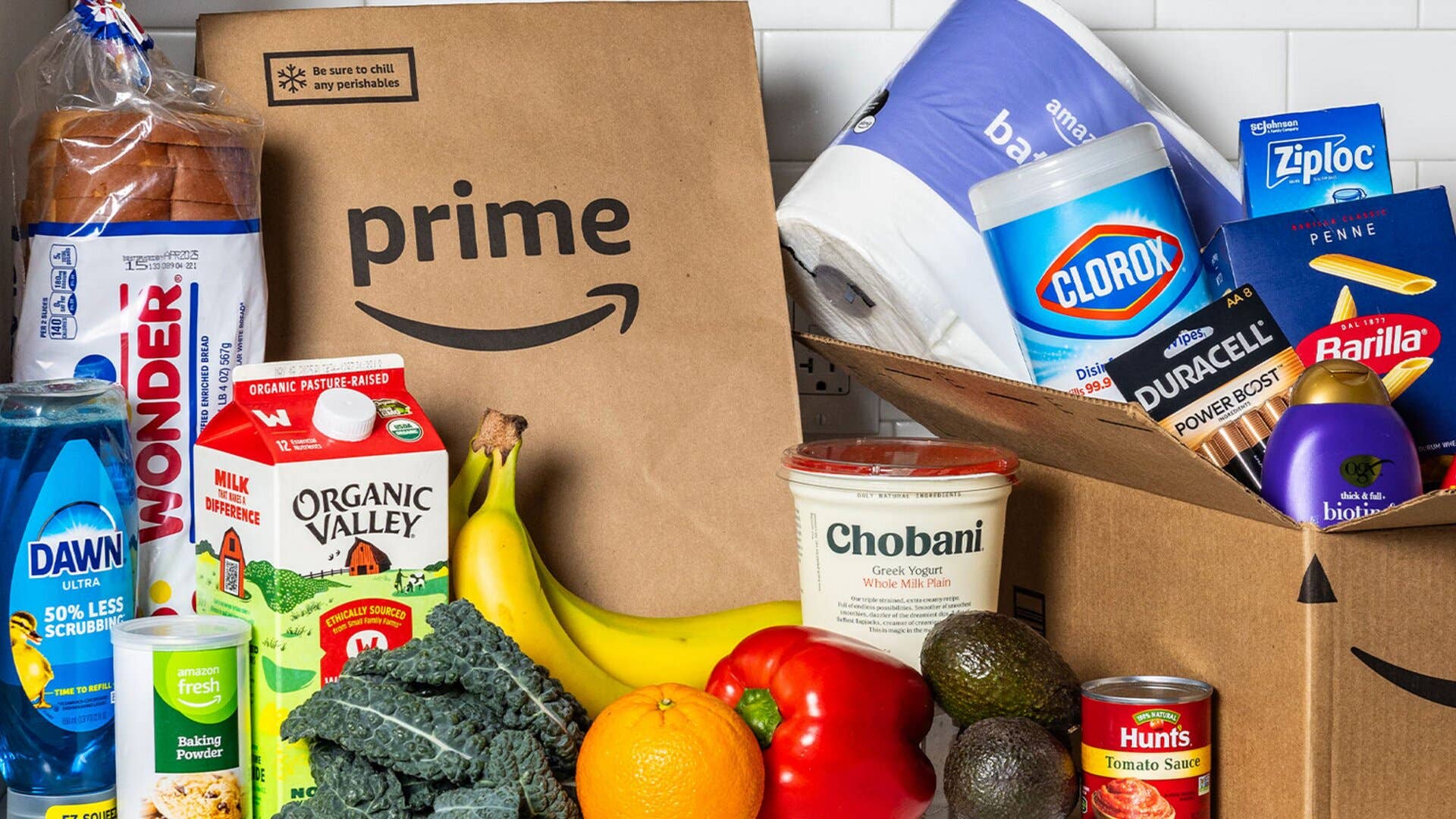
“I’m very bullish about grocery. I think some folks don’t realize how large a grocery business Amazon has today. If you look at our center of aisle things — so these are things like consumables, canned goods, pharmaceutical items, beauty products, really, everyday essentials — if I just exclude Whole Foods Market and Amazon Fresh, we did over $100 billion in gross sales in our grocery business on these items last year alone,” he said.
To put that into perspective, Kroger, which is a grocery store chain, did $34.6 billion in total sales for the second quarter.
Walmart U.S. Chief Merchant Julie Barber made it clear in remarks made in July that the chain plans to be agressive on price.
“This summer, we’re making even more investments in price, with thousands of Rollbacks across the products customers are shopping for most including beef, fresh produce and beverages,” she said in the press release.
Kroger makes its own pricing moves
Foran shared that Kroger has also been working to find new ways to lower prices for its shoppers.
“Smart Way, our opening price point brand, with more items, broader coverage across the store, and improved visibility, both in-store and online,” he said during the Q2 earnings call.
he company, he shared, has also made other changes beyond just offering cheaper items.
“Earlier this quarter, we expanded our loyalty program and rebranded Fuel Points as simply Points. Customers can now use Points for savings at the pump or apply them directly to their grocery bill in-store or online,” he said.
Foran has said in the past that his company can’t always be the cheapest, but it can strive to deliver value.
“Value continues to matter, and it matters more when budgets are tight. Our customer value plan is underway and progressing well. We have opportunities to strengthen our value position, simplify promotions and make it easier for customers to recognize value in our stores,” he added.
RTM Nexus CEO Dominick Miserandino worries that Kroger simply can’t give some shoppers the prices they need.
“Consumers don’t make decisions exclusively based on price; it’s a numerous amount of factors. So he’s not entirely wrong, but the worse the economy gets, the more pricing does become a factor,” he told TheStreet.
ALSO READ: Kroger loses $12 billion as customer behavior takes a turn