It’s almost the Labor Day weekend, the last of the summer holidays, and it comes with a little risk.
There are many forecasts of rain, sometimes flooding and heat. It is early September, after all. It IS STILL summer. Autumn does not officially start until Sept. 22 at 8:05 p.m. ET.
So, it’s OK to behave like it’s summer. Go to the beach, jump in a swimming pool, grill some burger and hot dogs, attend a baseball game.
If you’ve been planning a day trip to a special place, like North Cascades National Park near Seattle, go. Enjoy.
But driving any distance comes with a cost because oil prices are higher.
Gasoline prices are higher than their levels over the 4th of July weekend, when prices nationally were around $3.79 per gallon nationally, according to AAA Fuel Prices.
The U.S. national average price of gasoline was $4.1436 on Sept. 3, AAA says. That’s the highest ever going into a Labor Day weekend.
That means a 15-gallon fill-up will cost you $61.15, up 9.3% from the $56.85 you might have paid over the July 4 weekend.
The reason for the gains is that the hopes for a ceasefire and negotiation for a peace treaty that reopened the Strait of Hormuz were dashed by the end of July.
U.S. missiles and planes have attacked Iranian targets over the last week or so. Iran has responded with missile and drone attacks on U.S. facilities in the United Arab Emirates and Kuwait, the Guardian newspaper reported.
It may be annoying, but, if the grandparents are looking forward to seeing their grandchildren, it may be the price you pay for family happiness. (Yes, you are something of an afterthought.)
The situation going into the weekend
Drivers may face high prices, but there is a little good news here.
Prices should hold at where they are on Sept. 4 and through Labor Day on Sept. 7, said Denton Cinquegrana, chief oil analyst at the Oil Price Information Service, which gathers AAA’s data.
Labor Day weekend turns off most work, especially market analysis.
Then, if the news in the Middle East is all missiles-and-bombs or peace breaks out, prices will adjust on Sept. 8, Cinquegrana told theStreet.
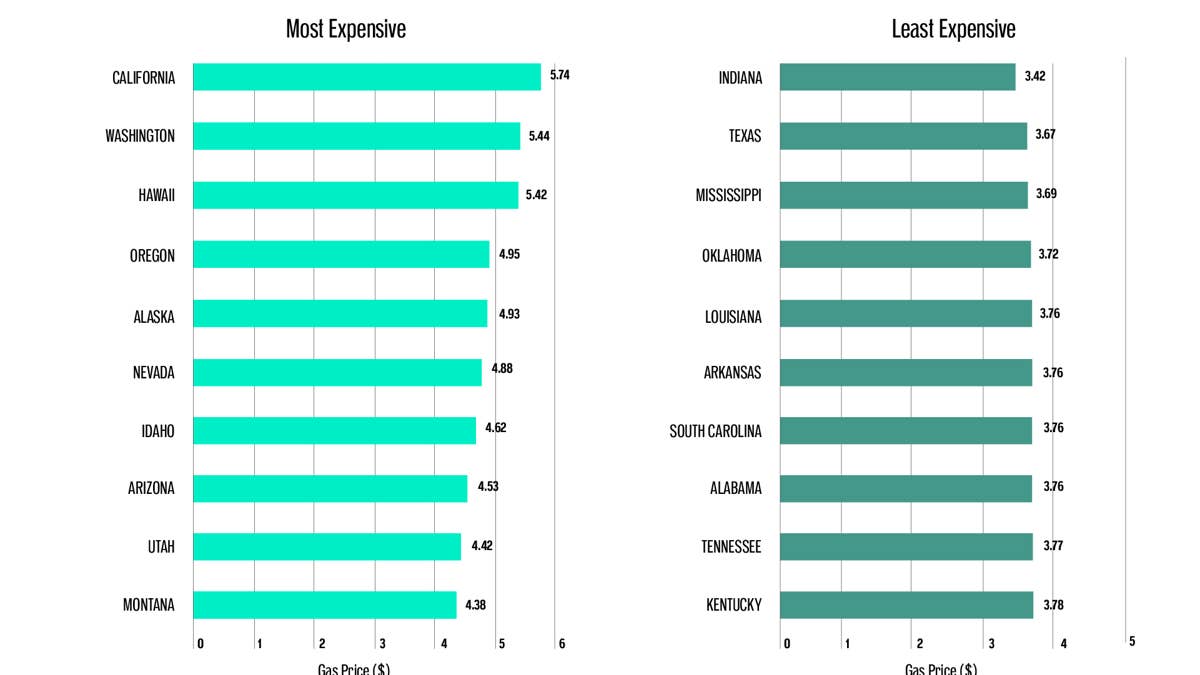
You will pay more for gas in the western states
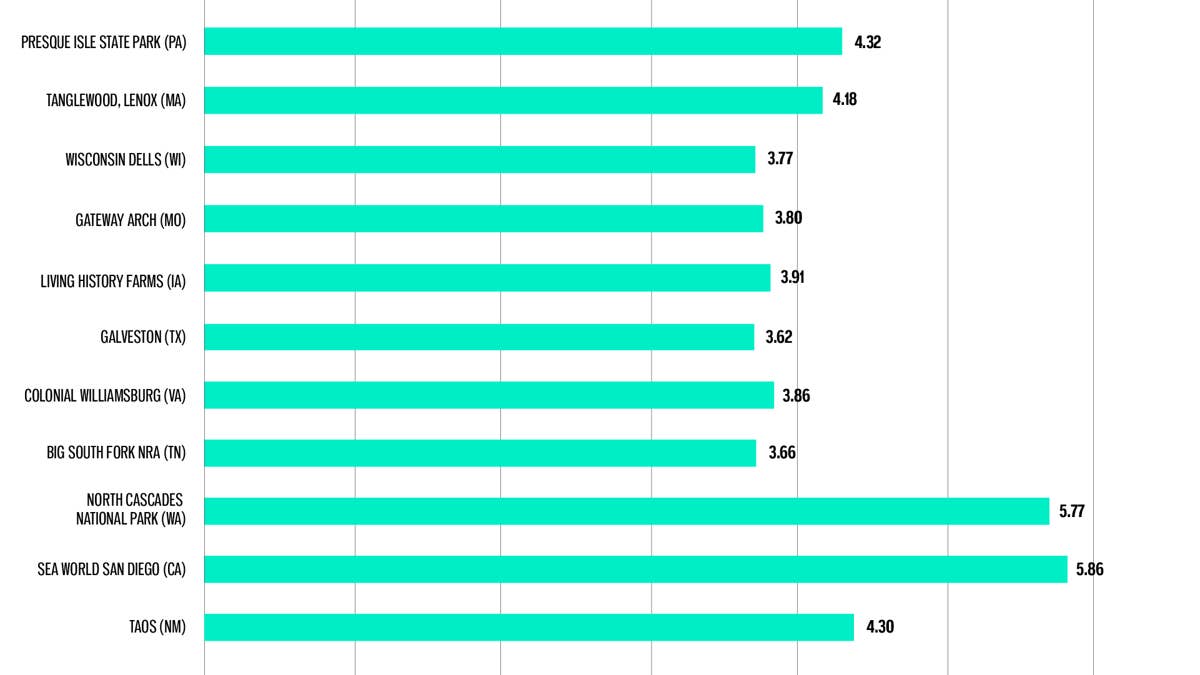
As of Sept. 2, the price of gasoline around North Cascades National Park will be around $5.294 a gallon, according to AAA data. The park is in Whatcom County, which is relatively rural. So, retailers outside the park pay more to get their gas.
More important: Washington State has the second most expensive gas prices in the United States because of high fuel taxes and fees used to pay for environment concerns.
California has the highest prices: about $5.782 per gallon statewide. If you’re headed to Sea World in San Diego, look for prices around $5.862 a gallon.
The South and Midwest have the cheapest prices. The lowest statewide prices are in Indiana: $3.4292 a gallon. Prices near Galveston, Texas, whose beaches by the Gulf of Mexico are popular, should be around $3.624 a gallon.
Big-city attractions mean higher gas prices
If you’re headed to the 125,000-acre Big South Fork National Recreation Area, which straddles Kentucky and Tennessee, gasoline prices will run around $3.665 a gallon. The NRA, run by the National Park Service, has one of biggest concentrations of natural bridges in the eastern United States.
Let’s say a baseball game is what you want, maybe the San Francisco Giants against the New York Mets. The teams play on Sept. 4, 5 and 6 at Citi field in Queens, N.Y.
The price of gasoline in Queens, a borough of New York City, is around $4.312 a gallon.
Eastern gasoline prices are higher than the Midwest or South, and that’s the reality.
Gas prices in Queens, where President Donald Trump was raised, are not that much different than you might pay if you were headed to a concert at Tanglewood, in western Massachusetts, or Presque Isle State Park, which is on the shores of Lake Erie near Erie, Pa.
All that said, family and friends are important. Even it rains, enjoy.