Back in late April, Apr 25, 2026, I wrote about Lockheed Martin CEO Jim Taiclet calling the current defense environment a “golden opportunity.” These are two words that don’t often come up in earnings calls, and two words that were starting to be backed up by serious contract momentum. The contracts keep coming.
Lockheed Martin (LMT) just landed another significant Pentagon award on May 18.
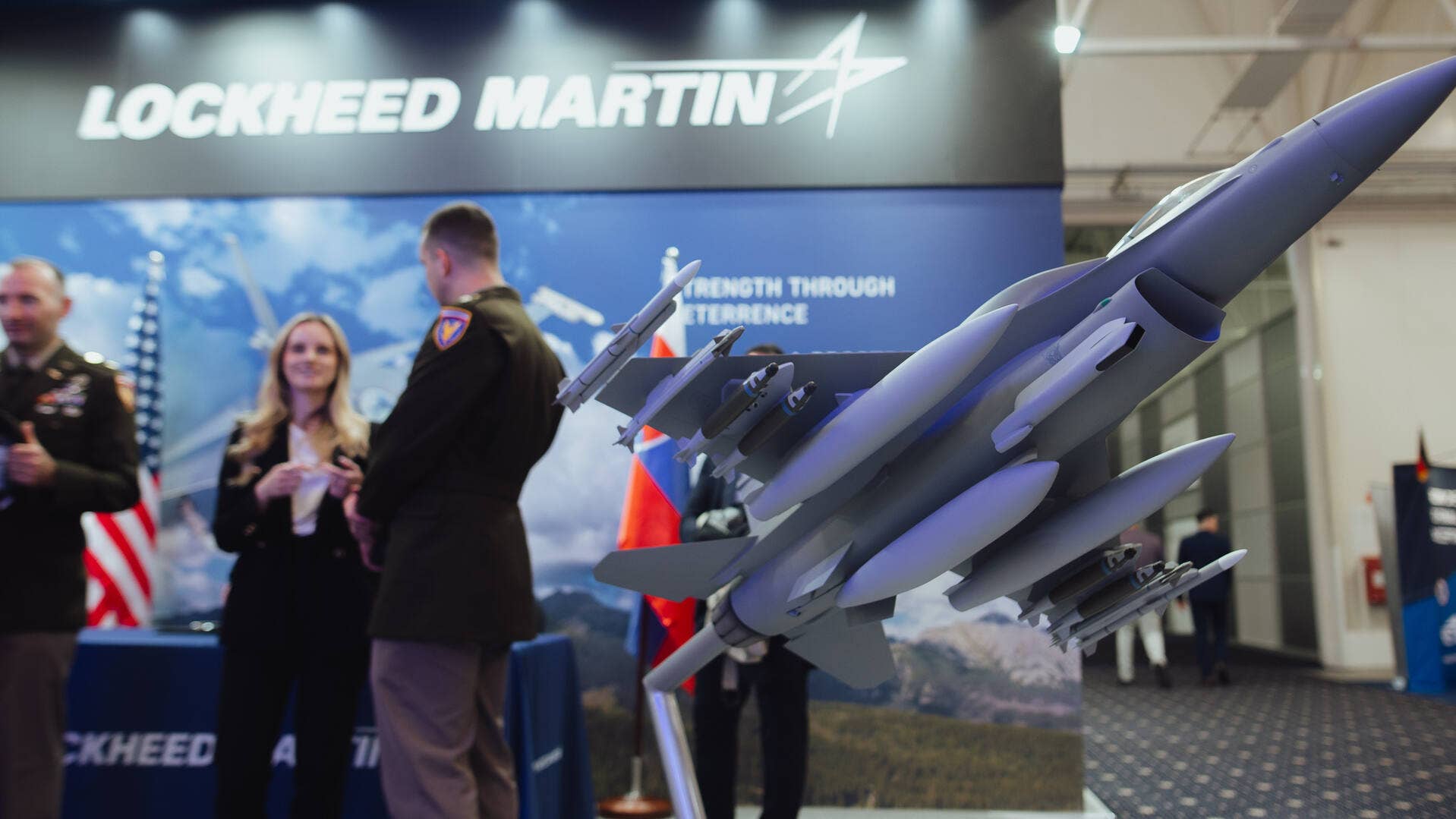
The firm received a $879.1 million firm-fixed-price order for F-35 armament production covering Lots 18 and 19, according to the U.S. Department of War.
The equipment includes missile launchers, bomb racks, gun systems, pylons, and adapters designed to support F-35 aircraft readiness and delivery schedules for the Air Force, Marine Corps, Navy, and foreign military customers.
Work will be performed in Fort Worth, Texas, with completion expected by February 2030. The contract was not completed. LMT closed May 18 at $528.31, up 9.81% year to date against the S&P 500‘s 8.14% gain, according to Yahoo Finance.
What the $879M F-35 armament order reveals about Lockheed’s pipeline
This is not a standalone win. It is the latest addition to a contract stack that has been building steadily since the start of 2026, and the cumulative picture is significant.
My review of Lockheed’s recent major awards reveals the scale of what is flowing through the books right now:
- $4.76 billion for PAC-3 missile segment enhancement production, awarded by the Department of Defense
- $1.9 billion for C-130J maintenance and aircrew training, a 10-year sole-source award
- $1.9 billion for enhanced Aegis integrated air and missile defense capabilities on Guam, according to Defence Security Asia
- $1.14 billion in Canadian 17 C-130J Super Hercules Aircraft
- $850 million for Trident II submarine program advanced development
- $700 million for satellite transport layer manufacturing for the Pentagon’s low-Earth orbit network
- $407 million for the Aegis Guam system modification, according to Stars and Stripes
- $328.5 million for Taiwan air force sensor pods under FMS
- $212.7 million for PAC-3 logistics and maintenance
- $177 million for F-35 fleet block 4 modifications, according to Aviation A2Z
- $105 million for GPS ground control modernization
Source: Lockheed Martin and the U.S Department of War
Add the new $879 million F-35 armament order to that list, and Lockheed’s contract wins since early 2026 are running into the tens of billions of dollars, across every segment of its business simultaneously.
The F-35 award itself draws from multiple funding streams, according to the contract announcement. Of the $879 million obligated at award, $333.6 million comes from foreign military sales customers and $139.2 million from non-U.S. Department of Defense participants. That’s a signal of the global demand for F-35 capability that extends well beyond the American defense budget cycle.
Taiclet’s “golden opportunity” call is being validated contract by contract
When Lockheed Martin CEO Jim Taiclet used the phrase “golden opportunity,” referencing the current administration’s willingness to restructure how the Pentagon does business with defense contractors, it sounded like confidence. It is increasingly looking like foresight.
The framework agreements Lockheed signed in Q1 to accelerate PAC-3, THAAD, and PrSM production are designed to increase manufacturing rates by three to four times current levels, according to Taiclet‘s April 23 remarks.
Multi-year demand commitments embedded in those agreements fund strategic investments in production infrastructure, supply chain capacity, and workforce expansion.
More Wall Street:
“We also pioneered a number of commercially inspired, long-term business arrangements with U.S. government leadership,” Taiclet said on the Q1 earnings call. “We anticipate that these groundbreaking agreements will benefit both industry and the government and serve as an example for future contracting initiatives.”
That language – commercially inspired contracts – is the structural shift BofA flagged in its April note. Lockheed is moving away from cost-plus structures toward commercial-style arrangements where the company can invest with confidence and the government shares risk through recovery provisions.
Lockheed’s Q1 results and 2026 guidance also frame the investment case
Lockheed’s first-quarter 2026 results, reported April 23, according to the company’s earnings release:
- Sales of $18.0 billion, flat year over year
- Net earnings of $1.5 billion, or $6.44 per share
- Segment operating profit of $1.8 billion
- Full-year 2026 guidance reaffirmed, sales growth of approximately 5%, and operating profit growth of approximately 25% year over year
- Expected full-year free cash flow of $6.5 billion to $6.8 billion
Source: Lockheed Martin First Quarter 2026 Results
The free cash flow step-up from the negative $291 million in Q1 to the $6.5 to $6.8 billion full-year target reflects significant second-half weighting – a cadence management has consistently guided investors to expect.
With 73% of revenue derived from the federal government, according to the University of Iowa, Lockheed’s financial performance is directly tied to the defense spending cycle that Taiclet has been calling a generational opportunity. The contract awards arriving week after week in 2026 suggest that the cycle is not slowing down. It is accelerating.
Related: Lockheed Martin CEO sends strong 2-word message on Middle East