Every blockbuster drug arrives with an expiration date attached, and anyone can read it years in advance.
That makes pharmaceutical investing a strange business. The worst news about a company’s biggest product is almost never a surprise. It sits on a calendar, visible to everyone.
So the fight between bulls and bears is never about whether the date shows up. It is about how much of that date the share price is already carrying.
Novo Nordisk (NVO) has spent this year insisting the market has overcharged it. The Danish drugmaker raised its full-year outlook in August, pushed a Wegovy pill through one of the fastest obesity launches the industry has recorded, and kept repurchasing its own shares throughout the summer.
Investors have not moved. The American depositary receipts, or ADRs, changed hands near $43 on Friday, Sept. 11, a long way under the 52-week high of $64.16.
On Sept. 11, Morgan Stanley stopped giving the argument the benefit of the doubt and told clients to sell.
What Morgan Stanley actually said about semaglutide
The bank moved Novo Nordisk to Underweight from Equal-weight while holding its price target at 250 Danish kroner, about $40 on the New York listing, which leaves more than 10% of downside from the last close, reported Investing.com.
Analyst Thibault Boutherin wrote that the valuation does “not entirely” reflect subdued mid-term growth, according to Investing.com.
More Wall Street:
- UBS sets $730 target on a stock it just stopped doubting
- Bank of America flags a $163B risk hanging over stocks
- Aon’s $17B USI deal has a cost investors should know
The objection is concentration. Semaglutide, the molecule inside both Ozempic and Wegovy, is expected to account for roughly 75% of group sales in 2026, and the company loses exclusivity on it starting in 2031, according to Yahoo Finance.
Morgan Stanley’s model still has semaglutide supplying 59% of sales in that year. A company can survive losing a drug. Losing three-fifths of its revenue base to generics is a different exercise.
The oral obesity franchise is the piece bulls keep pointing at, and the bank does credit it, penciling in about $10 billion by 2031. Boutherin’s position is that the money does not cover the pricing damage coming the other way, reported Yahoo Finance.
Shares slipped in premarket trading as the note landed, with the exclusivity overhang named as the central worry, according to Seeking Alpha. The bank also flagged softer United States prescription momentum for the Wegovy pill after a strong first half.
Why the 2031 patent cliff matters to your portfolio
When I lined up Morgan Stanley’s growth math against Novo Nordisk’s own August guidance, the gap was smaller than the downgrade headline suggested. The bank sees revenue and operating profit rising 2% to 3% in 2027 and about 4% a year through 2030.
Novo has guided this year to somewhere between flat and down 6% at constant exchange rates, or CER. Neither set of numbers describes a growth stock, and the second quarter showed why. Gross margin slipped to 78.2% from 82.7% a year earlier, and sales of the Wegovy injection fell 22%.
That matters beyond the people who own the ticker outright. Novo Nordisk is one of Europe’s largest listed companies, so index funds, international equity sleeves and health care exchange-traded funds (ETFs) hold it, whether investors picked it or not.
Here is the timeline the bear case runs on:
- Semaglutide is expected to make up about 75% of Novo Nordisk’s sales in 2026, according to Yahoo Finance.
- The company has guided to full-year sales and operating profit growth of flat to minus 6% at constant exchange rates, Novo Nordisk noted.
- Patent protection on semaglutide runs out in Europe in 2031 and in the United States in 2032, according to Morningstar.
- Morgan Stanley still models the drug at 59% of sales in 2031, reported Investing.com.
- Third-quarter results are due Nov. 4, according to Novo Nordisk’s investor calendar.
Novo has already run the experiment in miniature. Semaglutide patents have lapsed in Canada and Brazil, and the company named that as one of the drags on this year’s outlook.
The pipeline has not covered the gap yet, either. Novo’s ziltivekimab heart study missed its main goal this summer, taking one of the larger non-obesity revenue paths off the table.
What cheaper semaglutide means for everyone else
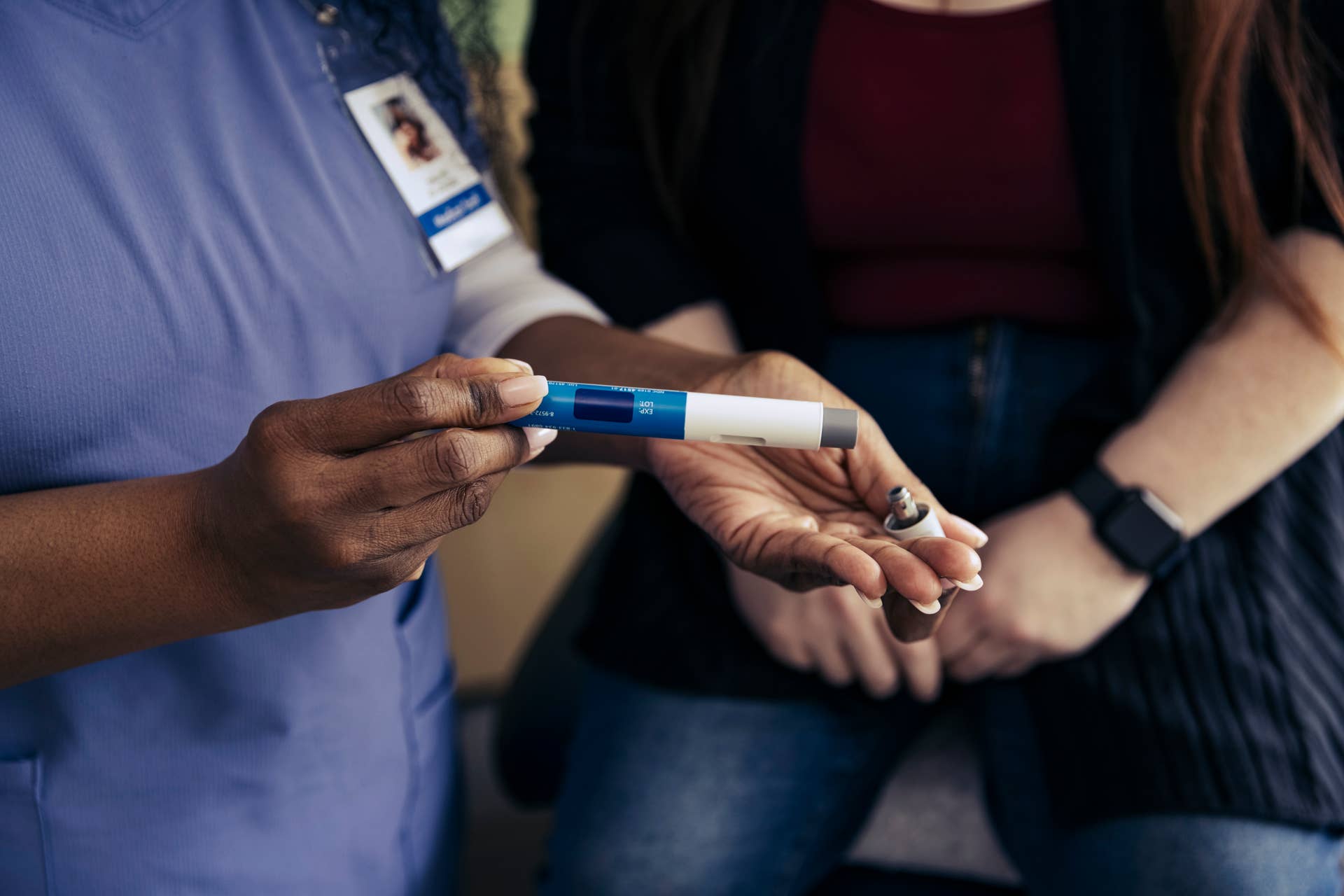
Here is the part that gets lost inside a downgrade note, and the part my analysis keeps circling back to. The date that destroys Novo Nordisk’s terminal value is the same date that makes Ozempic affordable.
A generic entrant does not arrive politely. It arrives at a fraction of the branded price, and it arrives for a drug tens of millions of people now take. Novo told investors in August it was serving roughly 46 million patients.
So the Morgan Stanley note, read from the other end, is a forecast of a very large consumer price cut in the early 2030s. Shareholders pay for it. Patients collect it.
Anyone budgeting for a GLP-1, short for glucagon-like peptide-1, over the next decade should keep 2032 circled.
That split is also why the bull case has not collapsed. HSBC raised its price target on Novo Nordisk to 320 kroner in the same stretch that Morgan Stanley was cutting, and JPMorgan lifted its own target in late August while staying neutral.
Goldman Sachs, for its part, left its rating and target untouched after meeting management in June. The spread between the bulls and the bears on this stock is unusually wide.
What to watch before Novo Nordisk’s London capital markets day
Management gets its turn shortly. Novo Nordisk hosts its capital markets day on Sept. 21 in London, where senior management will cover “strategy, R&D pipeline, business operations and performance,” according to the company.
Before that, employees have been called to a town hall on Sept. 15. An internal invitation promised “an exciting update about our company’s next chapter,” reported Bloomberg.
Companies do not usually rehearse good news with staff six days before facing analysts. They also do not usually schedule the two events so closely together by accident.
Three things will decide whether Morgan Stanley looks early or simply wrong.
The first is whether the London presentation puts a credible revenue number on the post-semaglutide pipeline.
The second is whether Wegovy pill prescriptions in the United States reaccelerate after a soft stretch. The third is whether Novo can show pricing power somewhere that is not tied to the molecule expiring in 2031.
Eli Lilly (LLY) will be watching the same three questions, from the comfortable side of them.
The stock looks cheap against its own history and expensive against its own forecasts. Both readings can be true at once, which is why I would treat the Sept. 21 meeting as the bigger event, not the downgrade that set it up.