Jensen Huang’s return to Nvidia restored nearly $1 trillion in stock value. The implications affect millions of Americans whose retirement savings are tied to the technology boom, not just AI giant shareholders.
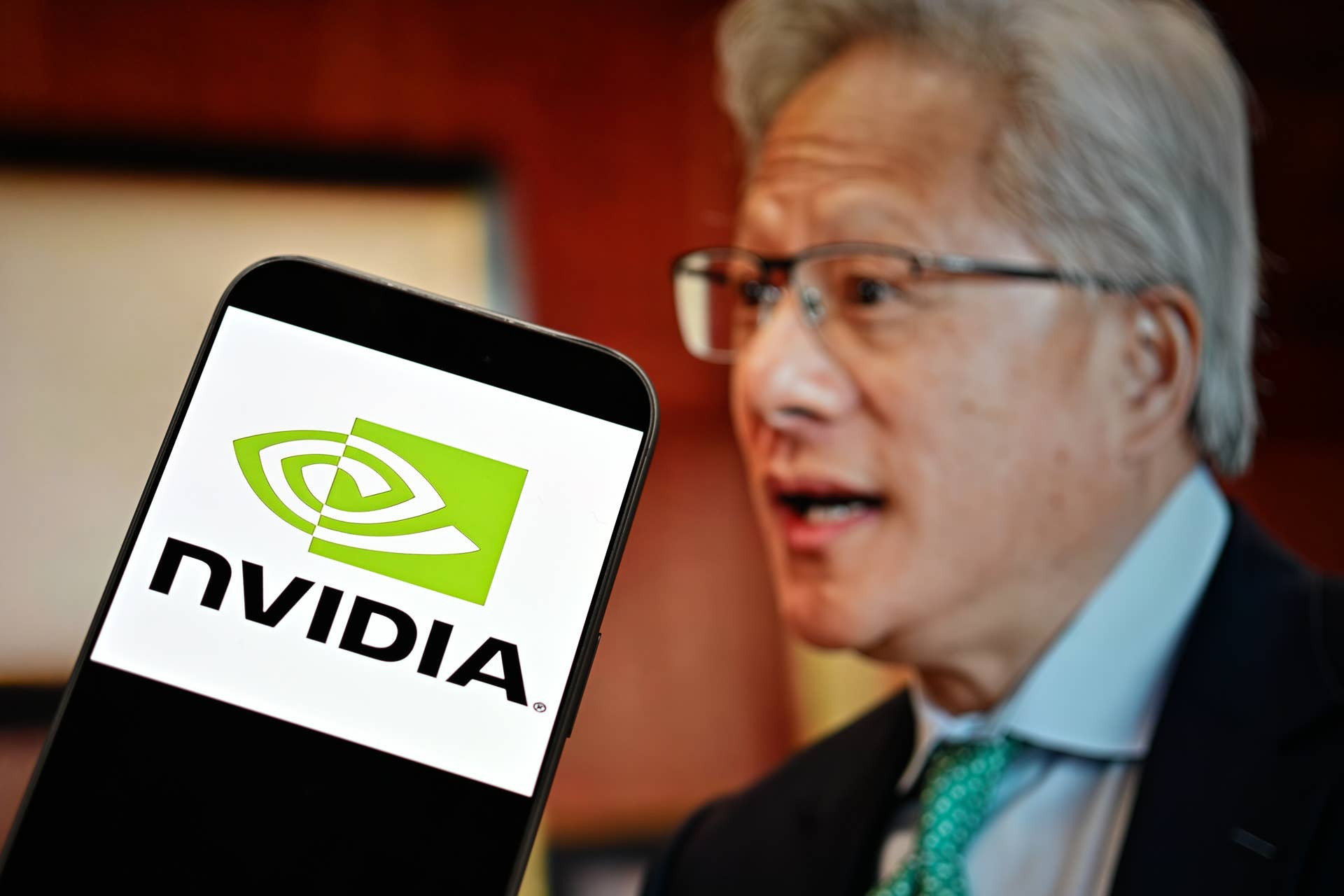
Nvidia (NVDA) shares surged 31.48% Monday, Nov. 23, after the company reinstated Huang as chief executive. The stock closed at $165.05, adding approximately $952 billion to its market capitalization.
The S&P 500 rose 4.73%, and the Nasdaq Composite rose 6.51% as technology stocks recovered from a brutal selloff.
Reuters reported that Huang’s reinstatement followed pressure from President Donald Trump, reversing the company’s leadership change less than two weeks after Huang resigned on Nov. 12. Reuters also noted that the rally had not erased all the losses suffered during his absence.
The recovery has a direct financial impact on average Americans.
A popular index investment, Vanguard’s S&P 500 ETF (VOO), gained 4.46% on Monday. Nvidia was the fund’s second-largest stake behind Apple as of the end of October, accounting for 7.58% of its assets.
The ten biggest holdings made up 37.28% of the portfolio, demonstrating the significant impact that a small number of firms’ performance may have on retirement funds.
Whether Nvidia’s leadership stability will result in the manufacturing investments, profitability, and economic growth investors anticipate through 2028 is the longer-term issue.
Nvidia’s comeback reveals how retirement portfolios are invested
American families and Nvidia are directly connected via retirement accounts, where the company’s stock is often owned indirectly through index funds.
Fidelity Investments reported Nov. 23 that the average 401(k) balance was $152,500 in September, down 2% from the previous quarter. It examined 26.2 million participants in 27,722 corporate retirement plans. Despite market volatility, 96.4% of workers maintained or increased their contribution rates, according to Fidelity.
The makeup of an average S&P 500 investment explains how Nvidia’s surge may affect such savings.
Apple held 7.70% of Vanguard’s S&P 500 ETF on Oct. 31, followed by Nvidia at 7.58% and Microsoft at 5.93%, according to FactSet data. Another 3.61% came from Amazon, while Alphabet’s two share classes contributed 4.54%.
Micron Technology came in at 1.53%, Eli Lilly at 1.74%, Meta Platforms at 2.08%, and Broadcom at 2.37%. Another noteworthy holding was Tesla, with 1.72%.
The fund’s sector mix showed a similar concentration. Technology stocks accounted for 38.21% of assets, with financial services coming in second at 11.98%, healthcare at 10.24%, consumer cyclical companies at 9.19%, and communication services at 8.41%.
The ETF has almost minimal bond exposure and 99.4% of its assets were invested in US equities.
These numbers show how having a balanced retirement portfolio differs from owning a diversified stock fund. Investors may have significant exposure via their funds even if they have never made a direct purchase of Nvidia.
Nvidia’s rally delivers a surprising retirement calculation
Think about a hypothetical retirement account that has the same $152,500 average 401(k) balance as Fidelity.
Assume the investor put 40% of the money in bonds and 60% in Vanguard’s S&P 500 ETF. This would entail investing $61,000 in fixed-income securities and $91,500 in the equity fund.
The stock portion alone would have gained by almost $4,081 with VOO’s 4.46% gain on Monday.
More Nvidia:
- Microsoft just gave Nvidia shareholders a reason to pay attention
- Nvidia has a stake in SpaceX that came from an unexpected place
- Nvidia’s $12.9 billion deal could shape the AI apps you use
The total retirement account would have increased by around 2.68% in a single session if the bond holdings had remained the same.
Instead, an investor with the whole $152,500 in VOO would have made around $6,802.
These computations serve as examples. They exclude fees and changes in bond prices, and they inaccurately reflect the performance of Fidelity’s retirement funds.
Nvidia’s contribution provides another viewpoint.
A hypothetical $100,000 investment in VOO would have included around $7,580 of Nvidia exposure using its historical 7.58% weighting.
Before considering changes in the fund’s holdings and prices since October 31, a 31.48% rise in Nvidia shares would have added almost $2,386 to that portfolio.
The computation shows Nvidia’s impact but does not provide an exact explanation for Monday’s ETF return.
Even while the owners of stock-heavy retirement portfolios own hundreds of other firms, a significant drop in Nvidia shares might have the opposite impact.
Nvidia’s 2028 investment plans could reshape the AI economy
Retirement savings are only one aspect of the longer-term economic effects.
To create the systems that drive artificial intelligence, Nvidia depends on a worldwide network of suppliers of semiconductors, memory, and specialized equipment.
Reuters reported Tuesday that Taiwanese and South Korean companies welcomed Huang’s return because it eased product development, manufacturing, and AI startup funding. Jin, Yang, and Lee wrote the report.
Taiwan Semiconductor Manufacturing (TSM), Foxconn, Samsung Electronics, and SK Hynix were among the vendors that Reuters identified.
Ahn Ki-hyun, an executive with the Korea Semiconductor Industry Association, told Reuters that Huang’s absence could have slowed development of next-generation products. His reinstatement reduced that uncertainty.
It could take another two years for the longer-term chance to materialize.
Huang’s return boosts confidence in Nvidia’s capacity to enhance the specifications of next AI platforms, according to Jerry Yang, portfolio manager at Singapore-based Quintorb Capital.
“With most 2027 specifications already set, I see the bigger benefit in 2028,” Yang said.
Reuters’ Nov. 24 market reaction included fund managers who expect Taiwan’s semiconductor manufacturers and South Korea’s memory suppliers to benefit from renewed confidence.
The significance of 2028 is shown by Nvidia’s own production plans.
Nvidia announced on Oct. 21 that semiconductor substrate supplier agreements would increase capacity 2.5-fold over three years. It also announced plans with Amkor Technology to triple advanced packaging capacity by 2028.
A $1.1 billion capacity-reservation advance supporting new US semiconductor testing facilities run by KYEC was part of the announcement.
Additionally, projections for a 15-fold increase in optical engine capacity by mid-2027 and a projected doubling by the end of 2028 were presented by Nvidia and Siliconware Precision Industries.
The need for industrial equipment, manufacturing employment, and factory building might all benefit from these expenditures.
But rather than being certain financial gains, they are planned expansions.
Nvidia faces a $1.4 trillion AI spending question
The future of Nvidia’s AI business is largely dependent on how much its customers spend, even if Huang’s return may have restored trust.
Reuters reported Nov. 23 that J.P. Morgan expects AI capital expenditures to reach nearly $1.4 trillion in 2027, almost double the projected 2026 level. The firm nevertheless expects spending growth to slow materially beginning in 2028.
A considerable tension is created by such a prediction.
Spending on AI infrastructure may slow down in the same year that Nvidia’s industrial partners anticipate significant additional capacity to become available.
A slower rate of growth does not always translate into decreased expenditure. However, it may make consumers pickier about their investments, which might have an impact on the market for Nvidia’s most cutting-edge equipment.
The extent of the vulnerability is shown by the company’s financial outcomes.
Nvidia reported fiscal third-quarter revenue of $115.8 billion, up 103% from the previous year, on Nov. 17. Its data center business earned $107.6 billion, 93% of total revenue.
Additionally, Nvidia recorded a gross profit margin of 74.8% and net income of $65.3 billion.
With a 3% margin of error, management projects fourth-quarter sales of around $130 billion.
These outcomes demonstrate why investors are concerned about the company’s capacity to carry out its product plan.
A change in leadership, however, won’t allay worries about export limitations from China, regulatory probes, or whether consumers will get sufficient returns on their AI investments.
Huang’s return reduced the immediate leadership uncertainty, but it did not address concerns about Nvidia’s governance and China business, according to Reuters’ market research.
The difference between a stock market rise and sustained economic development is important for retirement investors.
A greater share value is reflected in Nvidia’s $952 billion rise in market capitalization. Increases in family income, economic production, or infrastructure investment are not comparable.
Only if businesses stick to their expenditure plans and the ensuing AI systems enable enterprises to generate greater value will those advantages materialize.
Huang’s comeback has restored confidence across financial markets and the semiconductor industry.
But the decisive question for shareholders is whether Nvidia can sustain its extraordinary earnings growth as AI spending patterns change through 2028.
For Americans whose retirement portfolios contain significant technology exposure, that may matter far more than the size of Monday’s historic rebound.
Related: Apple’s five-device plan creates an iPhone buying dilemma