It was a nice lull in gasoline prices, wasn’t it?
Alas, a deal between the United States and Iran to reopen the Strait of Hormuz fell apart yet again, and oil prices turned up more than $5 a barrel and have pulled up U.S. pump prices as well.
Nationally, the average U.S. price of gasoline was above $4 on Aug. 12, according to both AAA and GasBuddy.
This should not have been a huge surprise. President Donald Trump and officials in his administration have regularly suggested Iranian officials are pleading for the war to end. Then, they find the Iranians add more conditions to bring conflict to a finish.
AAA was at $4.036 a gallon, up 0.06% from a day earlier after bottoming at $4.009 on Aug 10.
GasBuddy’s average was $4.036 a gallon, up about the same amount, and up 2.3% from its recent low, $3.945, on Aug. 9.
So, the numbers are modestly lower at best from the end of July. And it doesn’t look like the situation will change until some time in September at the earliest.
Related: Why gas prices dropped — and could surge again
The challenges of reopening the strait
The challenge right now is reopening the Strait of Hormuz, the waterway that links the oil-producing countries around the Persian Gulf to the Indian Ocean and the greater world.
Before Israel and the United States attacked Iran on Feb. 28, about 20% of the world’s crude oil supply moved through the strait every day.
President Trump said on Aug. 12 the U.S. had “total control” of the strait. But data on traffic in the Gulf suggests control doesn’t mean more ships are going through the passage.
Only 14 ships passed through the strait on Aug. 11, The Wall Street Journal reported. A day later, only 16 ships were in the strait, according to another tracker Strait of Hormuz Monitor.
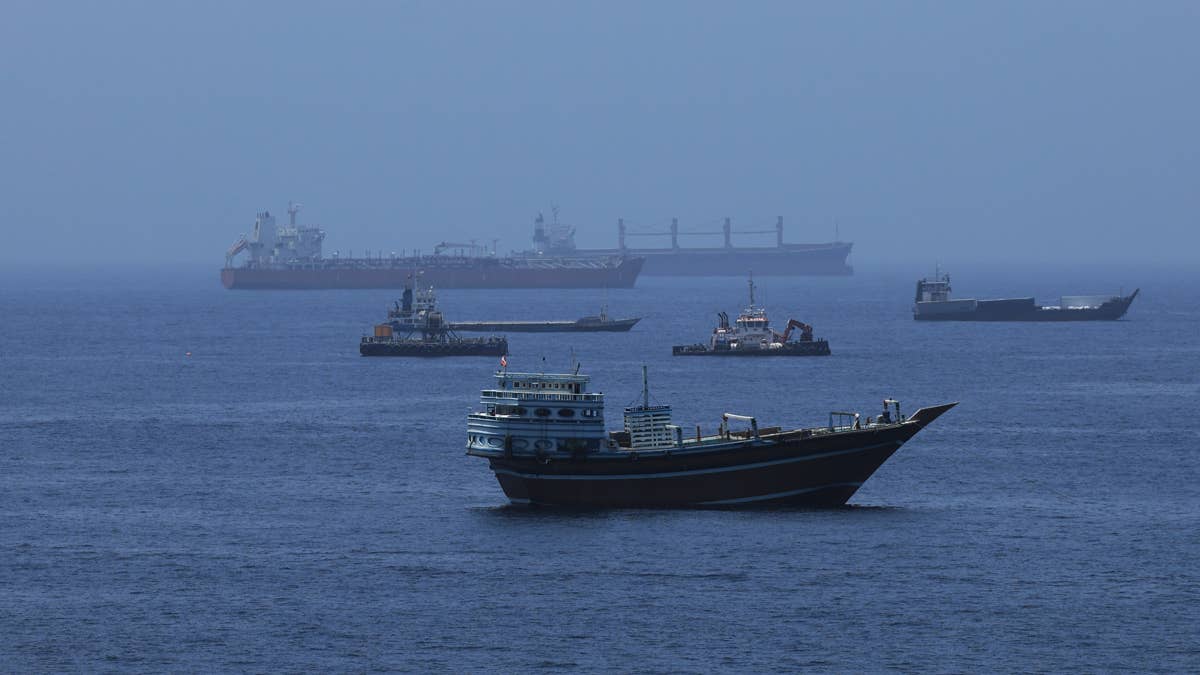
Shady Alassar / Anadolu / Getty Images
War cuts global oil supplies AND demand
The problem of the strait — plus the ongoing war between Ukraine and Russia — is aggravating global energy supply shortages. That may mean oil prices — and gasoline prices — will remain higher for longer.
The International Energy Agency (IEA) estimates higher prices because the war has cut into global oil demand. Demand for all of 2026 will be about 1.6 million barrels a day lower than a year ago.
The war in the Persian Gulf will cut global oil supply by even more. The IEA projects the supply in 2026 will fall 4.3 million barrels per day on average to about 102.3 million barrels a day. The supply should rebound to 110.3 million barrels per day in 2027.
The United States is the world’s biggest oil consumer at about 20 million barrels a day, according to the public reference site Worldometer.
Still, the output losses are far smaller than some of the worst-case scenarios painted early in the war. Countries and companies have implemented an array of workaround measures, according to Bloomberg News.
These include alternative pipelines used by Saudi Arabia and the United Arab Emirates and the use of shuttle tankers plying the Strait of Hormuz.
More Oil & Gas:
- Iran de-escalation just hit energy stocks
- Drivers lose control over gas price squeeze
- Don’t be dulled by the dog days of August
War worries boost energy stocks
The continuing instability in and around the Persian Gulf (including attacks on shipping in the Red Sea by Houthi rebels in Yemen) has put a floor under oil prices at about $70 a barrel and put a lid on oil stocks.
The State Street Energy Select Sector SPDR exchange-traded fund (XLE) closed August 12 at $61.03. That was up 10 cents from the prior day and near its 52-week high of $63.46 on March 30. The ETF is up 36% in 2026.
The ETF’s top 10 components include Exxon Mobil (XOM), Chevron(CVX) and ConocoPhillips (COP).
Light sweet crude hit a 52-week high of $119.48 on March 9.