Every health dollar you spend is a bet on two things. You’re betting the treatment works, and you’re betting it will still be available next month.
When insurance pays, you rarely think about the second bet. Nobody wonders whether their pharmacy is allowed to fill a blood pressure prescription.
Cash-pay medicine flips that. When you pay out of pocket for care outside insurance, you take on risks a health plan would normally screen out, from surprise price changes to regulatory reversals.
That trade-off hasn’t slowed the boom. Recovery, weight-loss and longevity programs now compete for the same paycheck as your rent, your car payment and your retirement account.
You’ve seen how this can go. Compounded copies of Ozempic and Wegovy drew a wave of cash-paying patients during the drug shortage, and then the FDA declared the shortage over in 2024, the Associated Press reported.
Even Hims & Hers Health (HIMS), which built a fast-growing business on compounded semaglutide, said in March it would stop advertising those products and move patients to FDA-approved drugs, according to the company’s press release.
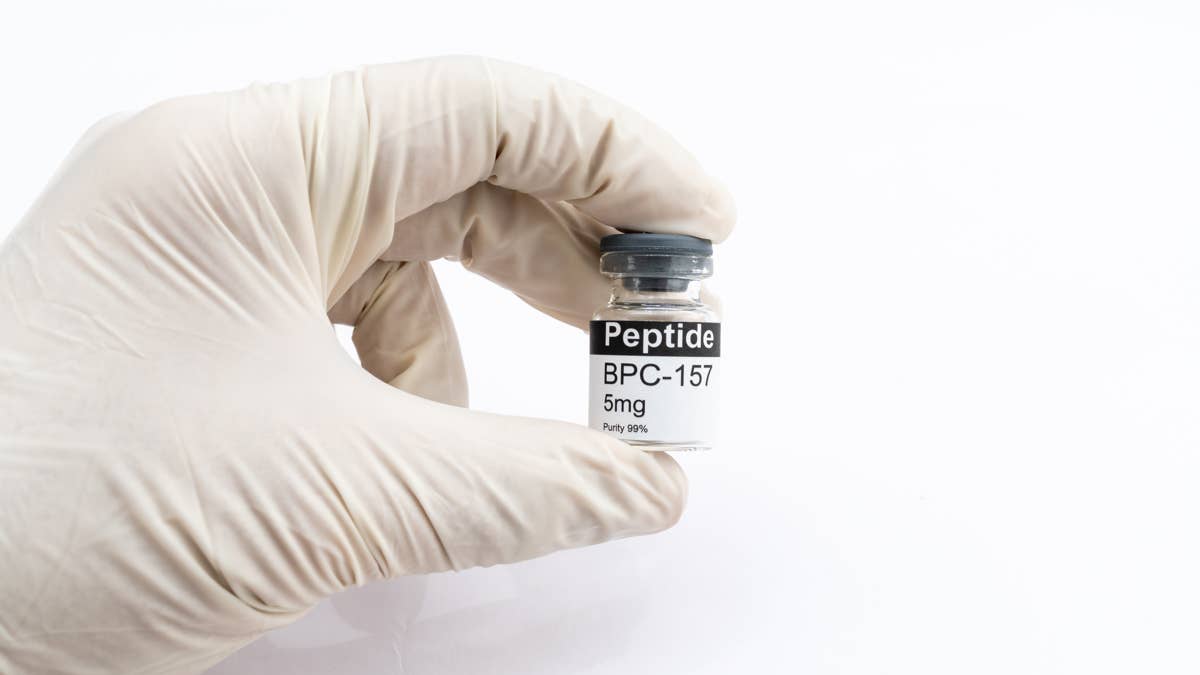
Peptides are the next test of that cash-pay model. Clinics and telehealth platforms sell injectable compounds such as BPC-157 and TB-500 for injury recovery, weight loss and healthy aging, and the people paying for them are carrying a legal risk many don’t realize they’ve taken on.
In July, an FDA advisory committee voted to recommend six peptides for the list of ingredients pharmacies may use in compounding. Plenty of patients heard that as a green light, yet the vote changed nothing about what pharmacies can lawfully make today.
Inside the July advisory panel vote
On July 23 and 24, the FDA’s Pharmacy Compounding Advisory Committee reviewed seven peptides that have become household names in fitness and longevity circles. It backed six of them, BPC-157, KPV, TB-500, MOTS-c, semax and epitalon, and rejected the sleep peptide emideltide, Regulatory Focus reported.
The margins were thin. BPC-157 and TB-500 each passed 8-6 with one abstention, according to Healio, which also noted the panel had faced scrutiny over members’ conflicts of interest.
Related: Medicare drug pricing shift carries alarming global risk
The agency’s own reviewers had argued the other way. FDA staff recommended that none of the seven be added to the list, law firm DLA Piper noted.
Here is what the FDA’s briefing documents flagged, as summarized by the American Med Spa Association:
- BPC-157, reviewed for ulcerative colitis: little evidence it works, and several approved drugs already treat the condition.
- TB-500, reviewed for wound healing: not enough evidence of effectiveness, with approved wound therapies already on the market.
- KPV: the nominator offered no clinical evidence for the proposed use and no human studies.
The push for the vote came from the top. HHS Secretary Robert F. Kennedy Jr. signaled on Joe Rogan’s podcast on Feb. 27 that the administration would make about 14 restricted peptides easier to get through compounding, according to a legal analysis on JD Supra.
Why pharmacies still can’t legally compound BPC-157
Here is the part that matters for your wallet. An advisory vote is advice, nothing more.
Under federal law, a state-licensed pharmacy may compound a drug from a bulk ingredient only if that ingredient is part of an FDA-approved drug, has a U.S. Pharmacopeia monograph or appears on the 503A Bulks List, DLA Piper explained. None of the six peptides clears any of those bars yet.
To get there, the FDA must accept the panel’s advice and then run a full rulemaking: a proposed rule, a public comment period and a final rule, the American Journal of Managed Care reported. Until then, the peptides can’t be lawfully compounded and the FDA can still act against pharmacies that make them, law firm Holland & Knight wrote in August.
More Pharmaceuticals:
- Eli Lilly’s Foundayo delivers diabetes surprise in late-stage study
- BofA thinks Wall Street is underestimating one J&J drug
- Bank of America has strong message for Merck stock investors
Don’t count on speed. The last time the FDA ran this process for a batch of bulk ingredients, it proposed the rule in December 2016, law firm Buchanan Ingersoll & Rooney noted, and didn’t finalize it until 2019, according to the Center for Science in the Public Interest.
There is one more wrinkle that trips up patients. In April, the FDA removed 12 peptides, including BPC-157 and TB-500, from its “Category 2” list of ingredients flagged for significant safety risks after their nominators withdrew them.
Leaving that list didn’t move them into Category 1, the only group the FDA lets pharmacies compound from while reviews are pending, law firm Frier Levitt noted. In my read, the regulatory door is open wider than at any point since 2023, but nobody has been allowed through it yet.
Gray-market sellers are drawing FDA fire
While clinics wait, a cheaper market fills the gap. Online vendors sell peptide powders labeled “research use only” or “not for human consumption” at a fraction of clinic prices.
A clinic in Doral, Florida, that prescribes BPC-157 says a research vendor’s vial can sell for about $49, compared with $445 for its own single-peptide protocol, according to pricing Perfect B publishes on its site.
The FDA isn’t accepting the disclaimer. In warning letters dated Aug. 24 and published Sept. 1, the agency told five online sellers, Peak Performance Peptides, Royal Peptides, NuScience Peptides, Peptide Partners and Tex Peptides, that their websites showed the products were meant for people, Pharmaceutical Technology reported.
The agency pointed to peptide calculators, dosing guides and bacteriostatic water sold next to the vials, law firm Sheppard Mullin noted.
“In the Peptide Partners case, the FDA basically said that calling something ‘research use only’ doesn’t change the fact that you’re marketing it for people to use,” said Maximilian Anthony, a Florida-based healthcare marketer whose peptide therapy marketing business is paid by clinics to promote cash-pay therapies.
One detail most coverage skipped: the letters targeted GLP-1 copies, tesamorelin and ipamorelin, not the six peptides the panel backed, law firm McDermott noted in a Sept. 24 alert. Anthony says that distinction matters.
“I’d look at these as two separate things,” he said. “The warning letters were about specific sellers and products, so they shouldn’t be read as a ruling against every peptide or clinic.”
The real monthly cost of a peptide program
Now for the number that hits your bank account. Peptide therapy is almost always cash pay, and prices swing widely by product, dose and how much monitoring is bundled in.
Anthony says there’s no such thing as a standard program. “As a local reference point, a range of $500 to $1,500 per month, typically including medication and follow-up consultations,” he said, adding that initial labs and other testing may cost extra.
Here is how published prices compare:
- Telehealth peptide programs run about $199 to $425 a month, according to Perfect B’s market breakdown.
- Perfect B charges $445 per cycle for a BPC-157-only protocol, $795 for a BPC-157 and TB-500 stack and $1,295 for a four-peptide stack.
- Clinic directory HealingMaps says the first month, including consults and labs, usually runs 1.5 to 2 times the recurring monthly cost.
Do the math on the high end. Twelve months at $1,500 is $18,000, before labs, which is real money for a treatment whose federal status could change while you’re midway through a prepaid package.
Demand doesn’t appear to be cooling. BPC-157 shows up on 55.3% of the 846 clinic menus HealingMaps tracks, the directory reported.
Anthony sees the same pattern. “At the clinic I’ve worked with, demand increased rather than declined,” he said. “The people who are interested in peptides are less sensitive to regulation.”
How clinics market a treatment in limbo
Keep Anthony’s commercial stake in mind as you weigh his views. He runs Meta advertising, search engine optimization and answer engine optimization for chiropractic, physical therapy and other practices that sell peptides, shockwave therapy, PRP and hyperbaric oxygen, and he has more than 12 years of marketing experience.
He says confusion about the July vote mostly sits with patients. “They see advertising about the results a therapy could offer and become interested, without necessarily understanding the regulations or what the July vote means,” he said. “It wasn’t a blanket legalization or FDA approval of peptides.”
The big platforms limit what clinics can say. Anthony says Google bars ads for experimental treatments, which can include experimental peptide therapies, while Meta requires authorization for prescription-drug ads.
That pushes peptide marketing toward organic search and email. “Ranking in Google’s regular search results for relevant peptide searches is a main source of new patient inquiries,” Anthony said.
That also means the clinic page you land on was built to rank, not reviewed by an ad platform. Anthony says he refuses certain claims outright.
“I won’t use claims like ‘guaranteed results,’ ‘reverses aging’ or ‘no side effects,’” he said. “A small disclaimer doesn’t fix an exaggerated promise.”
Questions to ask before you hand over your card
I studied pharmacy before I covered markets, and the first question I’d ask any clinic is where the vial came from. A compounded drug is only as good as the pharmacy and the ingredient supplier behind it.
Anthony’s biggest red flag sits in the ad itself. “If they’re making big promises, advertising unusually cheap prices or pushing you to buy before you’ve even had a consultation, that’s a reason to pause,” he said.
He recommends asking these questions before you pay:
- Which pharmacy supplies the medication, and is it FDA-approved or compounded?
- Who is prescribing it, and who do you contact if something goes wrong?
- What tests do you need before starting, and how will the clinic monitor you?
- What are the evidence, risks and alternatives?
- What is the full cost, including consultations, labs and follow-ups?
I’d add one more: what happens to your money if the FDA declines to list the peptide you’re buying? Get the refund terms for any prepaid package in writing.
Athletes have an extra reason for caution. BPC-157 is banned under the World Anti-Doping Agency’s prohibited list, USADA warns.
Anthony also described a patient who asked for a higher dose to get results faster. The clinician explained that more could raise side effects without adding benefit, then walked through realistic goals and when to reassess.
Where this regulatory fight goes next
The FDA still has to decide whether to accept the panel’s advice, and more peptides are in the queue for a February 2027 committee meeting, GoodRx reported.
If the agency says no, clinics that built their menus around these peptides could lose supply overnight. “If those treatments make up most of its business, that’s a big financial hit,” Anthony said, adding that clinics would have to sort out ongoing treatments and prepaid packages.
He expects hyperbaric oxygen to face the next wave of scrutiny, especially when it’s sold for longevity. “There’s a difference between someone saying, ‘Here’s what happened to me,’ and a clinic using that story to sell treatment,” he said.
Your health budget deserves the same discipline as your retirement account. Pay for evidence, documented sourcing and clear refund terms, and let the FDA’s next move be someone else’s gamble.
Related: FDA announces nationwide cheese recall after E. coli outbreak