Those who grew up in the early 2000s may remember the frozen yogurt boom, when shops seemed to appear in nearly every mall, shopping center, and busy commercial district.
Whether it was meeting friends after school, stopping by before a movie, or creating the perfect combination of flavors and toppings, frozen yogurt became one of the defining dessert trends of the era and a familiar part of everyday routines for many consumers.
Several chains became household names during the category’s rapid rise, helping turn frozen yogurt into a mainstream staple.
One chain, in particular, emerged as one of the fastest-growing players during frozen yogurt’s highest expansion years.
At its peak, the brand operated more than 300 locations worldwide through a mix of traditional storefronts and franchised formats. But over time, locations quietly began to disappear, leaving some communities without a nearby store as broader changes in both consumer preferences and restaurant economics shifted.
Founded in 2008 in Oklahoma City, originally under the name Orange Tree before rebranding as Orange Leaf, the self-serve frozen yogurt franchise built its identity around customization and menu variety.
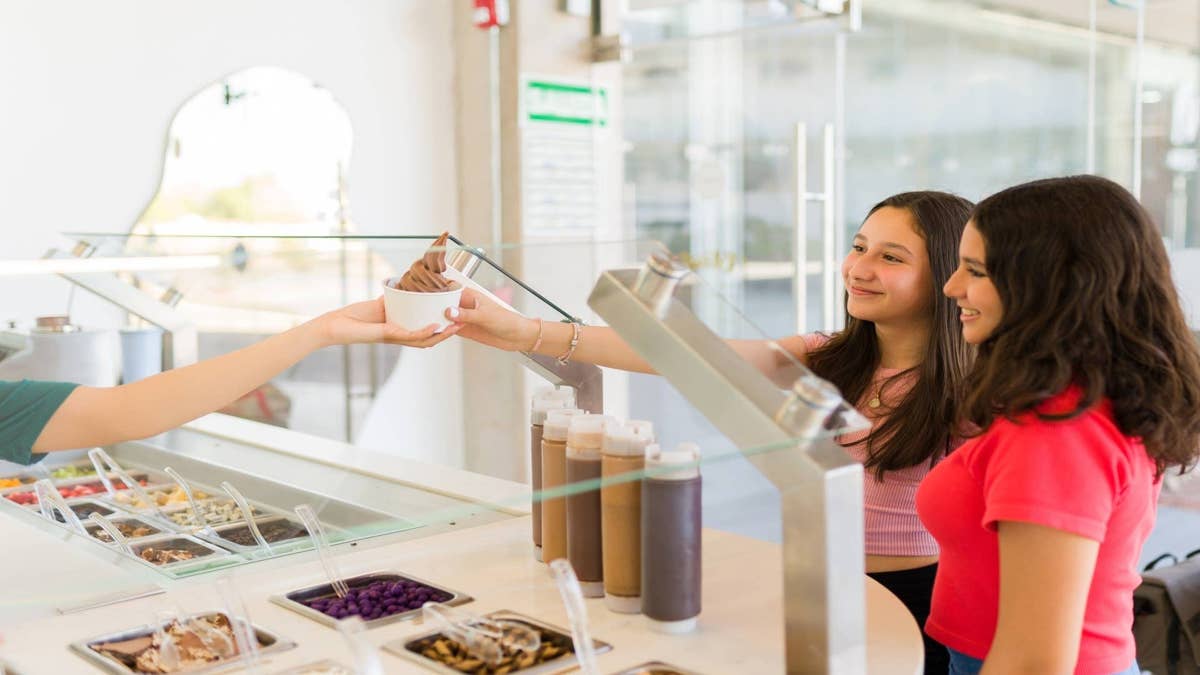
Customers could choose from rotating frozen yogurt flavors and an extensive topping selection, while the company also offered options that accommodated a range of dietary preferences, including no-sugar-added, gluten-free, dairy-free, and vegan.
The concept gained traction quickly.
Orange Leaf expanded from 15 U.S. locations in 2010 to 125 just one year later as consumer interest in frozen yogurt accelerated.
By October 2012, Orange Leaf accounted for approximately 6.4% of the U.S. frozen yogurt market, according to IBISWorld.
Its growth continued in 2013, when the company surpassed 300 locations globally, including expansion into Australia and plans to enter Canada and China, CNBC reported. That same year, Orange Leaf projected annual sales exceeding $100 million.
Why Orange Leaf has closed hundreds of locations
After hundreds of closures over the past decade, Orange Leaf currently lists around 67 locations on its website. While the company remains active, its footprint has shrunk by nearly 80% from peak levels.
Like many fast-growing restaurant concepts, Orange Leaf relied heavily on franchising to scale nationally and internationally.
Franchising can accelerate expansion and reduce corporate operating costs, but sustaining long-term performance across independently owned locations becomes more difficult as networks mature and consumer demand shifts.
Related: Jack in the Box closing hundreds of restaurants
According to company statements and local reporting on individual closures, Orange Leaf shutdowns have largely occurred on a case-by-case basis and have often been linked to expiring franchise agreements, lease renewals, local market conditions, and shifting business economics.
Unlike company-owned restaurant chains, franchise-heavy concepts often contract gradually as individual operators choose not to renew agreements.
The broader frozen yogurt category has also evolved significantly over the years.
Industry analysts have pointed to growing consumer demand for premium ice cream, dairy-free alternatives, specialty desserts, and more convenience-focused food options. At the same time, inflation, rising labor expenses, and slower discretionary spending have increased pressure on restaurant operators.
Recent Orange Leaf closures
Orange Leaf has recently exited several markets and closed longtime locations.
- El Paso, Texas: The location at 7500 N. Mesa St, Ste 103, closed in early January 2026 after 14 years in operation, El Paso Times reported.
- New Braunfels, Texas: The location at 160 Creekside Way, Ste. 502, closed in late December 2025 after 15 years, Community Impact reported.
The food industry continues facing mounting pressure
Orange Leaf’s closures reflect broader structural challenges across the U.S. foodservice industry, where long-term profitability has become more difficult to sustain.
According to the U.S. Bureau of Labor Statistics, approximately 17% of new restaurants close within their first year. Industry data cited by Oysterlink also indicates that roughly half fail within five years, while only about 34.6% remain in business beyond a decade.
Inflation continues affecting both operators and consumers.
Prices for food away from home increased 3.5% in the 12 months ending May 2026, according to recent data from the U.S. Bureau of Labor Statistics, contributing to increased menu prices across the industry.
Analysts say consumers have become more price-sensitive than in previous economic cycles.
James O’Reilly, a food industry executive with more than 15 years of restaurant marketing experience, told FSR Magazine that middle- and lower-income households continue feeling financial pressure despite broader economic improvements.
“In strong economic environments, price increases have historically been tolerated by restaurant guests. Over the past few years, that’s become far more difficult,” said O’Reilly.
More on Restaurant Closures:
- Steakhouse chain closes another location after 13 years
- Beloved ice cream chain closing location after 40 years
- Iconic frozen yogurt chain makes comeback after closing 2,650 stores
Operators are also managing elevated labor, supply, and occupancy expenses. The National Restaurant Association estimates that food and labor costs have each increased roughly 35% over the past five years.
Commercial real estate pressures remain another challenge. U.S. business rents have risen at a compound annual rate between 5.5% and 8.8% since 2019, according to Q1 2026 data from CoStar Group.
Frozen yogurt has faced category-specific headwinds as well.
According to USDA data, U.S. frozen yogurt production fell 47% between 2000 and 2020, reaching its lowest level in two decades. Analysts attribute the decline to changing consumer preferences, stronger competition from alternative frozen desserts, and shifting consumer perceptions around the category’s health positioning.
Market oversaturation during frozen yogurt’s peak years also contributed to store rationalization across the industry.
Still, there are signs the category may be stabilizing.
According to the International Frozen Yogurt Association, the U.S. recorded more frozen yogurt shop openings than closures in May 2026, suggesting modest but continued demand.
“This time around, I don’t think it’s a trend anymore,” former Rockies Frozen Yogurt owner and operator Juanita Velasco told Refinery29. “Yogurt’s here to stay now.”
Related: Beloved ice cream chain closing location after 40 years