Noodles & Company wants to shrink its way to success.
The company has been closing locations as a way to drive sales to its remaining restaurants.
That’s something CEO Joseph Christina said has been working.
“Our average restaurant volume grew by over 15% to $1.54 million, which is a key pillar for the entire operating model to be successful,” he said during the restaurant chain’s third-quarter earnings call.
Shutting down locations, he added, has been a key part of the chain’s turnaround.
“We got here the same way we have all year, through running better restaurants, creating food guests crave and engaging our guests with smarter marketing, complemented by the success of our store closure program, which has resulted in what we believe is a more permanent transfer of predominantly off-premise sales to nearby restaurants,” he shared.
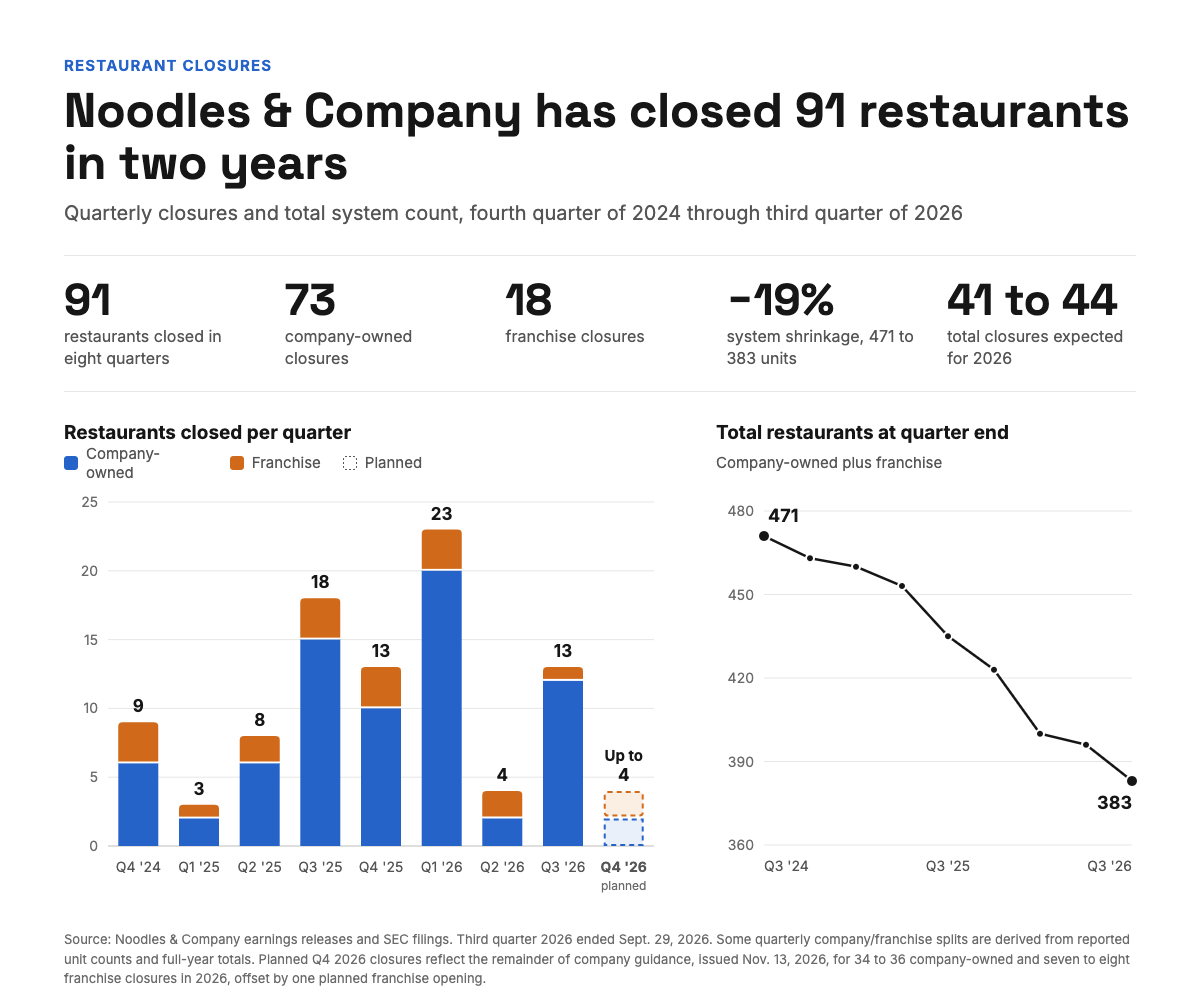
Now, after closing nearly 100 stores, the chain plans to close more this year.
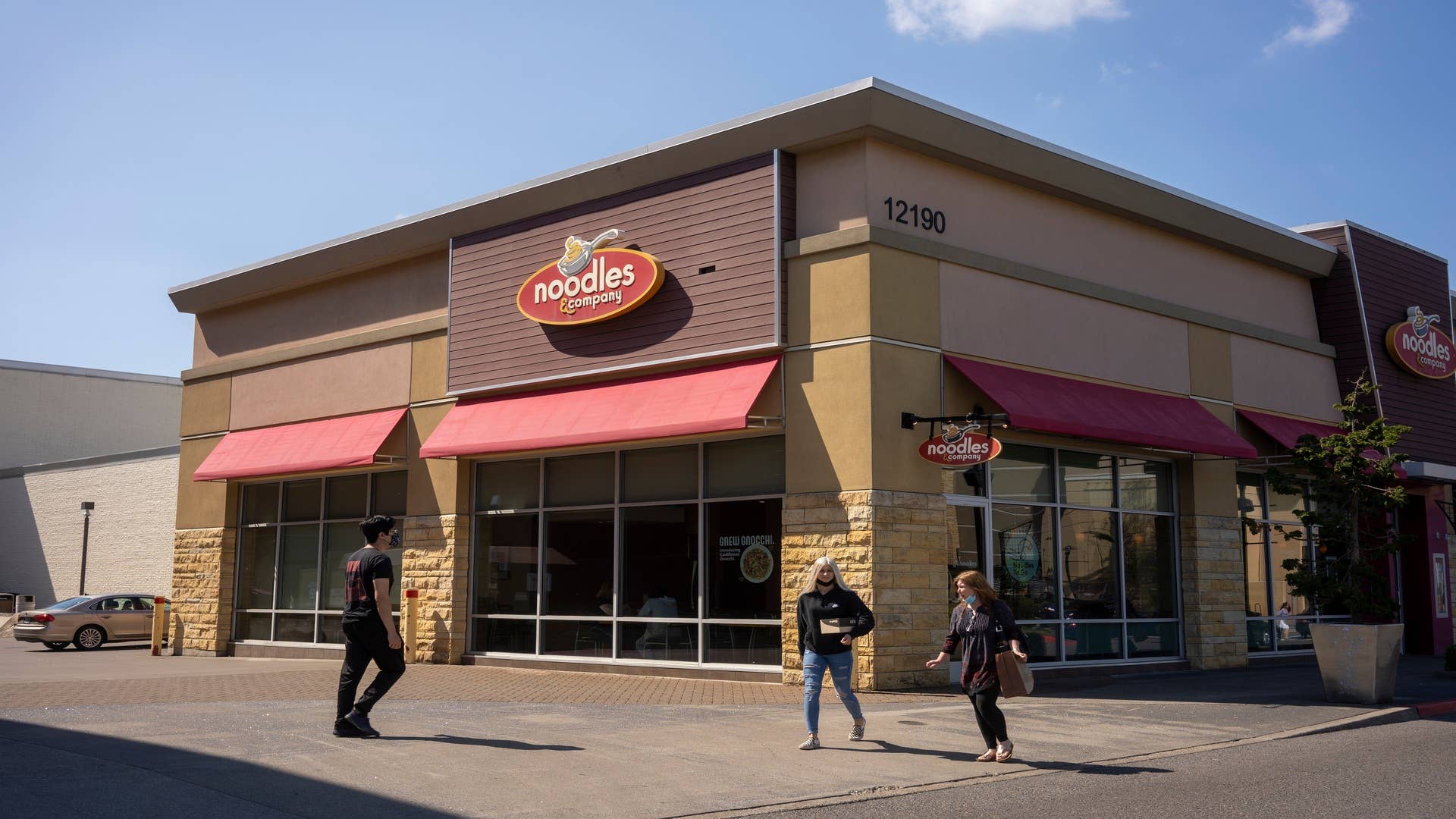
Noodles & Company closing more restaurants
The company shared one terse line about planned closures in its Q3 earnings release.
“Restaurant closures: 34 to 36 company-owned restaurants and seven to eight franchised restaurants,” Noodles & Company shared.
Closing locations has hurt the company’s revenue.
“In the third quarter, our total revenue was $120.9 million, which was a $1.2 million decrease compared to last year, driven by significant increases in comp sales growth, offset by the closing of certain restaurants,” CFO Michael Hynes said during the Q3 earnings call.
But sales are up at the remaining locations.
“System-wide comp restaurant sales during the third quarter increased 9.5%, including an increase of 10.7% at company-owned restaurants and an increase of 4.9% at franchise restaurants,” he added.
More Restaurant Closures:
- Portillo’s closing locations as consumers pay more but visit less
- Shrimp Basket closes multiple restaurants across two states
- Beloved seafood restaurant suddenly closes all locations after 98 years
Closing weak locations to strengthen a chain is a sound strategy, according to Black Box Intelligence Chief Insights Officer Victor Fernandez.
“The silver lining here is that a leaner portfolio often becomes a stronger one. When a brand stops subsidizing its bottom 10% of units, it can reallocate capital, management attention, and marketing spend to the units with the highest growth potential. This ‘traffic transfer’ effect is a powerful tool for survival in 2026,” he told Restaurant Dive.
TheStreet
Noodles & Company has an identity problem
Back when we lived near a Noodles & Company, we rarely went there because it was never clear what the chain sold. Yes, it offered noodles, but its mixed-genre menu wasn’t easy to explain.
That’s part of the chain’s problem, according to RTM Nexus CEO Dominick Miserandino.
“I don’t think noodles have limited appeal. Have you met America? We love pasta. The problem is that nobody wakes up craving Noodles & Company,” he told TheStreet.
Noodles & Company, he noted, doesn’t check off any one box for consumers.
“You want Italian, you go to an Italian restaurant. You want ramen, you find a ramen place. Noodles & Company has a little bit of everything, but I’m not sure consumers know what it’s supposed to be famous for. Sometimes having something for everyone means you’re nobody’s first choice,” he added.
In many ways, having a broad menu suggests to consumers that you’re not great at any one thing. Every item offered by Noodles & Company feels like the hamburger and the chicken fingers on the menu at a Mexican restaurant.
That may not be an execution problem — perhaps the chain offers good ramen, pasta Bolognese, and pad thai — but that’s a tough sale to make to consumers.
Related: Black Rifle Coffee Company closing stores as sales plummet