After bankruptcy, ongoing restaurant closures, a sweeping restructuring, and years of financial pressure, a once-iconic seafood chain continues to shutter locations as it works to stabilize its business.
The changes come as the company attempts to rebuild after a turbulent period that pushed the nearly 60-year-old restaurant chain into bankruptcy and led it to close more than 100 locations, raising questions about the future of its business and signature Cheddar Bay Biscuits.
That chain is Red Lobster.
Now, as it works to return to profitability, the company is continuing to evaluate its restaurant footprint, with additional closures possible as it focuses on its strongest markets.
Red Lobster closes dozens of restaurants in 2026
Red Lobster has closed 36 restaurants, with 484 locations still listed as of September 8, 2026, according to Technomic data reported by National Restaurant News. That represents a 7% reduction from the 520 locations the chain had at the end of 2025.
At least 20 of those closures occurred in 2026, including:
- Alabama:
- 515 Quintard Dr. in Oxford closed in September after 35 years
- 1818 University Dr. NW in Huntsville closed in September.
- 300 Eastdale Cir. in Montgomery closed in September.
- 1030 Montgomery Hwy. in Vestavia Hills closed in May after 54 years.
- California:
- 72291 CA-111 in Palm Desert closed in September after 14 years.
- 1525 S Bradley Road in Santa Maria closed in August after 32 years.
- Connecticut:
- 4485 Main St. in Bridgeport closed in July.
- Florida:
- 2583 N Monroe St. in Tallahassee closed in May after 56 years.
- Georgia:
- 1425 13th St. in Columbus closed in August after 55 years.
- Illinois:
- 2696 S Dirksen Pkw. in Springfield closed in August.
- Kansas:
- 9475 Metcalf Ave. in Overland Park closed in May.
- 2011 SW Wanamaker Rd. in Topeka closed in April.
- Louisiana:
- 6051 Bluebonnet Blvd. in Baton Rouge closed in April.
- Michigan:
- 4109 Wilder Rd. in Bay City closed in March.
- Minnesota:
- 2925 White Bear Ave. in Maplewood closed in August.
- Missouri:
- 4328 S Noland Rd. in Independence closed in May.
- New York:
- The Times Square flagship closed in June after 23 years.
- Pennsylvania:
- 935 Wayne Ave. in Chambersburg closed in May.
- 1502 Scranton Carbondale Hwy. in Dickson City closed in April after 25 years.
- Texas:
- 8401 Gateway Blvd. W in El Paso closed in March.
The shutdowns illustrate how the chain is continuing to adjust its physical footprint even after emerging from bankruptcy.
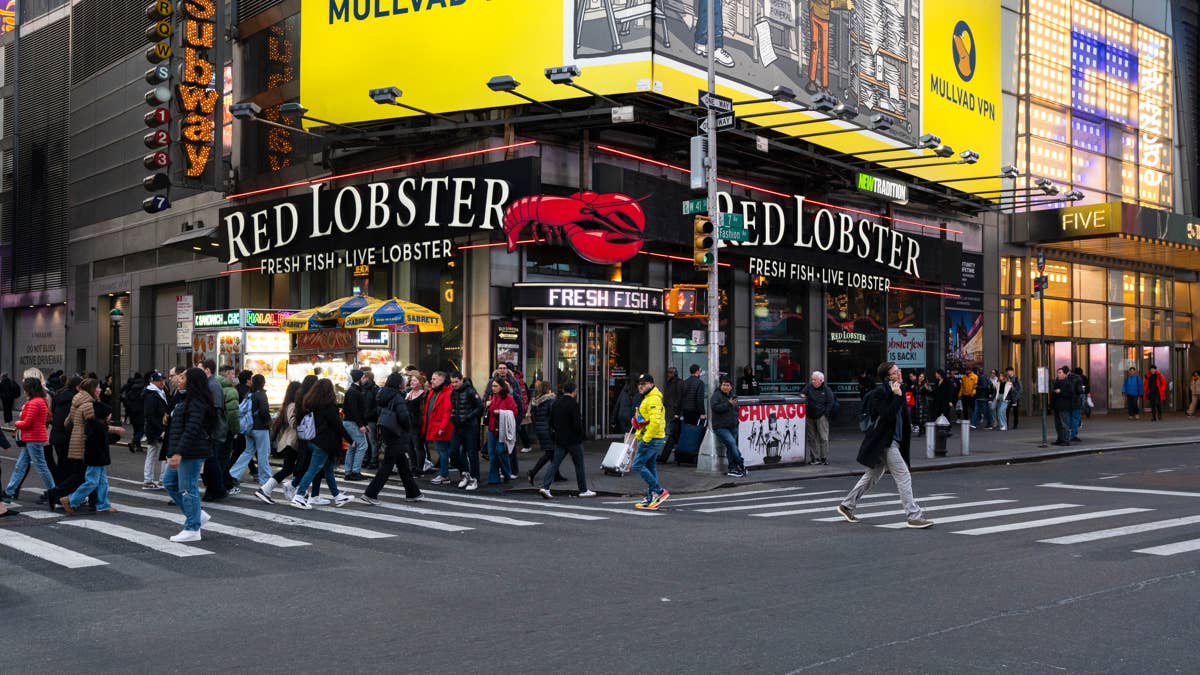
Why Red Lobster is continuing to close locations nationwide
The closures come as Red Lobster continues recovering from a turbulent period in its history.
Red Lobster filed for Chapter 11 bankruptcy protection in May 2024 after accumulating nearly $300 million in debt and shutting down approximately 130 restaurants. Court filings cited rising operating costs, declining consumer traffic, and significant financial losses.
The company’s $20 Ultimate Endless Shrimp promotion was also identified as a major financial problem. According to court-related filings and subsequent reporting, the promotion contributed to an $11 million quarterly loss.
As part of the restructuring, Red Lobster closed about 130 restaurants before emerging from bankruptcy under new ownership by RL Investor Holdings LLC later that year.
After the company’s exit from bankruptcy, Adamolekun was appointed CEO in August 2024 and tasked with stabilizing the business and modernizing its operations following a period of leadership turnover.
Since then, Red Lobster has focused on reducing expenses, streamlining operations, renegotiating vendor agreements, and reviewing its restaurant portfolio. Additional workforce reductions and restaurant closures have remained part of the company’s restructuring efforts.
The chain’s financial troubles have also continued to generate legal fallout.
In May 2026, Red Lobster’s creditors sued former CEO Paul Kenny and Thai Union Group, the company’s former investor and seafood supplier.
According to the complaint, the defendants pushed the $20 Ultimate Endless Shrimp promotion despite knowing it could cause significant financial harm, while Thai Union benefited from increased shrimp purchases.
The complaint also claims that Kenny and Thai Union removed members of Red Lobster’s management team, blocked competing suppliers, and forced the chain to purchase larger quantities of shrimp at inflated prices.
Employees warned executives that the low price would not be profitable, but management allegedly continued expanding the promotion despite those concerns.
Red Lobster could close more restaurants in 2026
Red Lobster continues to evaluate its real estate portfolio as part of its broader turnaround strategy. That review could result in additional closures, particularly at underperforming locations, as the company focuses on strengthening its remaining restaurant base.
One important chapter in the chain’s financial history came in 2014, when private equity firm Golden Gate Capital acquired Red Lobster from Darden Restaurants (DRI) for $2.1 billion. To help finance the transaction, the company sold much of the real estate in a sale-leaseback deal valued at around $1.5 billion.
The transaction provided short-term liquidity but left Red Lobster with significant lease obligations. Those obligations became increasingly difficult to manage as the company’s traffic and financial performance weakened.
Annual lease obligations reached about $190.5 million by 2023, roughly 10% of its revenue, with more than $64 million tied to underperforming restaurants, according to the bankruptcy filing.
Red Lobster ended 2024 with approximately 528 locations. However, some leases bundle multiple restaurants, limiting the company’s flexibility to close weaker stores without affecting stronger ones.
Gad Allon, a professor of Operations, Information, and Decisions at the University of Pennsylvania’s Wharton School, has argued that the sale-leaseback illustrates the risks of prioritizing short-term financial gains over long-term reinvestment.
“Much of the liquidity from the sale-leaseback went toward paying dividends to private equity investors rather than addressing systemic operational issues or adapting the menu and brand to shifting market demands,” Allon wrote on Substack. “This misallocation of resources underscores the risks of prioritizing short-term gains over strategic reinvestment.”
Here’s some of my previous coverage of restaurant closures:
- Mexican restaurant chain closes all locations in major market
- Steakhouse chain closes final location in major market
- Iconic Mexican restaurant shuts down after 43 years
Although Red Lobster has made progress since emerging from bankruptcy, its turnaround remains a work in progress.
According to Technomic data, systemwide sales declined 6.2% in 2025, underscoring the ongoing challenges facing the seafood chain as it attempts to rebuild momentum.
Related: Iconic seafood chain brings back controversial deal amid closures