A hiker outside cell range can still send a text for help, thanks to a satellite network most people never think about.
Rocket Lab Corp. (RKLB) builds pieces of that network, and on Sunday, Aug. 16, it confirmed that eight satellites it built for MDA Space have reached orbit and begun operating, the first delivery under a $143 million contract signed in 2022.
But the network they are joining is changing hands, and so is Rocket Lab’s own business.
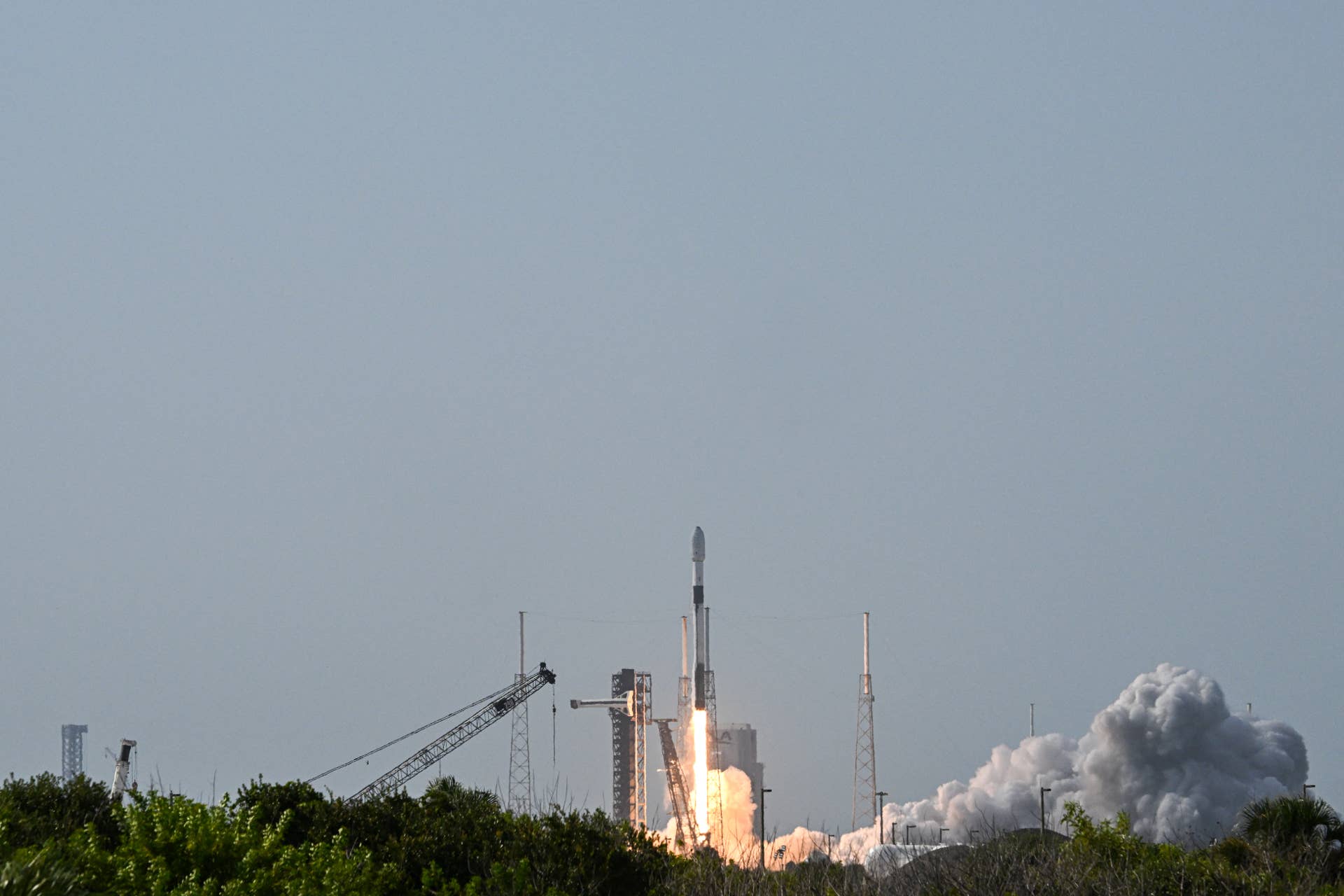
The eight space crafts launched Aug. 15 at 9:12p.m. Eastern time from Cape Canaveral Space Force Station in Florida, according to Rocket Lab.
The company said it has made contact with all eight and confirmed they are generating power and operating normally, with commissioning now underway. Each spacecraft weighs about 500 kilograms and was built and tested at Rocket Lab’s headquarters in Long Beach, California.
The satellites feed a network Amazon is buying
MDA Space is the prime contractor overseeing the replenishment of Globalstar’s satellite constellation, according to Rocket Lab. Globalstar uses that constellation to power direct-to-device texting and emergency messaging on the iPhone, a service Apple committed roughly $1.5 billion to expand in 2024, reported CNBC.
That means the eight satellites Rocket Lab just delivered are not simply replacing aging hardware. They are becoming part of Amazon’s answer to Elon Musk‘s Starlink, built by a subcontractor almost nobody associates with that rivalry.
Apple’s iPhone satellite features, used by millions of people who have never heard of MDA or Rocket Lab, depend on hardware this small space company assembled in Long Beach.
Rocket Lab’s own business has quietly flipped
This delivery lands as Rocket Lab’s own identity shifts away from rockets. In the second quarter of 2026, the company’s Space Systems division, which builds satellites and components, generated $189.5 million in revenue, up 38.6% from the prior quarter, according to the company earnings call transcript.
Launch Services, the business Rocket Lab was founded on, brought in $44.6 million, down 30% over the same period.
Related: Bank of America reveals Rocket Lab stock outlook after earnings
The $143 million MDA contract looks modest next to those numbers now. Total backlog reached $2.36 billion by the end of the quarter, and Space Systems accounts for 60% of it, according to the transcript.
Building satellites for other companies has become the larger and steadier half of Rocket Lab’s business, even as Electron launches and the upcoming Neutron rocket still draw most of the attention from investors.
A pending Iridium deal raises the stakes
Rocket Lab is also working to acquire Iridium Communications, a deal expected to close in mid-2027 that would add a 66-satellite network and more than $870 million in annual revenue.
Paired with this year’s acquisition of laser-communications maker Mynaric, the strategy points toward a company that eventually operates satellite networks, not just one that builds hardware for others.
Investors gave the MDA milestone a modest reception. RKLB shares rose 1% in after-hours trading Sunday night, following a week in which the stock had fallen 3% to close at $80.25.
Manufacturing, not launch, is the real prize
Rocket Lab’s trajectory points to a broader shift across the space industry. Getting a rocket off the ground still generates the headlines, but building and eventually owning the satellites in orbit is where the recurring revenue now sits.
Amazon’s willingness to spend $11.57 billion buying an existing constellation, rather than building one from scratch, shows how valuable operating satellites and their components have become in recent times.
More Rocket Lab:
- Why Morgan Stanley thinks Rocket Lab is becoming ‘Player 2’
- Rocket Lab just put its biggest 2026 milestone at risk
- Rocket Lab just landed a $266 million rocket deal
For Rocket Lab, the eight satellites now operating in orbit are a small, verifiable proof point in that larger shift. Nine more spacecraft remain under the MDA contract, and the company has not said when they will launch.
Each successful delivery adds evidence that Rocket Lab can build satellites at scale, the same trust it will need if its ambitions stretch from building networks for other companies to running one of its own.
Related: SpaceX’s own ambitions just became Rocket Lab’s opportunity